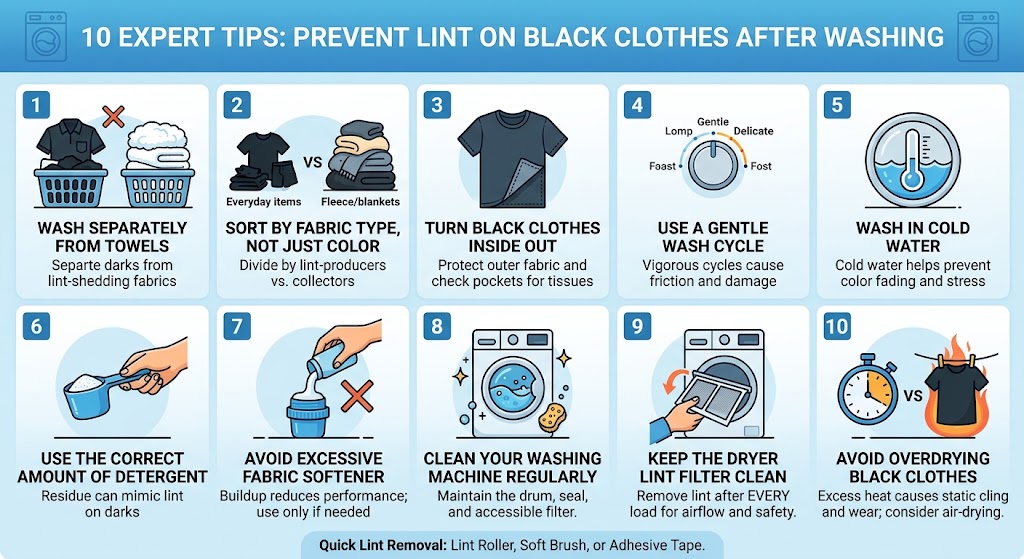
Have you ever taken your favourite black shirt, jeans, or trousers out of the washing machine only to find them covered in white fluff and tiny fabric fibres? Lint on black clothes after washing can make even freshly cleaned garments look untidy. The good news is that you can reduce this problem with a few simple laundry habits. The secret is to separate lint-producing fabrics, prepare your clothes properly, use suitable washing settings, and keep your washing machine and dryer clean. In this guide, you will learn how to prevent lint on black clothes, remove existing lint, and keep dark garments looking their best. What Causes Lint on Black Clothes After Washing? Lint consists of small fibres that come loose from fabrics during washing, drying, and everyday wear. These fibres can transfer from one garment to another or become trapped on textured fabrics. Static electricity can also make loose fibres cling to clothing. Black and dark-coloured garments do not necessarily attract more lint than every other colour. However, white and light-coloured fibres are much easier to see against a dark background. Common causes of lint on black clothes include: Washing black clothes with towels: Towels can release large amounts of loose fibres. Mixing dark clothes with fleece: Fleece blankets, fluffy sweatshirts, and bathrobes can shed lint. Overloading the washing machine: Crowded loads can prevent clothes from moving and rinsing properly. Static electricity: Dry air and tumble drying can cause loose fibres to cling to garments. Excessive friction: Rough washing cycles can loosen fibres and contribute to fabric wear. Tissues left in pockets: Small pieces of paper can break apart and spread throughout a load. Dirty appliance filters: Accumulated lint may interfere with effective collection and airflow in some machines. How to Prevent Lint on Black Clothes After Washing Preventing lint starts before you put your clothes in the washing machine. Follow these practical steps to reduce loose fibres and keep dark garments looking cleaner. 1. Wash Black Clothes Separately from Towels One of the most effective ways to prevent lint on black clothes is to keep them away from heavy lint-producing fabrics. Bath towels, flannel items, fleece blankets, chenille fabrics, and fluffy robes can release fibres during washing. Wash towels together in a separate load and keep black shirts, trousers, and jeans with similar dark garments. Separate delicate and heavily textured fabrics when necessary. This simple change can significantly reduce the amount of loose lint transferred to dark clothing. 2. Separate Clothes by Fabric Type, Not Just Colour Sorting laundry by colour is important, but fabric type also matters. Some fabrics shed fibres, while others are particularly good at collecting them. For better results, try separating your laundry into these groups: Black and dark everyday clothing: Shirts, trousers, jeans, and similar items. Lint-producing fabrics: Towels, fleece, flannel, and fluffy blankets. Delicate clothing: Fine knits and garments requiring gentle care. Heavily soiled items: Clothing that needs a different wash treatment. Always follow garment care labels and avoid mixing items that could snag or damage one another. 3. Turn Black Clothes Inside Out Before Washing Turning black clothes inside out helps protect the outer surface from friction during washing. It can also reduce visible abrasion and help preserve the appearance of dark fabrics. Before washing, turn black T-shirts, jeans, sweatshirts, and other suitable garments inside out. Close zippers and fasteners to reduce snagging, and check pockets for tissues, receipts, and other paper items. This habit will not eliminate every loose fibre, but it can help reduce visible lint and surface wear. 4. Use a Gentle Wash Cycle Vigorous agitation can increase friction between garments and contribute to fibre damage. A gentle or delicate cycle may help protect suitable fabrics, especially lightweight shirts, knits, and dark garments that show wear easily. Choose the cycle according to the garment care label. Use a normal cycle when required for more heavily soiled clothing, rather than choosing a delicate setting for every load. Avoid overloading the drum. Clothes need enough room to move freely so that water and detergent can circulate and rinse away effectively. 5. Wash Black Clothes in Cold Water When Suitable Cold water is often a good choice for black clothing because it can help reduce colour fading compared with repeated hot washes. Combined with a suitable cycle, it may also help protect fabrics from unnecessary stress. However, cold water does not prevent all lint. Sorting fabrics and reducing friction remain important. Follow the care label and detergent instructions, particularly when washing items with heavy soil or specific cleaning requirements. 6. Use the Correct Amount of Laundry Detergent Using too much detergent can leave residue on clothing, while using too little may not provide the cleaning performance your load needs. Residue can sometimes look like white lint or powdery marks on black garments. Measure detergent according to the manufacturer’s instructions, taking load size, soil level, and water hardness into account. If your clothes repeatedly come out with pale streaks, check the dosage, avoid overloading the washer, and consider an extra rinse if the garment and machine instructions permit it. A detergent designed for dark clothing may help maintain colour when used as directed, but it cannot replace proper laundry sorting. 7. Avoid Excessive Fabric Softener Fabric softener may reduce static cling in some laundry loads, which can make loose fibres less likely to stick to garments. However, it is not a complete solution for lint transfer. Use fabric softener only when suitable for the garment and washing machine, and follow the product’s dosage instructions. Excessive use can leave buildup, and some performance fabrics, towels, and moisture-wicking garments may not be compatible with softener. Never add several cleaning products together unless their labels explicitly confirm that they are compatible. 8. Clean Your Washing Machine Regularly Residue, loose fibres, and dirt can accumulate in parts of a washing machine. Regular maintenance helps keep the appliance working as intended and reduces the chance of debris affecting your laundry. Follow the manufacturer’s instructions to: Clean the
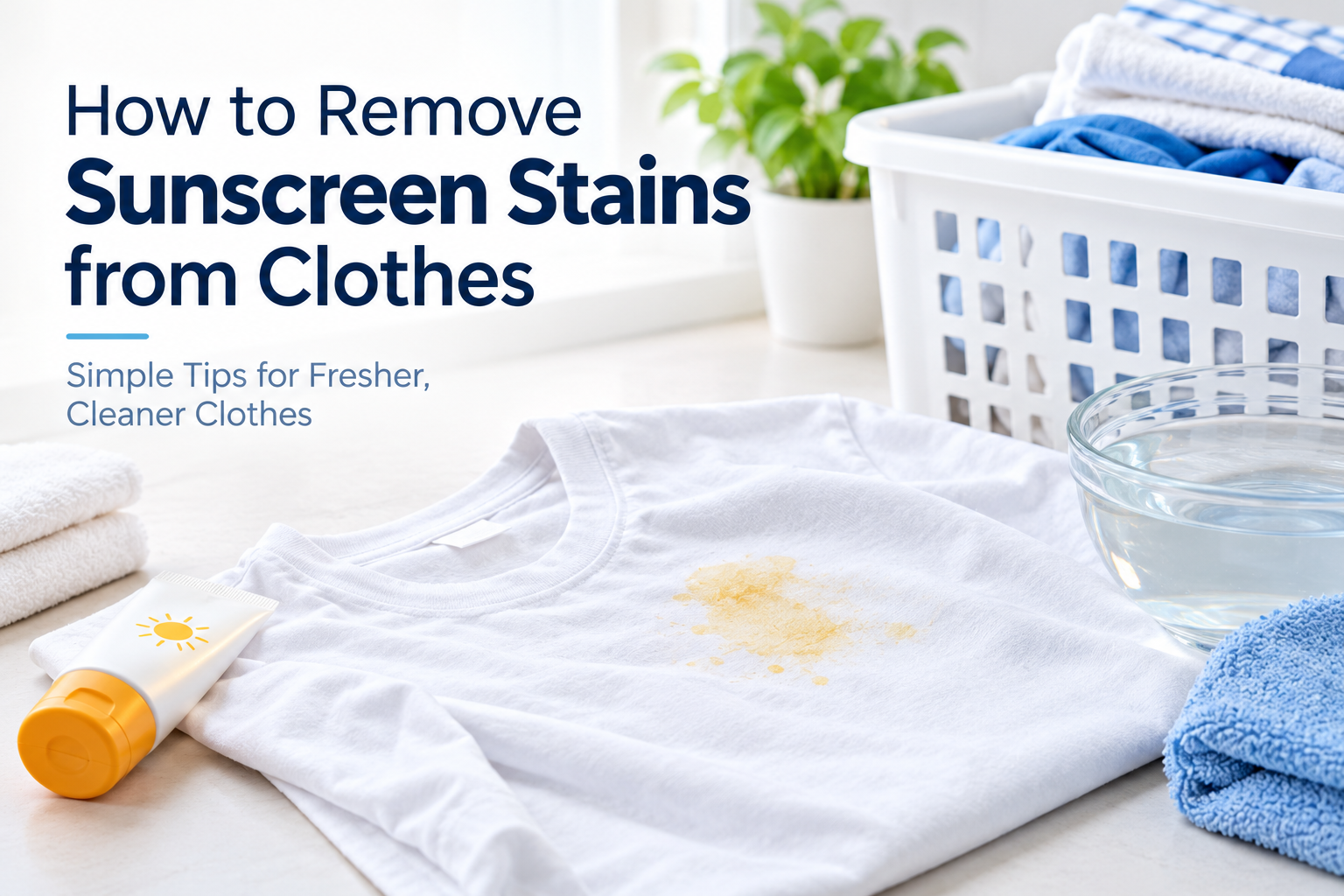
Sunscreen is essential for protecting your skin, but it can leave stubborn marks on your favourite clothes. Yellow patches on white shirts, greasy stains around collars, and orange marks on light-coloured fabrics can be frustrating, especially when regular washing does not remove them.The good news is that you can often improve or remove sunscreen stains with the right treatment. The key is to identify the type of stain, treat it before washing, and avoid using heat until the mark has disappeared. In this guide, you will learn how to remove sunscreen stains from clothes, treat old stains, protect delicate fabrics, and prevent marks from returning. Why Does Sunscreen Stain Clothes? Sunscreen contains a mixture of ingredients that help protect your skin from ultraviolet radiation. Depending on the formula, these may include oils, emollients, waxes, and mineral UV filters such as zinc oxide or titanium dioxide. Some sunscreens also contain organic UV filters that can contribute to discolouration under certain conditions. Different ingredients can leave different types of marks: Greasy stains: Oils and emollients can cling to fabric fibres and attract dirt. Yellow marks: Some sunscreen ingredients can react with fabric, sweat, or other substances and leave yellowish discoloration. Orange or rust-coloured stains: Certain sunscreen ingredients, particularly some products containing avobenzone, may react with minerals in water and produce orange or brown marks. White residue: Mineral sunscreens containing zinc oxide or titanium dioxide can leave visible white marks on dark clothing. Not every sunscreen stain has the same cause. The best treatment depends on the sunscreen formula, fabric type, water conditions, and how long the stain has been present. How to Remove Sunscreen Stains from Clothes Step by Step For most washable garments, start with these steps before trying stronger stain treatments. Step 1: Check the Fabric Care Label Before treating the stain, read the garment’s care label. Cotton, polyester, denim, swimwear, silk, and wool can require different cleaning methods. If the item is labelled dry-clean only, take it to a professional cleaner and explain that the stain is from sunscreen. Step 2: Remove Excess Sunscreen If the stain is fresh, gently lift any excess sunscreen from the fabric with a spoon or the edge of a dull object. Avoid rubbing it deeper into the fibres or spreading it to a larger area. If the sunscreen has dried, carefully remove any surface residue without scraping or damaging the material. Step 3: Apply a Suitable Laundry Detergent For a washable garment with a greasy sunscreen stain, apply a small amount of liquid laundry detergent directly to the affected area if the product label permits this type of pretreatment. Gently work it into the fabric with your fingertips or a soft cloth. Leave it for the time recommended on the detergent label. Avoid vigorous scrubbing, particularly on delicate fabrics, printed designs, and dark garments. Always test a pretreatment product on a hidden area first if you are unsure how the fabric or dye will react. Step 4: Rinse and Wash According to the Care Label Rinse the treated area as directed by the detergent manufacturer. Then wash the garment using a suitable detergent, the correct dosage, and the warmest water temperature permitted by the care label. Do not automatically use hot water. High temperatures can damage some fabrics and may make certain stains more difficult to remove. Follow both the garment-care instructions and the detergent’s directions. Step 5: Check the Stain Before Drying Inspect the garment in good light before placing it in a tumble dryer or ironing it. If the stain remains, repeat an appropriate pretreatment and wash again if the care label permits. Heat from a dryer or iron can make some remaining stains more difficult to treat. Air-dry the garment until you are confident the mark has gone. How to Remove Yellow Sunscreen Stains from White Clothes Yellow sunscreen stains on white clothes can be particularly noticeable. They may be caused by oils, sunscreen ingredients, sweat, or a reaction between certain UV filters and minerals. Start with a detergent pretreatment rather than immediately reaching for bleach. Check the garment’s care label and identify any restrictions on stain removers. Gently remove any excess sunscreen from the fabric. Apply a suitable liquid laundry detergent to the stain and allow it to work according to the label. Wash the item using a fabric-safe temperature and the recommended detergent amount. Inspect the garment before drying and repeat treatment if necessary. If a yellow mark remains, a colour-safe oxygen-based stain remover may be an option for compatible fabrics. Follow its instructions carefully and test it on a hidden area first. Avoid chlorine bleach unless the garment label and stain-remover instructions explicitly allow it. Bleach can damage fabrics, affect dyes, and is not an appropriate solution for every sunscreen-related stain. How to Remove Orange Sunscreen Stains from Clothes Orange or rust-coloured sunscreen stains can be difficult to remove because some sunscreen ingredients may interact with minerals in hard water. Avobenzone, an ingredient used in some sunscreens, is associated with discoloration when it interacts with certain metal ions. If you notice orange marks, take a cautious approach: Do not immediately apply chlorine bleach. Check the sunscreen ingredient list if the product is available. Test a suitable detergent or stain treatment on an inconspicuous area. Follow the product instructions and the garment’s care label. If the mark resembles rust and does not respond to normal pretreatment, seek advice about a fabric-safe rust remover. Some rust removers contain acids and are unsuitable for particular fabrics or finishes. Never mix stain removers with bleach or other cleaning chemicals. If you are unsure about the cause of the stain, a professional cleaner may be the safest option. How to Remove Greasy Sunscreen Stains from Clothing Oily sunscreen can leave darker patches on shirts, dresses, collars, and other areas where the fabric touches the skin. These marks often respond best to a treatment designed to loosen oily residue. Blot fresh sunscreen gently without spreading it. Apply a small amount of suitable
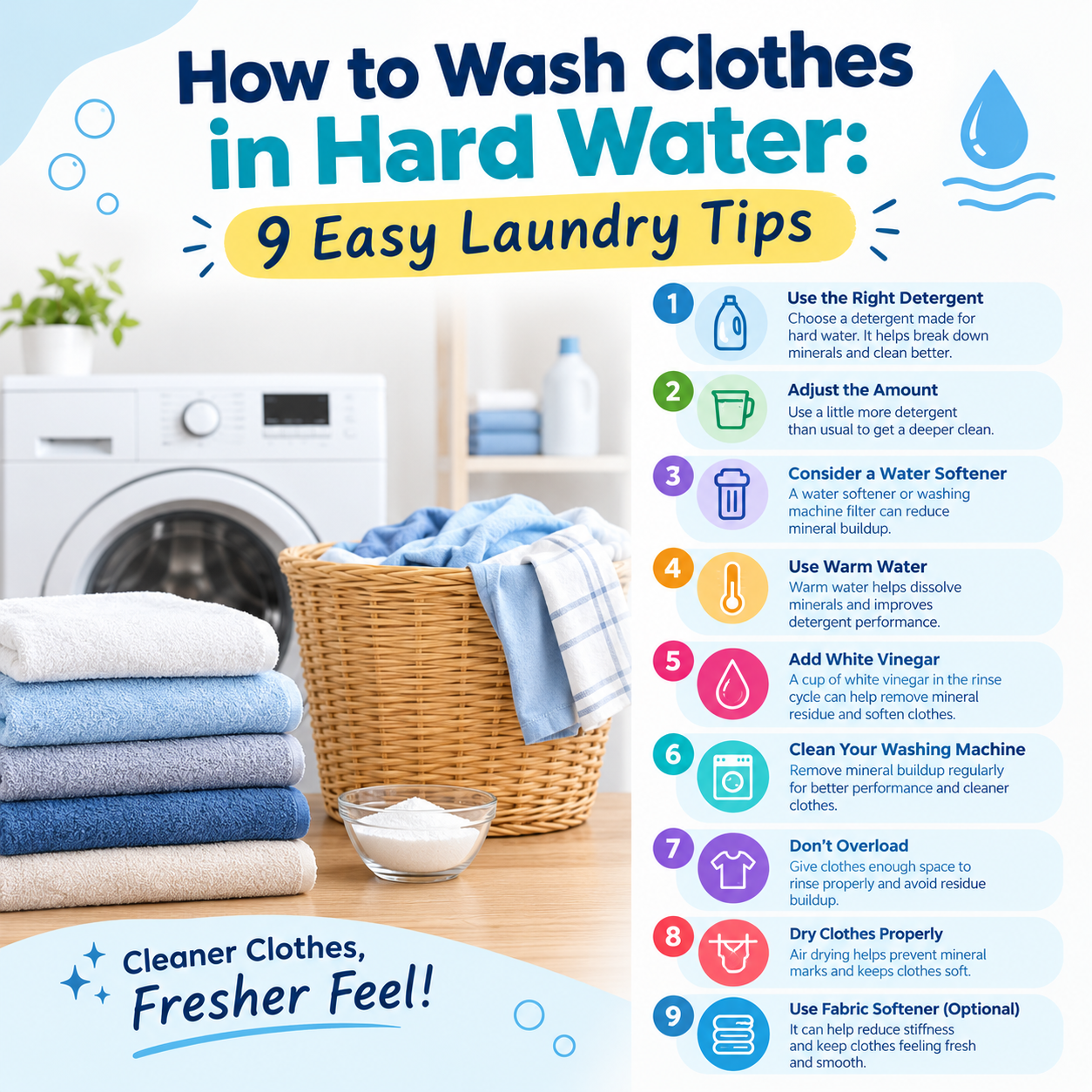
Do your clothes feel stiff after washing, look dull even when they are clean, or show white marks after coming out of the washing machine? Hard water could be contributing to the problem. Washing clothes in hard water can be challenging because it contains minerals that interfere with cleaning and may leave deposits on fabrics and inside your washing machine.The good news is that you can improve your laundry results with a few simple changes. In this guide, you will learn how to wash clothes in hard water, choose the right detergent, reduce residue, and keep your clothes feeling fresh and comfortable. What Is Hard Water? Hard water is water that contains relatively high levels of dissolved minerals, particularly calcium and magnesium. These minerals occur naturally as water moves through rocks and soil. Water hardness varies by location and water source. Hard water is generally safe to use for everyday household tasks, but it can make cleaning more difficult. The minerals can react with traditional soap, reduce lather, and contribute to deposits on fabrics and household surfaces. The U.S. Geological Survey explains that water hardness is mainly determined by its dissolved calcium and magnesium content. How Does Hard Water Affect Laundry? If your laundry does not look or feel as clean as you expect, your water quality may be one factor. Common hard-water laundry problems include: Stiff or rough clothes: Mineral and detergent residues may build up on fabric fibres. Dull-looking whites: Deposits and trapped soil can make white garments appear grey or less bright. White marks on dark clothes: Undissolved detergent or mineral deposits may leave visible streaks. Reduced cleaning performance: Hard water can interfere with some cleaning ingredients, especially in products not designed for the water conditions. Unpleasant lingering odours: Residue and trapped soil may contribute to laundry that does not smell fresh. Mineral buildup in the washing machine: Hard water can contribute to scale on internal components over time. These symptoms can have other causes too, such as overloading the washer, using too much detergent, or leaving damp clothes in the machine. Check your laundry routine before assuming hard water is the only cause. How to Tell If You Have Hard Water You do not need to guess. Look for a few common signs around your home: White, chalky deposits on taps, showerheads, or kettles. Soap that produces less lather than expected. Clothes or towels that regularly feel rough after washing. Recurring residue on laundry or scale inside appliances. For a more reliable answer, check your local water supplier’s quality report or use a water-hardness test kit. A simple soap-and-water bottle test can offer a rough indication, but it does not measure hardness accurately. How to Wash Clothes in Hard Water: 9 Practical Tips 1. Choose a Detergent Suitable for Hard Water Start by choosing a quality laundry detergent that is formulated to work with your water conditions. Many modern detergents contain ingredients designed to help manage hardness minerals and support cleaning performance. Read the product label to see whether dosage recommendations vary according to water hardness, load size, or soil level. A suitable formula can help you clean effectively without relying on excessive amounts of product. 2. Measure Your Laundry Detergent Correctly Using more detergent than recommended does not automatically make clothes cleaner. Excess detergent may be difficult to rinse away and can contribute to residue, especially when the washing machine is overloaded. Follow the dosing instructions on your detergent packaging. Consider the water hardness, the size of your load, and how dirty the clothes are. If your detergent provides a separate dosage for hard water, use that guidance rather than guessing. 3. Consider a Laundry Water-Softening Booster A laundry water-softening booster can help manage calcium and magnesium in hard water. Some products are designed to improve detergent performance and reduce mineral-related residue. Choose a booster specifically labelled for laundry and follow its instructions. Check fabric-care labels and product compatibility before use, especially for delicate garments. Do not combine cleaning products unless their labels say they can be used together. 4. Avoid Overloading Your Washing Machine Clothes need enough room to move freely through the water. An overloaded drum can prevent detergent from distributing evenly and make rinsing less effective. Leave sufficient space in the drum, follow your machine’s load recommendations, and separate heavily soiled items when necessary. Smaller, properly loaded washes can help reduce detergent residue and improve cleaning. 5. Select the Right Wash Cycle and Temperature Choose a cycle and temperature that suit the fabric, soil level, and detergent instructions. Warm water may help with some oily soils when the garment care label permits it, while cold water is often suitable for everyday laundry and many coloured fabrics. Hotter water does not remove water hardness. Avoid using high temperatures simply to compensate for hard water, because heat can shrink, fade, or damage certain fabrics. 6. Add an Extra Rinse When Needed If clothes repeatedly come out with detergent streaks or feel soapy, try an additional rinse. This may help remove excess detergent and loosened residue from the fabric. An extra rinse is not a permanent solution for very hard water, but it can be useful while you adjust detergent dosage and washing-machine settings. If residue continues, review the load size and detergent instructions as well. 7. Treat Stiff Towels and Rough Clothes Carefully Hard-water minerals and leftover detergent can contribute to towels feeling stiff or scratchy. Begin by washing towels in a correctly sized load and using the recommended detergent amount. A laundry water-softening product may help if mineral deposits are the main issue. Avoid using too much fabric softener, which can build up on towels and reduce their absorbency. Always follow the towel care label. 8. Use Vinegar Carefully and Never Mix Cleaning Products White vinegar is often suggested as a home remedy for hard-water laundry, but it is not the best solution for every fabric or washing machine. Frequent or concentrated use may affect some materials, machine components, or manufacturer warranties.
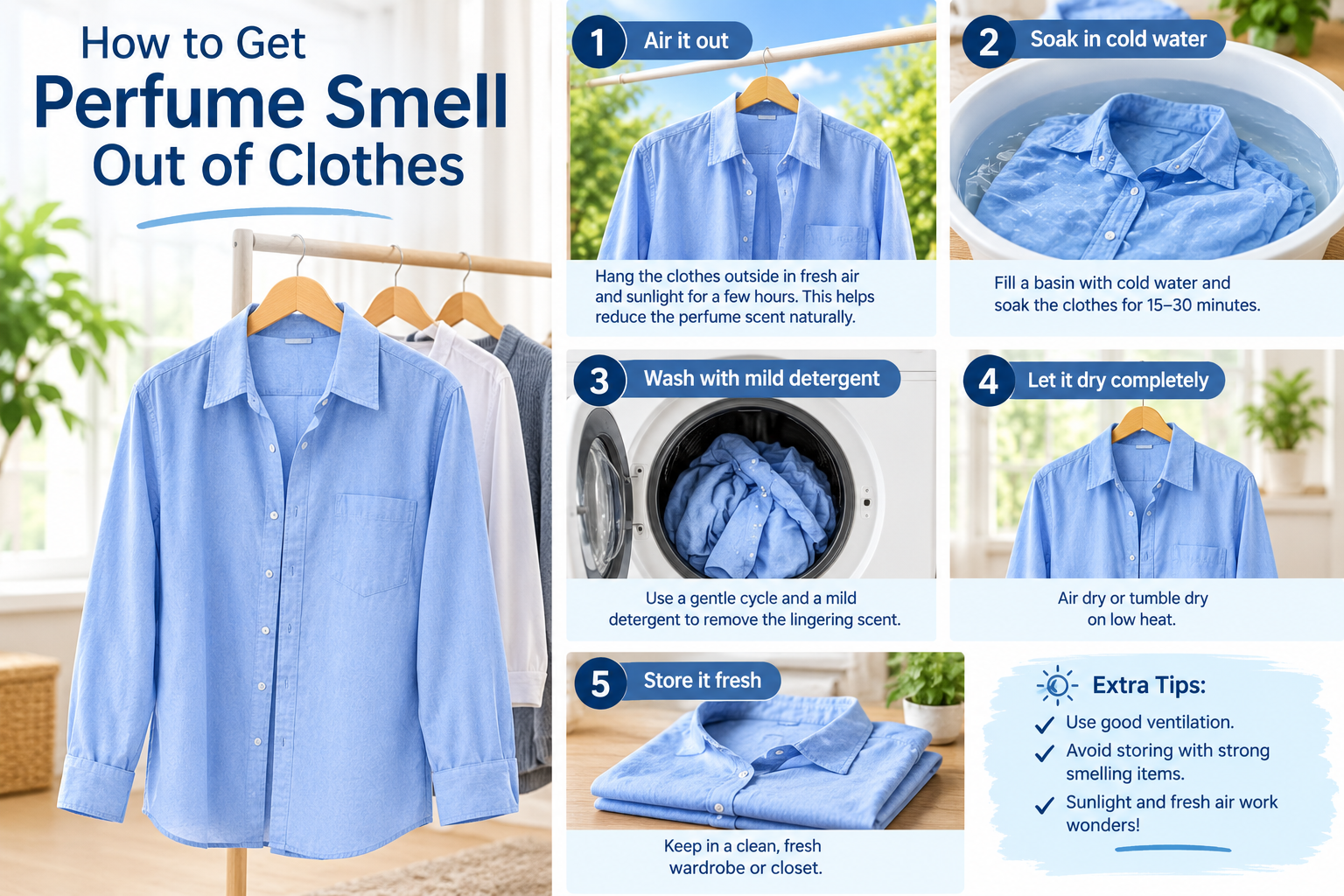
How to Get Perfume Smell Out of Clothes Perfume can leave a strong, lingering scent on clothes long after you have sprayed it. Whether you accidentally used too much fragrance, borrowed a scented garment, or washed your clothes and noticed that the smell remains, the right laundry method can help freshen your clothing without damaging the fabric. Learning how to get perfume smell out of clothes starts with choosing a method that suits the material. Some garments only need fresh air, while others benefit from a careful wash with a suitable laundry detergent. In this guide, you will learn how to remove perfume odor from clothes, what to do when you cannot wash a garment, and how to prevent strong fragrance from lingering after laundry. Why Does Perfume Smell Stay on Clothes? Perfumes and colognes contain fragrance compounds, and many formulas also contain oils and ingredients that help the scent last. Some of these compounds can remain on fabric after the alcohol in the perfume evaporates. Several factors can make the smell last longer: Heavy application: Spraying perfume repeatedly onto one area can leave more fragrance residue. Fabric type: Synthetic materials, wool, and other textured fabrics may retain certain fragrance compounds. Body oils: Perfume can mix with skin oils, sweat, and other residues on collars and cuffs. Insufficient washing: A short or overloaded wash cycle may not remove all the residue. Fragranced laundry products: Scented detergent or fabric softener can add more fragrance instead of helping you achieve a neutral smell. The best approach is to remove the lingering fragrance rather than cover it with another perfume or fabric spray. 1. Air Out the Clothes First Fresh air is the simplest way to begin removing perfume smell from clothes. If the fragrance is light, ventilation may reduce the scent without requiring a full wash. Hang the garment on a clean hanger. Place it in a well-ventilated area with good airflow. Leave it for several hours and check whether the fragrance has faded. Keep delicate or brightly colored fabrics away from prolonged direct sunlight. This method works best when the perfume was applied recently and the smell is not too strong. If the fragrance remains, move on to a fabric-appropriate cleaning method. 2. Wash the Garment With a Suitable Laundry Detergent For washable clothing, a properly measured laundry detergent and a suitable washing cycle are usually the best next steps. Washing helps remove fragrance residue, skin oils, and other substances that may hold the scent. Follow these steps: Read the garment’s care label. Check the clothing for visible perfume stains or oily spots. Separate delicate items from heavy garments. Use a suitable detergent according to the product instructions. Select the water temperature and washing cycle recommended for the fabric. Use an extra rinse if the garment still contains detergent or fragrance residue and the care instructions permit it. A fragrance-free detergent can be useful if your goal is to avoid adding another scent. Clean Laundry Detergent™ may be used when its product directions are suitable for the garment and your laundry needs. Do not add extra detergent in an attempt to overpower the perfume. Excess detergent can leave residue and may make rinsing more difficult. 3. How to Remove Perfume Smell From Clothes Without Washing If you cannot wash a garment immediately, there are a few ways to help reduce lingering perfume odor. Choose the method according to the fabric and always follow the garment’s care label. Try these options: Ventilation: Hang the garment in a well-ventilated room for several hours. Garment steaming: Use a steamer only if the fabric and care instructions permit it. Steam is not suitable for every material or garment construction. Odor-absorbing materials: Place an open container of baking soda or an activated-charcoal odor absorber near the garment in a closed storage space, keeping the material away from the fabric. Fabric-safe odor remover: Use a product specifically designed for the garment’s material and follow its directions. These approaches may reduce mild fragrance, but they may not completely remove a heavy perfume smell. If the item is washable and the scent persists, laundering is usually more thorough. Avoid spraying alcohol, vodka, vinegar, or other homemade mixtures directly onto clothing without checking fabric compatibility. These substances can affect dyes, finishes, and delicate fibers. 4. Use White Vinegar Carefully Some people use white vinegar as part of their laundry routine to help with certain lingering odors. However, vinegar is not a guaranteed solution for every perfume formula or fabric. If you want to try it, check your garment and washing machine instructions first. Test fabric compatibility where appropriate and follow the appliance manufacturer’s guidance on additives. Never mix vinegar with chlorine bleach or bleach-containing products. Do not apply undiluted vinegar directly to delicate or color-sensitive fabric. Avoid using vinegar on garments whose care instructions prohibit it. Do not combine vinegar and baking soda expecting a stronger cleaning effect; they react with one another and largely neutralize each other. For many everyday garments, a correctly measured detergent wash followed by thorough rinsing is a simpler first choice. 5. Try Baking Soda for Suitable Garments Baking soda is commonly used to help absorb some unwanted odors. It may be useful as an odor-control aid, but results vary, and it will not remove every fragrance compound. For a washable garment, check the care instructions before adding any laundry booster. If the fabric and machine instructions allow baking soda, use it sparingly and according to appropriate product guidance. For a garment that should not be washed, avoid rubbing baking soda directly into delicate fabric. Instead, place an open container of baking soda nearby in a suitable enclosed space without letting the powder touch the garment. Keep baking soda away from damp fabric, and make sure no powder remains on clothing before wearing it. If you are unsure how the material will react, use ventilation or professional cleaning instead. 6. Remove Perfume Smell From Shirts and Collars Perfume may linger around shirt collars, necklines,
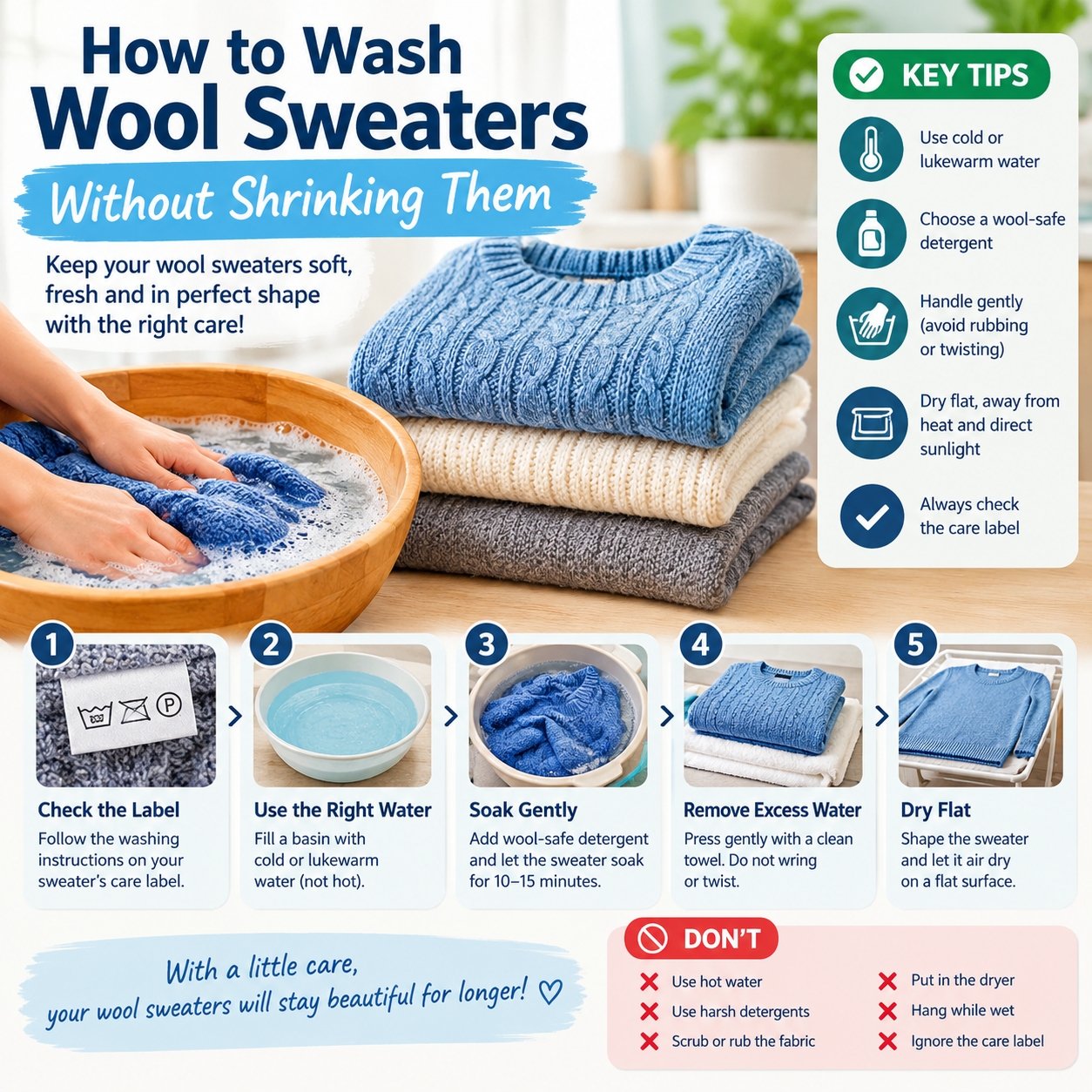
Wool sweaters are warm, comfortable, and timeless, but washing them incorrectly can cause shrinking, stretching, or loss of shape. Fortunately, learning how to wash wool sweaters without shrinking them is easier than you might think. With the right water temperature, a suitable detergent, and gentle handling, you can keep your favorite knitwear looking good for years. Whether you own merino wool, lambswool, or a delicate knitted sweater, the most important rule is to check the care label before washing. Some wool garments are machine washable, while others require hand washing or professional dry cleaning.In this guide, you will learn how to hand-wash wool sweaters, choose the correct washing machine settings, dry wool safely, and avoid common mistakes that can damage delicate fibers. Quick Answer: How Do You Wash Wool Sweaters Without Shrinking Them? To wash wool sweaters without shrinking them, use cool or lukewarm water, a mild detergent designed for wool, and gentle handling. Hand washing is a suitable option for many delicate wool garments. If the care label allows machine washing, choose the wool or delicate cycle and follow the recommended temperature. After washing, gently press out excess water, reshape the sweater, and dry it flat away from direct heat. Never assume that every wool sweater is suitable for machine washing or tumble drying. Why Do Wool Sweaters Shrink? Wool fibers have a naturally scaly surface. When wool is exposed to heat, moisture, and excessive movement, the fibers can become entangled and lock together. This process is known as felting, and it can make a sweater smaller, thicker, and less flexible. Several common laundry mistakes increase the risk of shrinkage: Hot water: High temperatures can contribute to fiber damage and felting. Excessive agitation: Vigorous washing, rubbing, and twisting can cause wool fibers to interlock. High dryer heat: Tumble drying can shrink or distort garments that are not approved for that method. Incorrect detergent: Harsh laundry products may damage delicate wool fibers. Improper drying: Hanging a heavy, wet sweater can stretch its shoulders and distort its shape. The safest approach is to follow the care label, control the water temperature, minimize friction, and dry the sweater carefully. What You Need to Wash a Wool Sweater Before you begin, gather a few basic supplies to make washing easier and safer. A clean sink, basin, or suitable washing machine Cool or lukewarm water, according to the care label A mild wool-specific detergent Two clean, absorbent towels A flat drying rack or another clean, ventilated surface A mesh laundry bag if machine washing is permitted A specialized wool detergent is a good choice because it is formulated for delicate wool garments. Follow the product instructions and avoid bleach or harsh cleaning products unless the garment manufacturer specifically approves them. How to Hand-Wash a Wool Sweater Step by Step Hand washing can help minimize friction and gives you greater control over the cleaning process. It is a good option for many delicate sweaters, provided the care label permits hand washing. Step 1: Check the Care Label Read the washing instructions before adding water. Look for guidance on hand washing, machine washing, water temperature, and drying. If the label says dry clean only, follow that instruction or consult a professional cleaner rather than assuming home washing is safe. Step 2: Fill a Basin With Cool or Lukewarm Water Fill a clean basin with water at the temperature recommended on the garment label. Avoid hot water and sudden temperature changes between washing and rinsing. Maintaining a consistent, gentle temperature helps reduce the risk of felting and unwanted changes in the sweater’s shape. Step 3: Add Wool-Safe Detergent Add the recommended amount of wool detergent to the water and mix it gently. Using too much detergent can make rinsing more difficult, so follow the instructions on the bottle. Step 4: Submerge and Soak the Sweater Turn the sweater inside out and lower it into the water. Gently press it beneath the surface until the fibers are wet. Allow it to soak for approximately 10 minutes, or follow the detergent and garment instructions. Avoid scrubbing, rubbing, or repeatedly moving the sweater around. Gentle soaking is generally sufficient for ordinary dirt and light odors. Step 5: Rinse Gently Drain the soapy water and rinse the sweater using clean water at a similar temperature, following the garment and detergent instructions. Gently press the fabric to release detergent rather than twisting or wringing it. Continue until the water is clear and excess detergent has been removed, unless you are using a wool wash specifically designed not to require rinsing. Step 6: Remove Excess Water Without Wringing Support the sweater with both hands when lifting it from the basin. Wet wool can stretch under its own weight, so avoid lifting it by the shoulders or sleeves. Place the sweater on a clean towel, roll the towel and sweater together, and gently press to absorb excess moisture. Do not twist the roll or wring the garment. Can You Machine-Wash Wool Sweaters? Yes, some wool sweaters can be machine-washed safely, but only when the care label permits it. Machine-washable wool garments are designed to tolerate the specified washing conditions when the instructions are followed. For a machine-washable wool sweater, use these precautions: Turn the sweater inside out before washing. Place it in a mesh laundry bag if suitable for the garment. Use a wool-specific detergent and the recommended quantity. Select the wool cycle or an appropriate delicate cycle. Use the water temperature specified on the care label. Choose a low spin speed if permitted by the garment instructions and machine settings. Wash with similar delicate items rather than rough fabrics, zippers, or heavy garments. A standard washing cycle can create too much heat and friction for untreated wool. When the label is missing or the washing instructions are unclear, hand washing is not automatically safe either; seek the manufacturer’s guidance or choose a professional cleaner if the sweater is valuable or particularly delicate. How to Dry Wool Sweaters Without Stretching Them Drying is
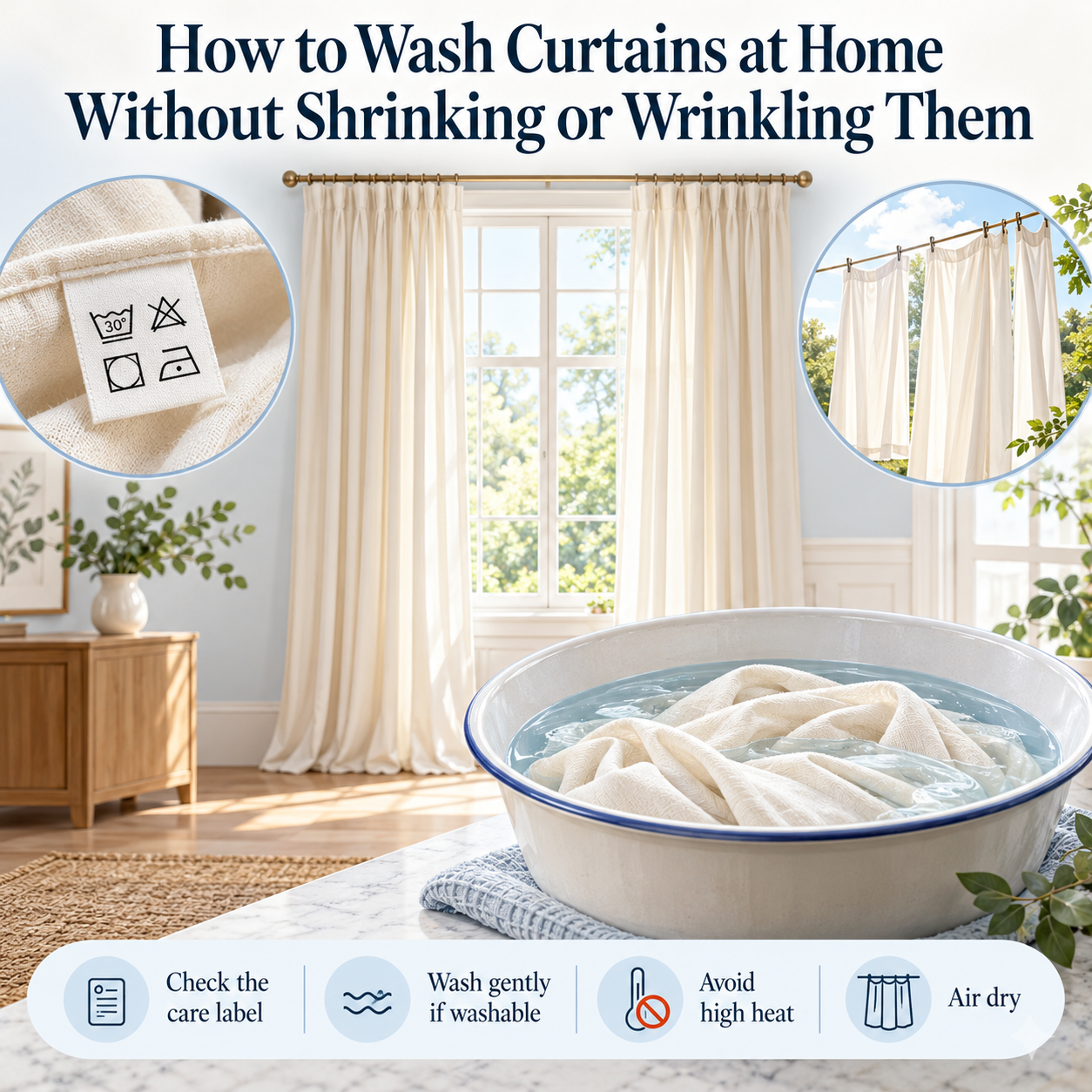
Curtains soak up dust, cooking smells, pet hair and pollen all year long. Yet most people put off washing them because they are afraid of ruining the fabric. If you have been wondering how to wash curtains at home without shrinking or wrinkling them, you are in the right place. With the right prep, the right settings and a smart drying method, you can freshen up almost any curtain safely and save money on dry cleaning. In this step-by-step guide, you will learn how to machine wash and hand wash curtains, how to protect different fabrics, and how to dry and de-wrinkle them so they hang perfectly. Why You Should Wash Your Curtains Regularly Curtains work like giant filters for your home. They trap dust, allergens, smoke and grease, which can leave them smelling stale and looking dull. Kitchen curtains, curtains in smoking households and curtains in homes with pets need extra attention. As a general rule, give curtains a quick dusting or vacuuming once or twice a month. Then plan a deeper wash about two to three times a year. If anyone in your home has allergies, wash them a little more often. Before You Start: Check the Care Label First, always read the care label. It tells you the safe water temperature, whether machine washing is allowed and whether the curtains are dry clean only. If the label says “dry clean only,” or if your curtains are heavily lined, thermal, or have glued trims, professional cleaning is the safest choice. Also, test a hidden corner first. Dab a little diluted detergent on an inside hem and wait a few minutes. If the color bleeds, do not wash the curtains at home. What You Need to Wash Curtains at Home A mild, gentle liquid detergent (avoid bleach and harsh stain removers) A soft brush or a vacuum with a soft attachment A large laundry basin or clean bathtub (for hand washing) A mesh laundry bag (optional, for delicate or lace panels) A steamer or iron with a low heat setting A sturdy hanger, curtain rod or clothes airer for drying Step 1: Take Down the Curtains and Remove the Hardware Start by taking the curtains down carefully. Next, remove every hook, ring, pin and weight. Metal pieces can snag the fabric, scratch your washing machine drum and cause damage during the spin cycle. Eyelet curtains can usually stay as they are, but check the label first. Step 2: Shake Off and Vacuum the Dust Then take the curtains outside and give them a good shake. After that, use a vacuum with a soft brush attachment on a low setting to lift loose dust from the surface and the folds. This simple step keeps dirt from turning into muddy water in the wash, so your curtains come out cleaner. Step 3: Treat Stains Gently Spot treat any marks before washing. Use a damp cloth with a drop of mild detergent and blot the stain gently. Do not rub hard, because rubbing can damage the fibers and leave a faded patch. Rinse the spot with cool water afterward. How to Wash Curtains in the Washing Machine Without Shrinking Them Machine washing works best for lightweight curtains made of cotton blends and polyester. Follow these settings to avoid shrinking: Load: Wash only one or two panels at a time. An overloaded drum cannot clean properly and increases creasing. Cycle: Choose the delicate, hand wash or curtain cycle. Temperature: Use cold or lukewarm water, around 30°C (86°F). Heat is the biggest cause of shrinkage. Spin speed: Select a low spin, ideally 400 to 600 rpm, or skip the spin entirely for delicate fabrics. Detergent: Use a small amount of mild liquid detergent and add an extra rinse to remove all the residue. Lastly, wash light and dark curtains separately so the colors do not transfer. How to Hand Wash Curtains Hand washing is the best choice for delicate materials, older curtains and anything you are nervous about. It takes more effort, but it greatly reduces the risk of shrinking. Fill a clean bathtub or large basin with cool water and add a little mild detergent. Place the curtains in the water and press them down gently so they are fully soaked. Swish the fabric softly for a few minutes. Do not scrub or twist it. Let the curtains soak for about 15 to 30 minutes if they are very dusty. Drain the water and rinse with clean, cool water until no suds remain. Press out the water gently. Never wring the fabric, because wringing creates deep wrinkles and stretches the fibers. Be aware that very heavy curtains are hard to hand wash because they hold so much water and take a long time to dry. How to Wash Different Types of Curtains Not every fabric reacts the same way, so use this quick guide: Cotton curtains: Cotton shrinks easily. Wash in cool water on a delicate cycle and never use the dryer. Linen curtains: Use cold water and a low spin. Linen creases quickly, so take it out of the machine right away and hang it while still damp. Polyester curtains: These are the most forgiving. A gentle machine wash in cool water works well, and they wrinkle less. Velvet curtains: Some cotton velvets can handle a cool wash without spinning, but many need professional cleaning. Check the label first. Sheer and lace curtains: Place them in a mesh bag and use the most delicate cycle available. Silk curtains: Do not machine wash or steam them. Choose professional dry cleaning. Lined or blackout curtains: Wash by hand in cool water or send them to a cleaner, since the backing can crack or peel. Can You Steam Clean Curtains Instead? Yes, and steaming is a great option for heavy curtains that are too big for the machine. A steamer kills bacteria, removes odors and loosens dust without taking the curtains down. Work from top to bottom and keep the steamer a few inches
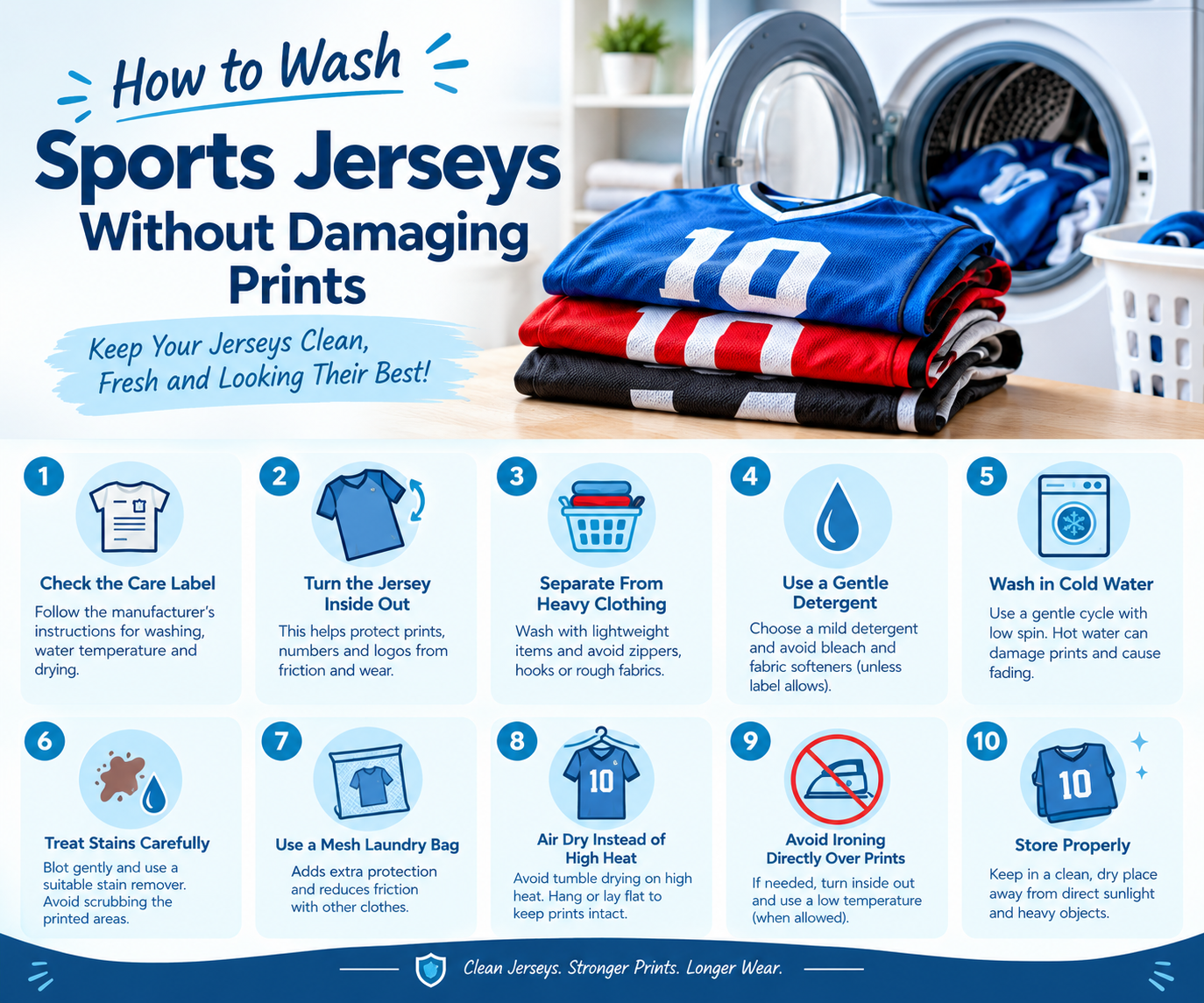
How to Wash Sports Jerseys Without Damaging Prints Sports jerseys are designed for movement, sweat, and regular wear, but their printed numbers, team logos, names, and decorative details need special care. Washing them incorrectly can cause peeling, cracking, fading, shrinking, or damage to delicate fabrics. Whether you wear a football jersey, basketball uniform, soccer shirt, or another type of sportswear, learning how to wash sports jerseys properly can help keep them fresh, comfortable, and looking their best. With the right washing method, a suitable detergent, and careful drying, you can clean your jerseys while helping protect their prints. Why Do Sports Jersey Prints Get Damaged? Sports jerseys often feature heat-applied numbers, vinyl lettering, screen-printed graphics, embroidered logos, and lightweight synthetic fabrics. These materials may react differently to heat, friction, and certain cleaning products. High temperatures: Hot water and high dryer heat can weaken some print adhesives and affect certain fabrics. Aggressive washing: Excessive friction can wear down printed designs and damage delicate stitching. Harsh cleaning products: Bleach and unsuitable stain removers may discolor fabrics or damage graphics. Incorrect drying: Direct high heat can cause some prints to crack, peel, or lose their finish. Leaving sweat untreated: Sweat, body oils, and dirt can build up and cause persistent odors or stains. 1. Check the Care Label Before Washing Before putting your jersey in the washing machine, read the manufacturer’s care label. It provides important instructions about water temperature, washing methods, drying, and any restrictions. Most polyester sports jerseys can be machine-washed, but some have special finishes, delicate embellishments, or construction details that require extra care. Check whether the label recommends machine washing or hand washing, a specific water temperature, a gentle cycle, or air drying. If the label says not to machine-wash the jersey, follow those instructions. 2. Turn the Jersey Inside Out One of the simplest ways to help protect jersey prints is to turn the garment inside out before washing. This places the printed surface on the inside, reducing direct contact with other clothes, zippers, buttons, and the washing machine drum. Turning your jersey inside out can help reduce friction against printed numbers and logos, protect lettering from unnecessary abrasion, and minimize surface wear during washing. Make sure the jersey is fully turned inside out, including the sleeves, before placing it in the machine. 3. Separate Jerseys From Heavy Clothing Sports jerseys are often lightweight, while jeans, towels, hoodies, and other heavy garments can create extra friction during a wash cycle. Wash jerseys with similar lightweight clothing whenever possible. Avoid washing them with garments that have exposed zippers, hooks, rough fasteners, or abrasive materials. If you have several jerseys, avoid overcrowding the washing machine. Clothes need enough room to move freely for effective cleaning and rinsing. 4. Choose a Gentle Detergent Choosing a suitable laundry detergent is important when cleaning printed sportswear. A detergent designed for routine laundry can help remove sweat, body oils, and everyday dirt without requiring aggressive scrubbing. Choose a detergent suitable for the jersey’s fabric and care instructions. Measure the detergent according to the product directions. Avoid chlorine bleach unless the garment label and product instructions specifically permit its use. Avoid fabric softeners if the jersey manufacturer advises against them, particularly for performance fabrics designed to manage moisture. Do not combine cleaning chemicals. Clean Laundry Detergent™ can be considered as part of your regular laundry routine when its product directions are suitable for the jersey’s fabric and care requirements. 5. Wash Sports Jerseys in Cold Water Cold water is generally a good choice for machine-washable sports jerseys because it can help reduce the risk of heat-related damage and color fading. Follow these steps for a gentle wash: Place the jersey inside out in the washing machine. Select cold water or the temperature specified on the care label. Choose a gentle or delicate cycle with a moderate or low spin setting. Add the appropriate amount of detergent. Allow the wash cycle to finish. Avoid unnecessarily long or aggressive wash cycles, especially for jerseys with heat-applied numbers, names, or logos. 6. Treat Sweat and Stains Carefully Sports jerseys can develop sweat marks, grass stains, mud, and food stains during games or training sessions. Treating stains before washing can improve cleaning results, but aggressive rubbing may damage the printed surface. Check the garment label and identify the stained area. Rinse or gently blot the stain with cool water, where appropriate. Apply a small amount of suitable detergent if the care instructions permit it. Let the product work according to its directions. Wash the jersey using the recommended cycle. Avoid scrubbing directly over printed numbers, logos, or lettering. For stubborn stains, test a suitable treatment on an inconspicuous area first. Never mix bleach, ammonia, or other cleaning chemicals. 7. Use a Mesh Laundry Bag for Extra Protection A mesh laundry bag can provide an additional layer of protection for delicate or valuable jerseys. It helps limit direct contact with other garments and reduces the chance of printed areas catching on fasteners. Turn the jersey inside out first. Place it loosely inside a suitable mesh laundry bag. Avoid squeezing multiple garments into one small bag. Select the appropriate gentle washing cycle. A mesh bag is particularly useful for jerseys with delicate detailing, although it cannot completely prevent damage caused by excessive heat, unsuitable chemicals, or incorrect washing settings. 8. Never Rush the Drying Process Drying is just as important as washing when it comes to protecting sports jersey prints. High dryer temperatures can damage some printed designs and may affect synthetic fabrics. For many jerseys, air drying is the gentlest option. Remove the jersey promptly after washing. Gently reshape it without pulling on the printed areas. Hang it on a suitable hanger or lay it flat, depending on the fabric and garment construction. Keep it away from direct heat. Allow it to dry completely before storing. Avoid wringing the jersey aggressively because this can stretch the fabric and put unnecessary stress on the graphics. If the care label
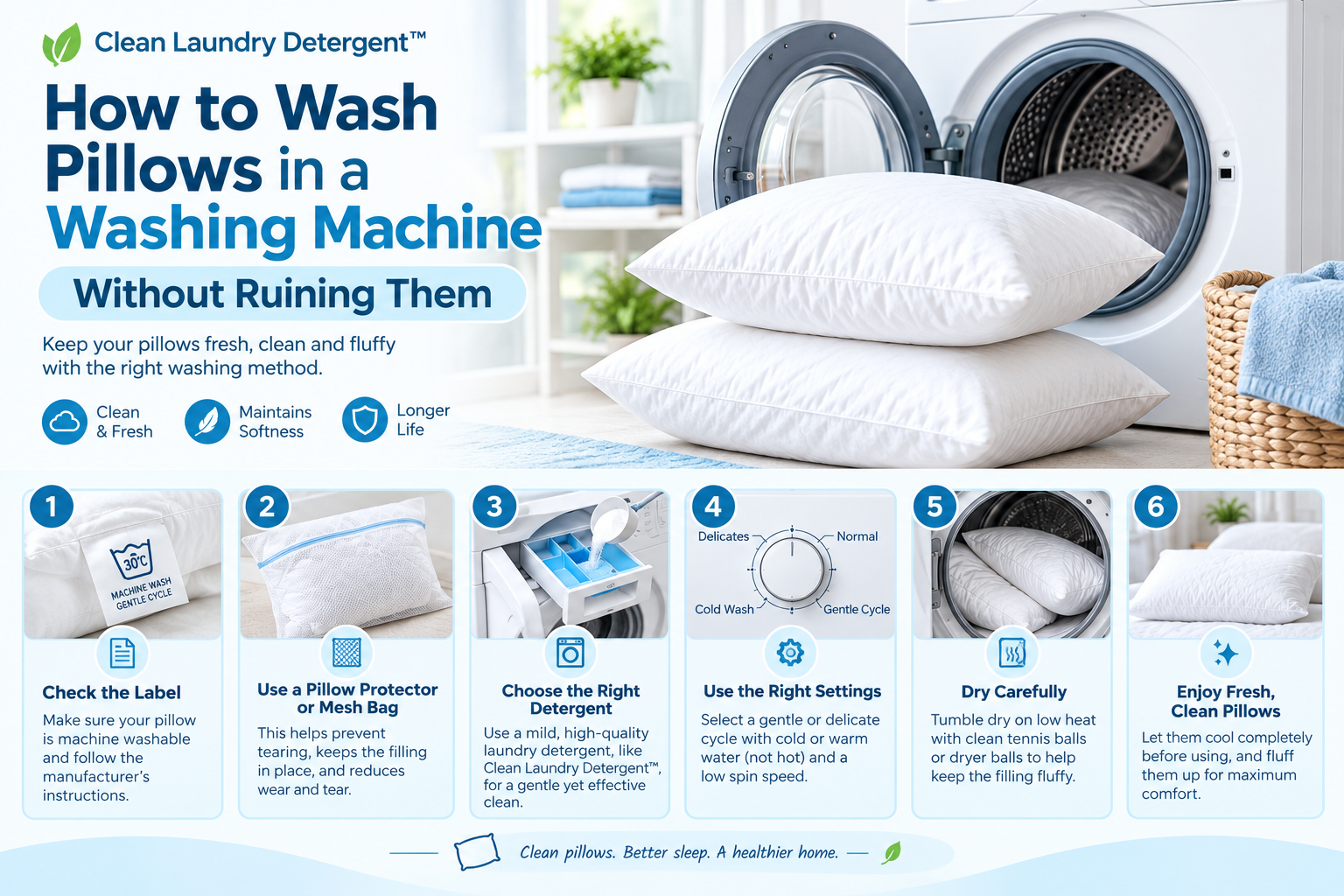
Knowing how to wash pillows in a washing machine can save you money and make your bed feel brand new. Over time, pillows collect sweat, skin oils, dust mites, and allergens, and they slowly turn yellow and flat. The good news is that most pillows can be washed at home. The catch is that the wrong cycle, too much detergent, or a rushed drying job can leave you with a lumpy, soggy mess. This guide walks you through exactly how to wash pillows the right way, for every pillow type. Quick answer: Most down, feather, and polyester pillows can be machine washed. Wash two pillows at a time to balance the load, use a gentle cycle with warm water and a small amount of mild detergent, run an extra rinse, then dry on low heat with dryer balls until fully dry. Memory foam and latex pillows should never go in the washing machine. In this guide Can You Wash All Types of Pillows in a Washing Machine? Short answer: no. Whether you can wash pillows in the washing machine depends on what is inside them. Always read the care label first, since it is the most reliable guide for your specific pillow. Pillow type Machine washable? Notes Down Yes (usually) Gentle cycle, mild detergent, dry thoroughly on low heat Feather Yes (usually) Same as down; can be heavier and slower to dry Polyester / fiberfill Yes Easiest to wash; check the label for temperature limits Memory foam No Spot clean or hand wash only; air dry flat Latex No Spot clean only; keep away from direct heat Buckwheat / microbead No (wash cover only) Remove the filling and wash the cover separately How Often Should You Wash Your Pillows? A good rule of thumb is to wash your pillows every 3 to 6 months. If you have allergies, sleep hot, eat or drink in bed, or share your bed with pets, wash them closer to every 3 months. A simple routine keeps pillows cleaner for longer: Pillowcases: weekly Pillow protectors: every 1 to 2 months Pillows: every 3 to 6 months Before You Start: What You Need Your pillows and their care labels Mild liquid detergent (free of bleach and heavy fragrance) A front-loading washer, or a top-loader without a center agitator Two or three clean dryer balls or tennis balls A stain remover or white vinegar for yellow patches (optional) Tip: Check the seams and fabric before washing. If you see tears or loose stitching, mend them first or the filling can leak and clog your machine. How to Wash Pillows in a Washing Machine: Step by Step Read the care label. Confirm the pillow is machine washable and note the maximum water temperature. Remove pillowcases and protectors. Wash these separately. Pre-treat stains. Dab a small amount of detergent or stain remover onto stained areas and let it sit for 10 to 15 minutes. Load two pillows at once. This balances the drum so the machine does not shake or go off-balance. If you only have one pillow, add a couple of clean towels to even out the load. Add a small amount of mild detergent. Use about half of what you would use for a normal load. Too much soap is hard to rinse out and leaves pillows stiff or clumpy. Choose a gentle cycle. Use warm water unless the label says otherwise. Run an extra rinse. Pillows hold on to detergent, so a second rinse helps remove all of it. Run an extra spin. This removes as much water as possible and speeds up drying. Dry thoroughly. See the drying section below. Never use a pillow that is still damp inside. What Temperature Should You Wash Pillows At? For most pillows, warm water on a gentle cycle cleans well without damaging the filling or fabric. Cold water is a safe choice for delicate pillows or when the label recommends it. Hot water can shrink some fabrics and damage certain fillings, so only use it if the care label allows it. Some synthetic pillows tolerate hotter water, which can help reduce dust mites. Best Detergent for Washing Pillows Look for a mild, liquid detergent that rinses clean. For down and feather pillows, a gentle or down-specific wash helps protect the natural oils in the feathers. Avoid: Bleach: it can weaken fabric and damage filling. Fabric softener: it coats fibers and can make pillows flat and less breathable. Heavy fragrances and harsh additives: these can linger and irritate sensitive skin. If you have sensitive skin or allergies, choose a fragrance-free, hypoallergenic formula. How to Wash Pillows by Type How to Wash Down Pillows Down pillows are delicate but wash well when handled gently. Use a mild detergent, a gentle cycle with warm water, and an extra rinse. Dry on low heat with dryer balls, and expect drying to take a while. Down must be completely dry or it can develop a musty smell. How to Wash Feather Pillows Feather pillows follow the same process as down. They tend to be heavier and may need more drying time. Fluff them by hand every 30 minutes during drying to prevent clumping. How to Wash Polyester and Fiberfill Pillows Polyester pillows are the most forgiving. A warm gentle cycle with mild detergent and an extra rinse works well. Dry on low to medium heat with dryer balls. Because synthetic fill can flatten over time, these pillows usually need replacing sooner than down. How to Wash a Memory Foam Pillow Do not machine wash memory foam. The agitation can tear the foam, and the foam soaks up water and may never dry properly, which leads to mold and odor. Instead: Remove the cover and wash it according to its own care label. Spot clean the foam with a damp cloth and a little mild detergent. If it needs a deeper clean, hand wash in lukewarm water and gently press (do not wring or twist) to release dirt. Rinse by pressing out soapy
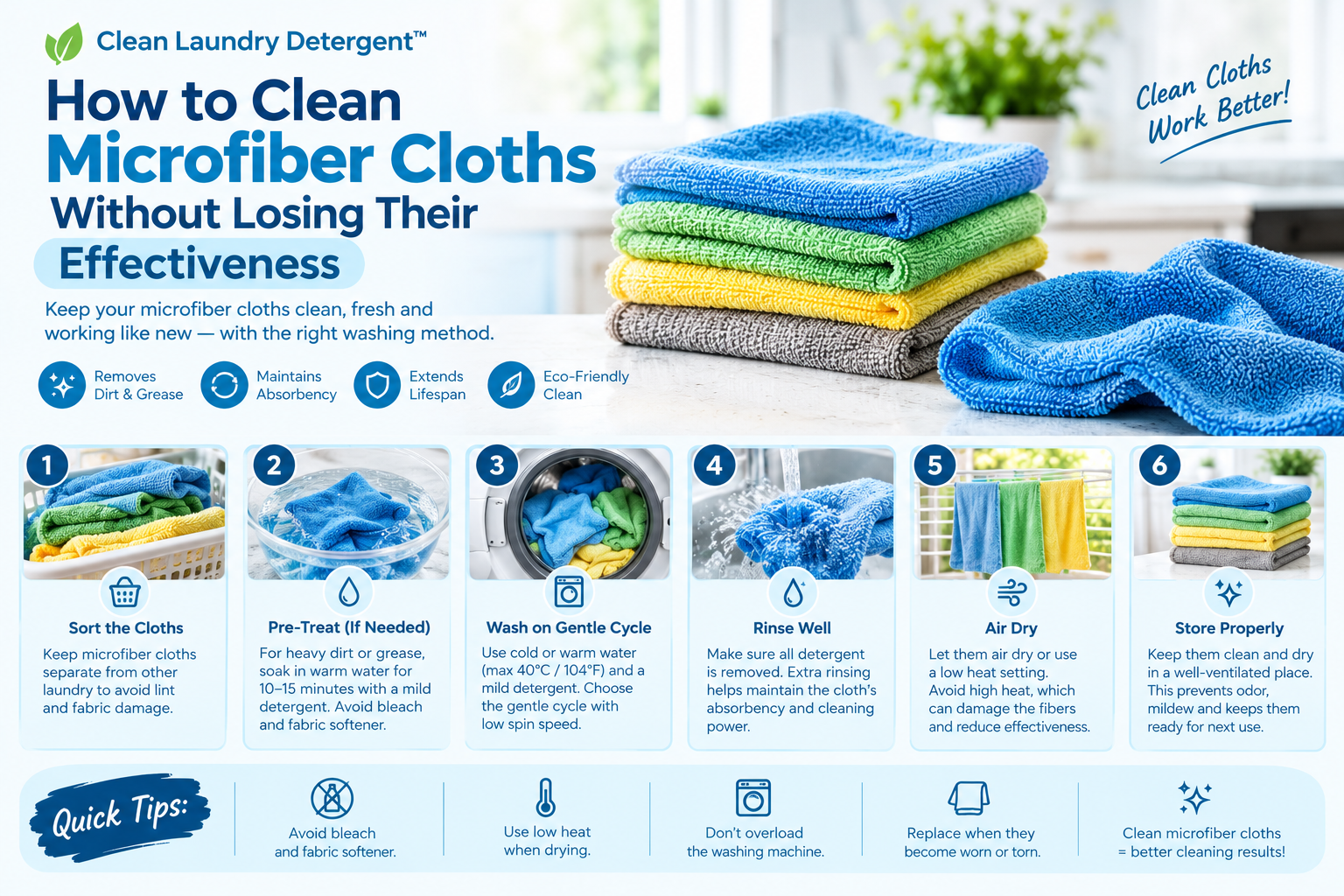
How to clean microfiber cloths without ruining them is one of the most common cleaning questions out there, and the answer is simpler than most people think. Microfiber cloths are reusable cleaning cloths that trap dust, grease, and bacteria far better than cotton rags. But wash them the wrong way, and they turn streaky, stiff, and useless. This guide covers microfiber cloth care from start to finish, so your cloths stay absorbent, soft, and streak-free for years. Whether you want to know how to wash microfiber cloths, how to wash microfiber towels for your car, or how to revive old microfiber cloths that stopped working, you will find a clear answer below. Moreover, you will learn how to clean microfiber cloths without losing effectiveness by avoiding the three biggest mistakes: fabric softener, bleach, and high heat. Quick answer: Wash microfiber cloths in warm water with a small amount of liquid, fragrance-free detergent. Skip fabric softener and bleach. Then air dry them or tumble dry on low heat. Why Microfiber Cloths Lose Their Effectiveness To understand cleaning microfiber cloths properly, it helps to know how they work. Microfiber is a blend of polyester and polyamide (nylon) fibers. During manufacturing, these fibers are split into thousands of tiny strands. These split fibers create a huge surface area and a natural static charge. That is why microfiber grabs dust and absorbs liquid so well. Over time, however, those split fibers get clogged. The most common causes are: Fabric softener residue that coats the fibers and blocks absorbency Detergent residue from using too much soap Grease and oil that build up from kitchen and car use Mineral deposits from hard water Excess heat that melts or flattens the fibers When the fibers are clogged, the cloth cannot trap dirt. Instead, it smears it around. That is why a microfiber cloth that is not cleaning well usually needs a proper wash, not a replacement. What to Avoid When Cleaning Microfiber Cloths Before the step-by-step instructions, here are the main things to avoid. These are the habits that cause most microfiber cloths to lose their effectiveness. Fabric softener and dryer sheets: They leave a waxy film on the fibers. Bleach: It breaks down the synthetic fibers. High heat: Very hot dryers can damage the fibers. Too much detergent: Extra soap leaves residue behind. Washing with lint-heavy items: Cotton towels shed lint that clings to microfiber. Can You Use Fabric Softener on Microfiber Cloths? No. This is the number one reason people ask why microfiber cloths stop working. A microfiber cloth ruined by fabric softener loses its ability to absorb water and attract dust. Fabric softener is designed to coat fibers with a silky layer. On a towel, that feels nice. On microfiber, it clogs the split fibers completely. So if you are wondering why you should not use fabric softener on microfiber, the short answer is this: softener fills the tiny gaps that make microfiber effective. The same goes for dryer sheets. If your cloths are already coated, do not worry. The restoring steps later in this guide can often fix them. Can You Use Bleach on Microfiber Cloths? It is best not to. Bleach weakens the polyester and polyamide fibers, which makes the cloth thinner and less effective. It can also discolor colored cloths. If you need to sanitize, use hot water or a dedicated disinfecting method instead (see the disinfecting section below). What Temperature to Wash Microfiber Cloths Warm water works best for most cloths. As a general rule, a warm cycle (around 40°C or 104°F) cleans well without stressing the fibers. A hot water wash can help with heavy grease or disinfecting, but always check the care label first, since some manufacturers recommend lower temperatures. Cold water is fine for lightly used cloths, though it removes oils less effectively. Best Detergent for Microfiber Cloths The best detergent for microfiber cloths is a gentle liquid detergent with no added softeners. Look for these features: Liquid formula: It rinses out more completely than powder. Fragrance-free and dye-free: Fewer additives mean less residue. No built-in fabric softener: Avoid “2-in-1” products. Eco-friendly and plant-based: These tend to be gentler and rinse cleaner. If you are shopping for the best laundry detergent for microfiber cloths, choose an eco-friendly laundry detergent that is also non-toxic and hypoallergenic. A plant-based, biodegradable laundry detergent is a good fit for sustainable cleaning, and fragrance-free laundry detergent is ideal for kitchen cloths and cleaning rags. In short, the best eco-friendly detergent for microfiber cloths is a laundry detergent without fabric softener, built for cleaning cloths and everyday laundry alike. How to Wash Microfiber Cloths in a Washing Machine (Step by Step) Here is the simplest way to clean microfiber cloths in a washing machine: Shake out loose dirt. Take the cloths outside and shake off dust and debris. Sort by color and use. Practice color separation, and keep heavily soiled cloths (grease, car wax) away from light-duty ones. Pre-rinse if needed. Rinse very greasy cloths in warm water first. Add a small amount of liquid detergent. One or two teaspoons is enough for a small load. Skip softener and bleach. Leave the softener compartment empty. Choose a warm, gentle cycle. Add an extra rinse if you have hard water. Remove promptly. Take the cloths out as soon as the cycle ends. Can You Wash Microfiber Cloths With Regular Laundry? It is possible, but not ideal. Microfiber attracts lint like a magnet, so washing it with cotton items leaves fuzz all over your cloths. That lint is also the reason some people ask why microfiber cloths leave lint on glass. For the same reason, avoid washing microfiber cloths with towels. If you must mix, wash them with other synthetic, low-lint items. Otherwise, run a separate load of microfiber only. It costs a little more time, but your cloths will last far longer. Can You Hand Wash Microfiber Cloths? Yes, hand washing works well, especially for a few cloths: Fill a basin with
“`html Blankets keep us warm and comfortable, but they can be surprisingly difficult to wash. The wrong temperature, washing cycle, detergent or drying method can leave a blanket lumpy, stiff, shrunken or damaged. Learning how to wash blankets correctly helps protect the fabric while keeping your blanket fresh, soft and comfortable. This guide explains how to wash blankets safely at home. You will learn how to check the care label, choose the right washing temperature, select a suitable cycle and dry your blanket properly. These simple steps can help prevent common problems such as uneven filling, stiffness, shrinking and fabric damage. How to Wash Blankets Safely Start by checking the care label before putting your blanket in the washing machine. Manufacturers provide specific instructions based on the fabric, filling and construction of the blanket. Remove loose dirt, hair and debris before washing. A gentle shake outdoors can help loosen dust and surface dirt. Pet hair can also be removed with a lint roller or soft brush. Next, check the blanket for stains, loose stitching or damaged areas. Small tears can become larger during washing, especially when the blanket is heavy and wet. Use a washing machine with enough space for the blanket to move freely. Overloading the drum can prevent proper cleaning and may place unnecessary stress on both the fabric and the machine. Check the Care Label First The care label is one of the most important sources of information when washing a blanket. It may recommend machine washing, hand washing or professional cleaning. Look for instructions about water temperature, washing cycles, bleach, drying and ironing. Following these instructions reduces the risk of shrinking, fading, stretching or damaging the material. Some blankets should never be placed in a washing machine. Wool, delicate fabrics and certain weighted or specially filled blankets may require different cleaning methods. Can You Wash a Blanket in a Washing Machine? Many everyday blankets can be washed in a washing machine, but the correct method depends on the material and size. Cotton, polyester and many fleece blankets are commonly machine washable. A large blanket needs enough room inside the drum for water and detergent to circulate. If the blanket fills the entire drum before washing begins, consider using a larger-capacity machine or a laundromat machine. Heavy blankets become much heavier when they absorb water. For this reason, always consider the washing machine’s capacity before starting a cycle. Choose the Right Water Temperature Water temperature can affect the cleanliness, appearance and lifespan of a blanket. Always follow the temperature recommendation on the care label whenever possible. Cold water is often a safe choice for many washable blankets. It can help reduce the risk of shrinking, fading and unnecessary fabric stress. Warm water may be suitable for some cotton or heavily soiled blankets. Hot water should only be used when the care label allows it because high temperatures can damage some fabrics or cause shrinkage. Choose the Right Washing Cycle A gentle or delicate cycle is often a good option for blankets that need careful handling. The lower agitation can help reduce stretching and unnecessary wear. Durable cotton blankets may tolerate a regular cycle when the care label permits it. Avoid choosing a stronger cycle simply because the blanket is large. When in doubt, select a gentler cycle and follow the manufacturer’s instructions. The goal is to clean the blanket without putting unnecessary stress on the fabric. Use the Right Detergent Choose a mild laundry detergent that suits the blanket’s material. Using too much detergent can leave residue behind, which may make the fabric feel stiff or dull. Follow the detergent manufacturer’s recommended amount for the size of the load. A heavily soiled blanket does not always need a large amount of detergent. Avoid bleach unless the care label specifically allows it. Harsh chemicals can weaken fibers, change colors or damage certain materials. How to Prevent Blankets From Becoming Lumpy Blankets with padding or filling can sometimes become uneven during washing. This problem is more common when the filling absorbs water and shifts inside the blanket. Use the recommended washing cycle and avoid overcrowding the machine. Giving the blanket enough room to move can help water and detergent circulate more evenly. After washing, inspect the blanket before drying it. Gently redistribute any filling that has moved into one area. For some filled blankets, several gentle drying cycles may work better than one very hot cycle. Always follow the care label because some materials should not be tumble dried. How to Prevent a Blanket From Becoming Stiff A blanket may feel stiff when too much detergent remains in the fabric. Excess detergent can be difficult to rinse away, especially when the blanket is thick. Use the recommended detergent amount and choose an additional rinse when appropriate. Proper rinsing helps remove detergent residue without adding unnecessary products. Drying also affects how soft a blanket feels. Allowing the blanket to dry completely can help prevent a damp, heavy or unpleasant texture. How to Wash a Large Blanket Large blankets require extra care because they can become heavy when wet. Before washing one, make sure the machine has enough capacity for the blanket to move freely. A large-capacity washing machine can provide better movement and rinsing than a small household machine. Laundromat machines may be useful when a blanket is too large for your home washer. Spread the blanket evenly inside the drum rather than forcing it into a tight ball. This arrangement can help reduce imbalance during the wash cycle. Once the washing cycle finishes, remove the blanket promptly. Leaving a heavy wet blanket sitting in the machine for a long time can encourage an unpleasant damp smell. How to Wash a Heavy Blanket Heavy blankets can place extra weight on a washing machine when soaked with water. Check the machine’s capacity before starting the wash. Use a suitable cycle recommended for the blanket’s fabric. A gentle cycle can be helpful when the material needs extra care. Balance the load