

How to Choose Laundry Detergent for Different Fabrics
How to Choose Laundry Detergent for Different Fabrics: The Complete Guide
Walking down the laundry aisle can feel overwhelming. Liquid or powder? Pods or concentrate? Natural or chemical? The truth is, the best laundry detergent for different fabrics isn’t a one-size-fits-all answer — cotton, silk, wool, denim, and synthetic blends all respond differently to the ingredients in your detergent. This guide breaks down exactly how to choose laundry detergent based on what’s in your hamper, so your clothes last longer and look better, wash after wash.
Why Fabric-Specific Detergent Matters
Every fabric has a different fiber structure, weave, and sensitivity to chemicals, heat, and agitation. Using the wrong product is one of the most common causes of premature fabric damage — think pilling, fading, stretching, or that scratchy feeling in towels that used to be soft. A little fabric-specific detergent knowledge goes a long way toward protecting your wardrobe and getting better cleaning results overall.
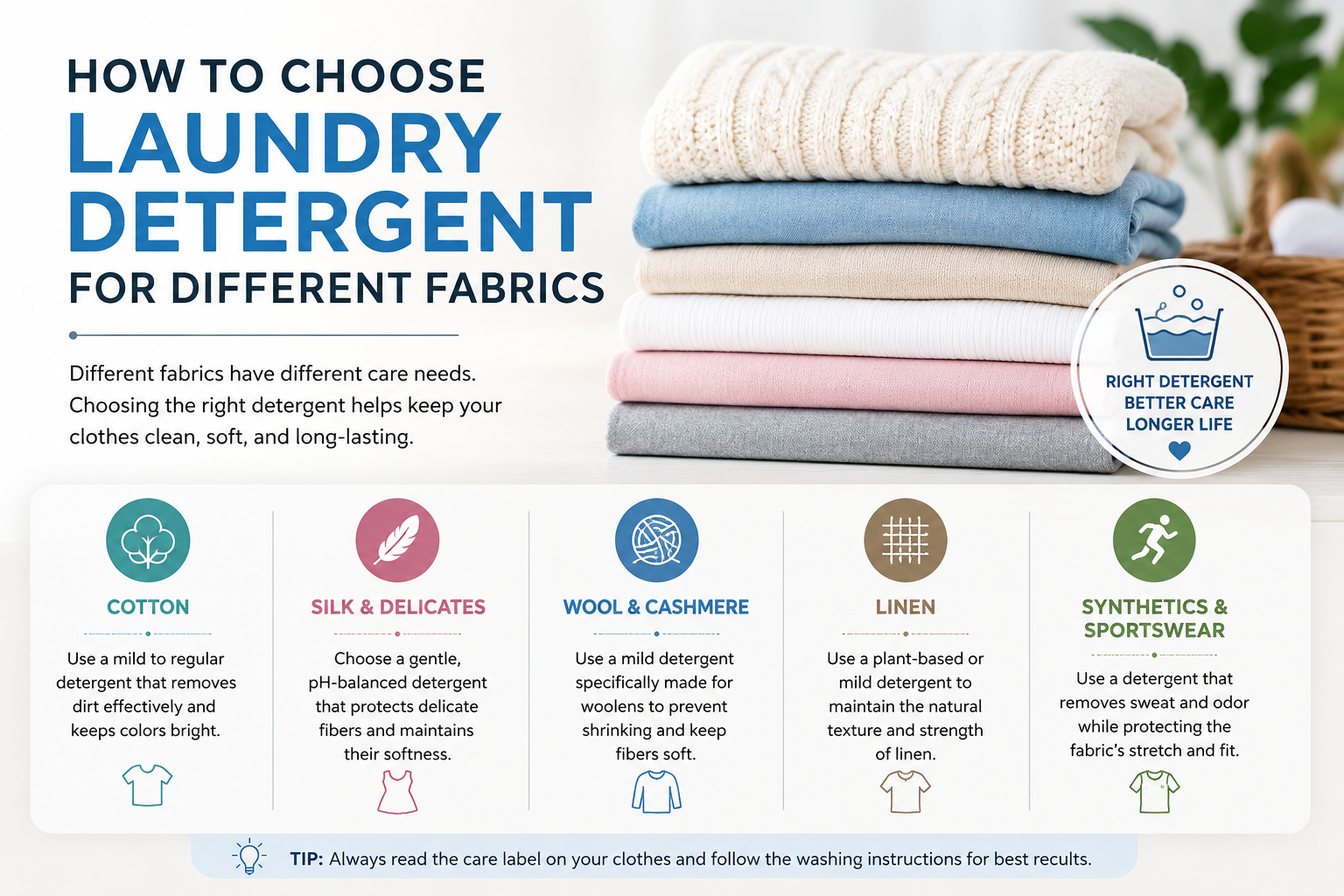
Best Detergent for Cotton Clothes
Cotton is durable and forgiving, so it tolerates most detergents well. For best results, look for a formula with enzymes to break down everyday stains like sweat, food, and grass. Both liquid and powder work fine on cotton, though powder tends to be more effective on ground-in dirt (like work clothes or kids’ play clothes).
Laundry Detergent for Silk
Silk is a protein-based fiber, which means standard detergents — especially those with enzymes or bleach — can break down the fibers and cause dullness or damage over time. Choose a gentle, pH-neutral detergent specifically labeled for delicates. Hand-washing or a delicate cycle in cold water is best.
Best Detergent for Wool
Like silk, wool is protein-based and reacts poorly to harsh alkaline detergents, which can cause shrinking, felting, or a rough texture. Use a wool-specific or delicate-fabric detergent, always in cold water, and avoid high agitation.
Detergent for Delicate Fabrics
Lace, lingerie, and sheer fabrics need a low-sudsing, gentle detergent without optical brighteners or heavy fragrance additives, which can weaken thin fibers. A mesh bag plus a delicate-cycle detergent is the safest combo.
Detergent for Synthetic Fabrics
Polyester, nylon, and spandex blends can trap odors and body oils more than natural fibers. Look for a detergent designed to cut through oil-based residue — many “sport” or “performance fabric” detergents are formulated exactly for this. Avoid fabric softener on synthetics, as it can reduce moisture-wicking properties.
Best Detergent for Denim/Jeans
Denim holds onto dye, so a detergent made for colored clothes (see below) helps prevent fading. Turning jeans inside out and washing in cold water preserves color longer, but the detergent formula matters just as much as water temperature.
Laundry Detergent for Linen
Linen is a natural fiber that softens with wear but can become brittle if over-treated with harsh chemicals. A mild, enzyme-based detergent without excessive bleach works best, paired with a gentle wash cycle.
Detergent for Activewear/Sportswear
Activewear fabrics are notorious for retaining odor because sweat and oils bond to synthetic fibers. Sport-specific detergents use surfactants designed to fully rinse away these residues — regular detergent often just masks the smell temporarily.
Best Detergent for Baby Clothes
Babies have sensitive skin, so a hypoallergenic laundry detergent free of dyes, fragrances, and harsh chemicals is essential. Look for dermatologist-tested labels and avoid fabric softeners, which can leave irritating residue.
Liquid vs. Powder Detergent: Which Should You Use?
- Liquid detergent dissolves easily in any water temperature and is great for pretreating stains directly on fabric.
- Powder detergent is often more cost-effective and works well on tough, ground-in stains, but can leave residue in cold water or on delicate fabrics.
- Detergent pods offer convenience and pre-measured doses but can be less flexible for smaller or partial loads, and aren’t ideal for delicate hand-washing.
For most households, a liquid detergent offers the most versatility across fabric types.
Choosing Based on Skin Sensitivity and Environmental Impact
- Best detergent for sensitive skin: Fragrance-free, dye-free formulas reduce the risk of irritation.
- Hypoallergenic laundry detergent: Ideal for eczema-prone skin, babies, or allergy sufferers.
- Eco-friendly laundry detergent: Plant-based surfactants and biodegradable packaging reduce environmental impact without sacrificing cleaning power.
- Detergent for hard water: Look for water-softening additives or increase your detergent dose slightly, since hard water minerals can prevent detergent from fully dissolving and rinsing out.
- Concentrated laundry detergent: Offers more washes per bottle and reduces plastic waste, though dosing accuracy matters more with concentrated formulas.
Problem-Solving: Protecting Fabrics and Colors
- How to wash delicate fabrics: Use cold water, a gentle/delicate cycle, and a mesh laundry bag.
- How to prevent fabric damage from detergent: Avoid overdosing detergent — excess product that doesn’t fully rinse out is a leading cause of fabric wear and skin irritation.
- How to remove stains without damaging fabric: Spot-test stain removers first, and choose enzyme-based detergents for organic stains (food, grass, blood) rather than bleach-based solutions.
- Best detergent for colored clothes: Look for “color-safe” formulas without optical brighteners, which are designed for white fabrics and can dull colored ones.
- Detergent for white clothes: Formulas with optical brighteners or mild bleach alternatives help keep whites looking bright over time.
Quick Laundry Tips for Different Fabrics
- Always check the care label before choosing detergent and wash temperature.
- Sort by fabric type, not just color, when possible.
- Use less detergent than you think you need — most people overdose.
- Cold water preserves both color and fiber integrity better than hot water in most cases.
- Air-dry delicates and wool to avoid heat damage from the dryer.
Frequently Asked Questions
What detergent is best for wool sweaters?
A wool-specific or delicate detergent with a neutral pH, used in cold water, is best. Avoid regular detergents with enzymes or bleach.
Can I use regular detergent on silk?
It’s not recommended. Regular detergent, especially with enzymes or brighteners, can weaken silk fibers and cause discoloration over time. Use a gentle, silk-safe formula instead.
What happens if you use the wrong detergent?
Using the wrong detergent can lead to fading, stretching, pilling, residue buildup, skin irritation, or permanently damaged fibers — especially on delicate or protein-based fabrics like silk and wool.
How much detergent should I use?
Follow the manufacturer’s dosing line on the cap or packaging, and adjust based on load size and water hardness. Using less than you think is usually the safer choice, since detergent residue itself can damage fabric and irritate skin.
Final Thoughts
Choosing the best laundry detergent for different fabrics isn’t about finding one “best” product — it’s about matching the formula to the fiber. A quick glance at care labels, combined with the right detergent type for cotton, silk, wool, denim, or synthetics, will keep your clothes looking newer for longer while protecting your skin and the environment.
One Response