


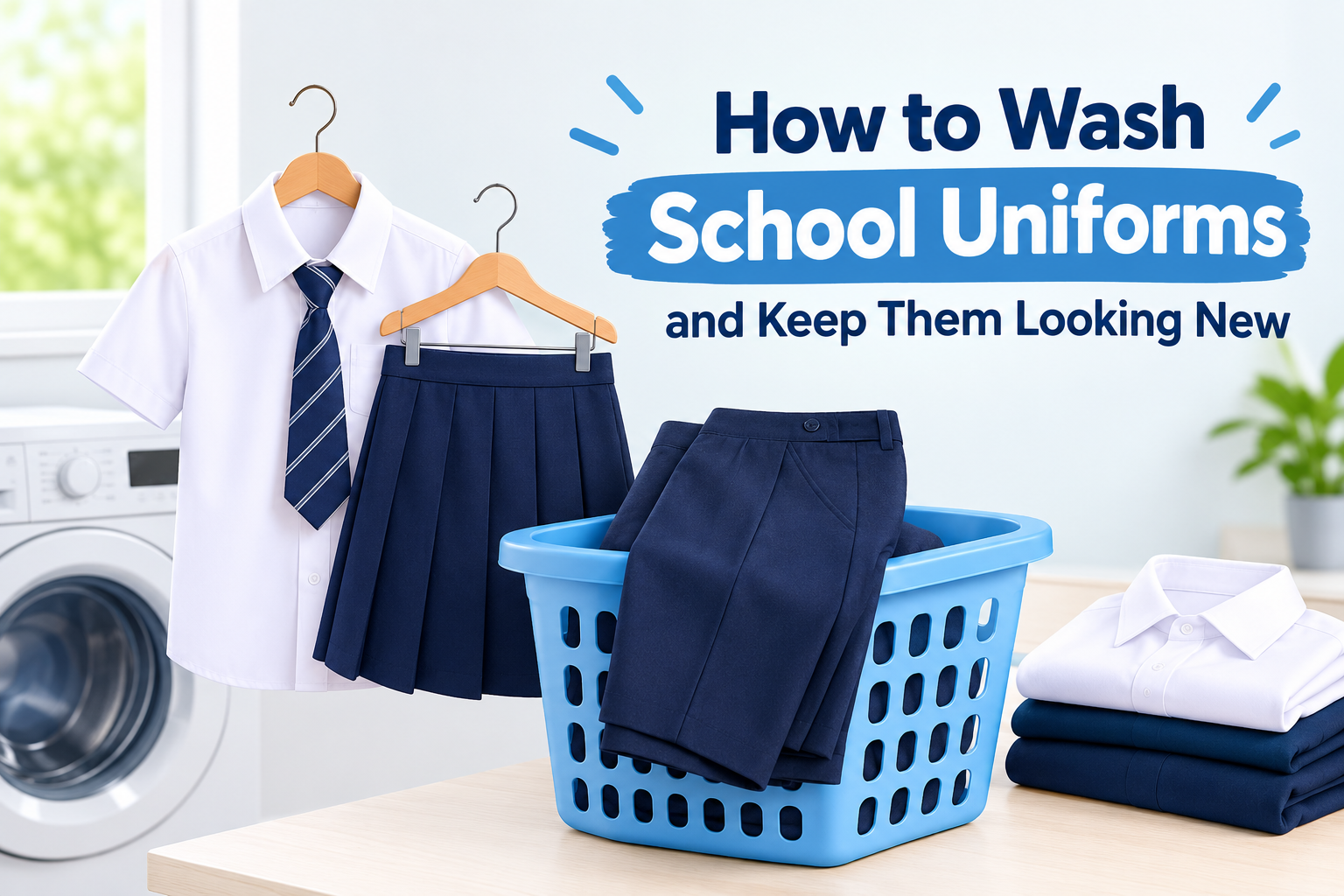
How to Wash School Uniforms and Keep Them Looking New
How to Wash School Uniforms and Keep Them Looking New
School uniforms go through a lot. From playground dirt and food spills to sweat, ink, grass, and everyday wear, uniforms can quickly look faded or worn if they are not washed correctly.
The good news is that you do not need complicated methods to keep school uniforms clean and in good condition. The key is to follow the care label, use the right washing method, treat stains early, and avoid washing or drying the fabric too aggressively.
This guide explains how to wash school uniforms properly, remove common stains, prevent fading and shrinking, and keep uniforms looking newer for longer.
Check the Care Label Before Washing
Before putting a school uniform in the washing machine, check the care label on the garment. Different materials can require different washing temperatures, cycles, and drying methods.
Look for instructions about:
- Recommended washing temperature
- Machine washing or hand washing
- Bleach restrictions
- Tumble drying
- Ironing temperature
- Dry-cleaning requirements
Following these instructions can help prevent problems such as shrinking, color fading, fabric damage, and loss of shape.
Empty Pockets and Prepare the Uniform
Always check every pocket before washing. Pens, tissues, paper, coins, and other items can cause stains or damage during a wash cycle.
Before washing:
- Empty all pockets.
- Remove badges or detachable accessories if recommended.
- Close zippers.
- Fasten buttons and hooks.
- Turn printed or decorative garments inside out.
- Separate heavily stained items for pre-treatment.
These simple steps can help protect both the uniform and other clothes in the same load.
Separate Uniforms by Color
Sorting laundry is especially important when washing school uniforms.
Keep dark uniforms away from white or light-colored clothing to reduce the risk of color transfer. If a uniform is new, wash it separately the first few times if you are unsure whether the dye may bleed.
A useful basic system is:
- Dark uniforms: Wash with similar dark colors.
- White shirts: Wash with whites or other suitable light garments.
- Colored garments: Wash with similar colors.
- Delicate pieces: Wash separately according to their care instructions.
Avoid overcrowding the washing machine because clothes need enough room for water and detergent to circulate properly.
Pre-Treat Stains Before Washing
School uniforms can collect stubborn stains throughout the day. Treating a stain before washing gives you a better chance of removing it completely.
For fresh stains, gently remove any excess material without rubbing it deeper into the fabric. Apply an appropriate stain-treatment method according to the garment’s care instructions, then allow it to work before washing.
Common school-uniform stains include:
- Food and drink
- Grass
- Mud
- Ink
- Sweat
- Makeup
- Grease
- Dirt
Always test a stain-removal method on a hidden area first, particularly when working with colored or delicate fabrics.
Choose the Right Washing Temperature
The hottest setting is not automatically the best setting.
Higher temperatures can cause some fabrics to shrink, fade, weaken, or lose their shape. For many everyday school uniforms, a cooler or moderate wash may be sufficient when the garment’s care label allows it.
Use the temperature recommended on the care label rather than choosing a hotter cycle simply because the uniform looks dirty.
Use the Correct Amount of Laundry Detergent
Using more detergent does not necessarily make clothes cleaner. Too much detergent can leave residue on fabric and may make clothes feel stiff or less fresh.
Use the amount recommended for:
- The detergent you are using
- The size of the laundry load
- The level of soiling
- Your water conditions
- The washing machine instructions
For heavily soiled uniforms, pre-treating specific stains is often more useful than simply adding extra detergent.
Turn Dark Uniforms Inside Out
Turning dark trousers, skirts, sweaters, and other garments inside out before washing can help reduce direct friction on the outer surface.
This can be particularly useful for uniforms that are washed frequently.
It may also help protect printed designs, embroidery, and other decorative details from unnecessary wear.
Use a Gentle Cycle for Delicate Uniform Pieces
Not every part of a school uniform should necessarily be washed using the same cycle.
Delicate items, knitted garments, wool pieces, and other sensitive fabrics may require a gentler cycle or hand washing.
If the care label recommends a specific cycle, follow it. Avoid treating delicate garments like heavy-duty school trousers or cotton shirts.
Avoid Overloading the Washing Machine
An overloaded washing machine may not clean clothes effectively because the garments cannot move freely.
A crowded drum can also increase friction between garments, which may contribute to fabric wear and wrinkles.
Leave enough space for the clothes to move during the wash cycle and follow your washing machine manufacturer’s recommendations for load size.
Be Careful With Bleach
Bleach can damage some colored fabrics and may weaken certain fibers. It should never be used automatically just because a uniform has a difficult stain.
Always check the garment’s care label before using any bleaching product.
For colored uniforms, avoid bleach unless the manufacturer specifically indicates that it is safe.
How to Wash White School Shirts
White school shirts often require frequent washing because they can show sweat, food, dirt, and other marks easily.
For best results:
- Check the care label.
- Separate white shirts from colored garments.
- Pre-treat visible stains.
- Use the recommended amount of detergent.
- Wash at the temperature recommended on the label.
- Inspect the shirt before drying.
- Treat remaining stains again rather than automatically drying them.
Avoid drying a stained shirt until you are satisfied with the stain-removal result, because heat can make some stains more difficult to remove.
How to Wash School Trousers and Skirts
School trousers and skirts may be made from polyester blends, wool blends, cotton, or other materials.
Turn them inside out when appropriate, fasten closures, and select the recommended wash cycle.
Avoid excessive heat when washing or drying unless the care instructions specifically allow it. This can help reduce unnecessary fading, shrinking, and fabric stress.
How to Wash School Sweaters and Knitwear
Sweaters and knitwear often need more careful handling than standard shirts.
Check whether the garment requires:
- Cold washing
- A delicate cycle
- Visit StoreHand washing
- Flat drying
- Special ironing instructions
Avoid hanging wet knitwear if doing so could cause it to stretch. If the care instructions recommend flat drying, lay the garment flat and reshape it while it dries.
How to Remove Grass Stains From School Uniforms
Grass stains are common on school uniforms, particularly after outdoor activities.
Remove loose dirt first, then pre-treat the affected area using a method suitable for the fabric. Wash according to the care label and check the stain before drying.
Do not use excessive scrubbing, which can damage the fibers or spread the stain.
How to Remove Ink Stains From School Uniforms
Ink can be particularly difficult because different inks contain different dyes and solvents.
Avoid aggressively rubbing the stain. Instead, follow a fabric-appropriate stain-treatment method and test it on an inconspicuous area first.
For expensive, delicate, or dry-clean-only uniforms, professional cleaning may be the safer option.
How to Remove Food and Drink Stains
Food stains should ideally be treated as soon as possible.
Gently remove solid material from the fabric and avoid rubbing it further into the fibers. Pre-treat the remaining mark and wash according to the garment’s care instructions.
Always inspect the uniform before putting it in the dryer.
Dry School Uniforms Correctly
Drying is just as important as washing when you want uniforms to last.
Whenever possible, follow the drying instructions on the care label. Some garments can be tumble dried, while others should be air dried or dried flat.
Avoid excessive heat when it is not recommended because repeated high-temperature drying can contribute to shrinkage, fading, and fabric wear.
Remove Uniforms Promptly After Washing
Do not leave freshly washed uniforms sitting wet inside the washing machine for long periods.
Remove them promptly and either transfer them to the dryer if appropriate or hang them according to the care instructions.
This can help reduce musty odors and excessive wrinkling.
Iron School Uniforms at the Correct Temperature
If a uniform needs ironing, check the care label before setting the iron.
Different fabrics tolerate different levels of heat. Using excessive heat can cause shiny patches, scorching, melting, or permanent damage.
Iron garments according to their fabric requirements and use a pressing cloth when recommended.
How to Prevent School Uniforms From Fading
Frequent washing can gradually affect the appearance of dark and colored uniforms.
To help reduce fading:
- Wash dark clothes inside out.
- Use the recommended water temperature.
- Avoid unnecessary high heat.
- Do not overload the washing machine.
- Use detergent appropriately.
- Keep uniforms away from prolonged direct sunlight when drying if the care label recommends otherwise.
Proper washing habits can make a noticeable difference over the course of a school year.
How to Prevent School Uniforms From Shrinking
Shrinkage is often associated with excessive heat, although the amount of shrinkage depends heavily on the fabric.
To reduce the risk:
- Follow the care label.
- Avoid unnecessarily hot washing cycles.
- Use the recommended dryer setting.
- Do not over-dry garments.
- Pay special attention to cotton, wool, and other heat-sensitive fabrics.
How Often Should School Uniforms Be Washed?
The ideal washing frequency depends on the garment and how heavily it was worn.
Shirts, socks, and other items worn directly against the skin generally need more frequent washing. Outer layers such as sweaters, blazers, or jackets may not need washing after every wear unless they are visibly dirty, sweaty, or stained.
A practical approach is to check each garment after use and wash it when it needs cleaning rather than following one rule for every piece of the uniform.
Store Clean Uniforms Properly
Make sure uniforms are completely dry before storing them.
Fold knitwear and other garments that can stretch, while hanging suitable shirts, trousers, skirts, jackets, and dresses on appropriate hangers.
Keep clean uniforms in a dry, well-ventilated storage area and avoid packing them away while they are even slightly damp.
Common School Uniform Washing Mistakes to Avoid
Avoid these common mistakes:
- Washing without checking the care label
- Mixing dark and light colors
- Using too much detergent
- Washing with an overloaded machine
- Using excessive heat
- Scrubbing stains aggressively
- Drying garments before checking stains
- Leaving wet clothes in the washer
- Using bleach on fabrics that cannot tolerate it
- Washing delicate fabrics on harsh cycles
Small mistakes repeated throughout the school year can gradually shorten the life of a uniform.
Final Thoughts
Keeping school uniforms looking new is mostly about consistent care rather than complicated cleaning methods. Sort garments correctly, follow their care labels, treat stains early, use the appropriate washing temperature, and avoid unnecessary heat.
With the right routine, school shirts, trousers, skirts, sweaters, and other uniform pieces can stay cleaner, fresher, and in better condition throughout the school year.
The simple rule to remember: check the care label, treat stains early, wash gently when appropriate, and dry correctly.