


How to Wash Clothes for Sensitive Skin: 10 Simple Tips to Reduce Irritation
Sensitive skin laundry doesn’t have to be complicated. The right detergent, washing temperature, rinse cycle, and drying habits can help make clothes more comfortable against your skin.
If your skin feels itchy, dry, or irritated after putting on freshly washed clothes, your laundry routine may be worth a closer look.The problem is not always the fabric itself. Detergent residue, heavy fragrance, excessive detergent, fabric softener buildup, and poor rinsing can all affect how clothing feels against the skin.
The good news is that you do not need a complicated laundry routine to make your clothes more comfortable.
A few simple changes can help reduce unnecessary residue and make everyday laundry gentler on sensitive skin.
In this guide, we’ll explain how to wash clothes for sensitive skin, what to look for in a laundry detergent, how much detergent to use, which washing temperature to choose, and which common laundry habits may be worth changing.
Why Laundry Can Matter for Sensitive Skin
Clothing stays in contact with your skin for hours at a time.
T-shirts, underwear, pajamas, bedsheets, towels, and other fabrics can all hold traces of laundry products after a wash cycle.
For some people, certain ingredients or residues may contribute to discomfort or irritation.
This is why choosing a suitable detergent is only one part of a skin-friendly laundry routine.
Your washing temperature, detergent quantity, rinse cycle, machine cleanliness, and drying method can also make a difference.
The goal is simple:
Clean your clothes effectively while minimizing unnecessary residue and irritants.
10 Tips for Washing Clothes for Sensitive Skin
1. Choose a Gentle Laundry Detergent
The first step is choosing a detergent that matches your needs.
If you have sensitive skin, look for a formula designed to minimize potential irritants. Many people prefer detergents that are free from unnecessary dyes and strong fragrances.
A good detergent should still clean effectively. Gentle does not have to mean ineffective.
Look for a product that:
- Cleans everyday dirt and stains effectively
- Works with your washing machine
- Does not require excessive amounts per load
- Is suitable for your fabrics
- Is formulated with sensitive skin in mind
If you already know that a particular fragrance or ingredient bothers your skin, avoid products containing it.
2. Don’t Use More Detergent Than You Need
More detergent does not automatically mean cleaner clothes.
In fact, using too much detergent can make rinsing more difficult and may leave excess product behind on fabrics.
This is one of the most common laundry mistakes.
Always follow the manufacturer’s recommended amount for the size and type of load.
With concentrated detergents and detergent sheets, measuring is particularly important because a small amount can provide substantial cleaning power.
For more guidance, see our complete guide on how much laundry detergent to use.
3. Consider Fragrance-Free or Mildly Scented Options
That strong “fresh laundry” smell does not necessarily mean your clothes are cleaner.
Fragrances are primarily there to provide scent, not cleaning power.
If you have sensitive skin or find that strongly scented laundry products bother you, consider choosing a fragrance-free detergent.
If you prefer scented laundry products, a mild scent may be more comfortable than an overpowering fragrance.
Pay attention to how your skin responds rather than assuming that a stronger scent means better laundry.
4. Use the Right Water Temperature
Water temperature affects both cleaning and fabric care.
Cold water can be an excellent option for many everyday loads, especially when you want to reduce energy use and help protect colors and fabrics.
Warm or hot water may be appropriate for certain heavily soiled items or fabrics when the care label allows it.
For sensitive skin, the important thing is not simply choosing the hottest possible temperature.
Instead:
- Check the clothing care label.
- Choose a suitable washing temperature.
- Use enough detergent for the load.
- Make sure the clothes are thoroughly rinsed.
Cold-water washing can also be useful for everyday laundry when paired with a detergent designed to work effectively in cold water.
5. Use an Extra Rinse When Necessary
If you suspect detergent residue is bothering your skin, an extra rinse may be worth trying.
An additional rinse gives the washing machine another opportunity to remove leftover detergent and other residues from the fabric.
This can be particularly useful for:
- Underwear
- Pajamas
- Baby clothing
- Towels
- Bedsheets
- Clothing worn directly against the skin
You don’t necessarily need an extra rinse for every load.
Try it when you notice residue, irritation, or a strong detergent smell remaining after washing.
6. Avoid Overloading the Washing Machine
An overloaded washing machine cannot clean clothes as effectively as a properly loaded machine.
When clothes are packed too tightly, water and detergent may have less opportunity to circulate through the fabrics.
This can contribute to:
- Poor cleaning
- Detergent residue
- Lingering odors
- Longer drying times
Leave enough room for the clothes to move freely during the wash cycle.
7. Keep Your Washing Machine Clean
Sometimes the problem isn’t your detergent. It may be your washing machine.
Over time, detergent residue, moisture, dirt, and other buildup can accumulate inside a washer.
If the machine develops a musty smell, that odor can transfer to laundry.
Make washing-machine maintenance part of your regular cleaning routine.
Pay attention to:
- The detergent drawer
- Door seals
- Lint and debris
- The inside of the washer
- Drain areas
- Manufacturer-recommended cleaning cycles
Keeping the machine clean helps create a cleaner environment for every load.
8. Be Careful With Fabric Softener
Fabric softener can make clothes feel softer and add fragrance, but it is not necessary for every laundry load.
Some people with sensitive skin may prefer to minimize additional laundry products.
If your goal is to simplify your routine, start with a good detergent and proper washing technique.
If you use fabric softener or dryer sheets, follow the manufacturer’s directions and pay attention to how your skin reacts.
9. Wash New Clothes Before Wearing Them
New clothing may have residues from manufacturing, packaging, transportation, and handling.
Washing new garments before wearing them can help remove substances that you may not want sitting against your skin.
This is especially worth considering for:
- Underwear
- Pajamas
- Baby clothes
- Bedsheets
- Towels
- Workout clothing
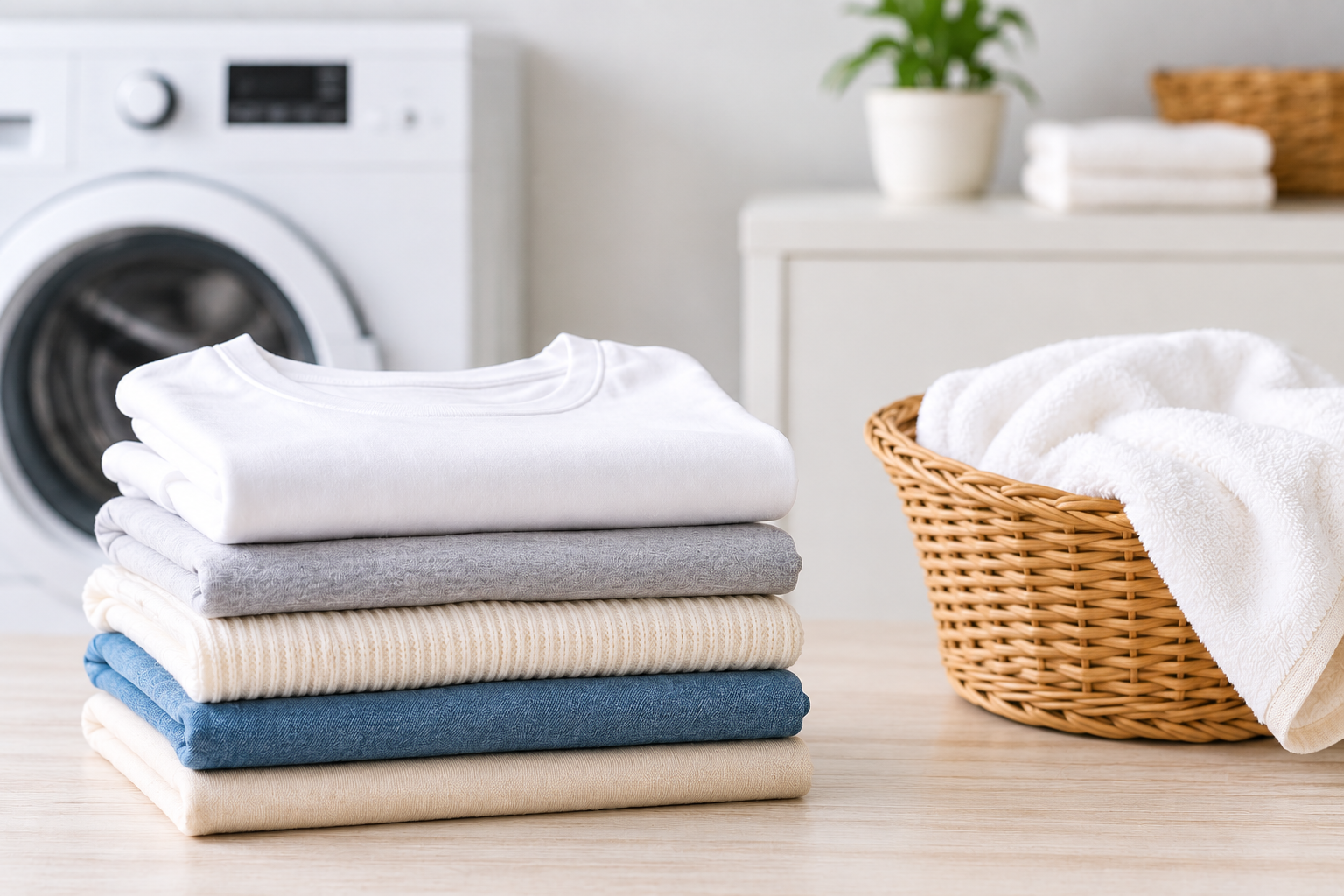
10. Dry Clothes Thoroughly
Washing is only half of the laundry process.
Clothes should be dried properly after washing.
Leaving damp clothing sitting in the washing machine for a long time can contribute to unpleasant odors.
- Remove clothes from the washer promptly.
- Shake garments out before drying.
- Dry according to the care label.
- Make sure items are completely dry before storing them.
- Avoid storing damp clothing in baskets or drawers.
What Ingredients Should You Look for in a Sensitive-Skin Detergent?
There is no single detergent formula that works perfectly for everyone.
However, if you have sensitive skin, you may want to pay attention to the ingredient list and choose products that avoid ingredients you know cause problems for you.
Many people looking for a gentler laundry routine prioritize:
- Fragrance-free or mild-fragrance formulas
- Dye-free formulas
- Hypoallergenic formulations
- Clearly disclosed ingredients
- Effective cleaning without excessive detergent
- Products designed for sensitive skin
Remember that “natural” does not automatically mean that a product cannot cause irritation. Even naturally derived ingredients can bother some individuals.
Should You Wash Sensitive-Skin Clothing Separately?
You don’t necessarily need to wash all sensitive-skin clothing separately.
However, separating certain loads can make sense.
For example, you might choose to separate:
- Heavily soiled work clothing
- Clothing exposed to strong chemicals
- Baby clothing
- Bedding
- Everyday clothing
What About Baby Clothes?
Baby clothing deserves extra attention because it frequently comes into direct contact with delicate skin.
A simple routine is usually best:
- Wash new baby clothes before use.
- Choose a gentle detergent.
- Avoid using more detergent than recommended.
- Consider an extra rinse if necessary.
- Wash according to the garment care label.
- Keep the washing machine clean.
If a baby develops persistent redness, a rash, or other concerning symptoms, speak with a pediatrician or other qualified healthcare professional rather than assuming laundry detergent is the cause.
How Often Should You Wash Clothes for Sensitive Skin?
There is no universal schedule for every garment.
Items that touch the skin closely or become sweaty generally need more frequent washing than outerwear.
- Underwear: Usually after each use.
- Socks: Usually after each use.
- Workout clothing: Usually after each use.
- T-shirts: Often after one or a few wears, depending on sweat and use.
- Pajamas: Depends on personal habits, climate, and how much you sweat.
- Bedsheets: A regular weekly washing routine is common.
- Jackets and coats: Usually less frequently unless visibly dirty or exposed to odors.
Common Laundry Mistakes That Can Make Clothes Less Comfortable
Using Too Much Detergent
Excess detergent can be difficult to rinse completely.
Overloading the Washer
Crowded loads can reduce cleaning and rinsing performance.
Leaving Wet Clothes in the Washer
This can contribute to unpleasant odors.
Using Too Many Laundry Products
Adding detergent, softener, scent boosters, dryer sheets, and other products can make your routine unnecessarily complicated.
Ignoring the Washing Machine
A dirty washer can contribute to dirty-smelling laundry.
Washing Everything on the Hottest Setting
Hot water isn’t automatically better for every fabric.
Ignoring Clothing Care Labels
Different materials require different washing and drying methods.
A Simple Sensitive-Skin Laundry Routine
If you want to simplify everything, start with this routine:
- Sort your clothes.
- Check the care labels.
- Avoid overloading the washing machine.
- Use an appropriate amount of gentle detergent.
- Choose the correct water temperature.
- Add an extra rinse when necessary.
- Remove clothing promptly after the cycle.
- Dry clothing completely.
- Clean your washing machine regularly.
- Pay attention to how your skin responds to different products.
You don’t need dozens of laundry products to get clean, comfortable clothes.
A simple routine can often be easier to maintain and easier to troubleshoot.
Why Laundry Detergent Sheets Can Be Convenient
Laundry detergent sheets have become popular because they simplify the measuring process.
Instead of pouring liquid detergent into a measuring cup, you use a pre-measured sheet according to the product instructions.
The biggest practical advantage is convenience.
- No measuring cup
- Less liquid mess
- Easier storage
- No heavy detergent bottle to pour
- A simple pre-measured format
However, always follow the specific instructions for the product you purchase.
Why Prime Nova Partners Clean Laundry Detergent May Be a Good Option
For households looking for a simpler laundry routine, Clean Laundry Detergent™ by Prime Nova Partners is designed around powerful cleaning while remaining gentle on fabrics.
The product is marketed as biodegradable, free from phosphates, sulfates, and synthetic fragrances, and suitable for sensitive skin.
Prime Nova Partners also offers pre-measured laundry detergent sheets, providing another option for people who prefer a mess-free laundry routine.
The important thing is to choose the format and formula that works best for your household.
Frequently Asked Questions
Can laundry detergent cause skin irritation?
Certain detergent ingredients may irritate some people’s skin. If you consistently notice discomfort after wearing freshly washed clothing, consider simplifying your laundry routine and discussing persistent symptoms with a healthcare professional.
Is fragrance-free detergent better for sensitive skin?
Fragrance-free products can be a useful option for people who find fragrances irritating. However, individual sensitivities vary.
Does using more detergent make clothes cleaner?
Not necessarily. Using more detergent than recommended can make rinsing more difficult and may leave excess residue on fabrics.
Should I use an extra rinse for sensitive skin?
An extra rinse can be useful if you are concerned about detergent residue or notice that clothes retain a strong detergent smell.
Is cold water good for sensitive-skin laundry?
Cold water can be suitable for many everyday loads and can help protect fabrics and reduce energy use. Always follow the care label and use a detergent appropriate for the selected temperature.
Are laundry detergent sheets suitable for sensitive skin?
Some detergent sheets are formulated with sensitive skin in mind, but formulations vary. Check the product’s ingredients and instructions before choosing one.
How can I make clothes less irritating to my skin?
Start with a gentle detergent, avoid excessive detergent, rinse clothing thoroughly, keep your washing machine clean, and avoid products that you know irritate your skin.
Final Thoughts
Learning how to wash clothes for sensitive skin doesn’t require a complicated laundry routine.
The most important habits are simple:
Use the right detergent. Don’t overuse it. Wash at an appropriate temperature. Rinse thoroughly. Keep your washing machine clean. Dry clothes properly.
If your current laundry routine leaves your clothes heavily scented, coated, or uncomfortable against your skin, simplifying the process may be a good place to start.
Clean clothes should feel clean—not overloaded with unnecessary products.
For households looking for a convenient option, Prime Nova Partners offers Clean Laundry Detergent™ and pre-measured laundry detergent sheets designed around effective cleaning, convenience, and a gentler approach to everyday laundry.
Suggested Internal Links
- How Much Laundry Detergent Should You Use? The Right Amount
- How to Wash Clothes Properly: Step-by-Step Guide
- Cold Water Laundry: Benefits for Clothes, Energy & the Planet
- How to Clean Your Washing Machine and Remove Bad Smells
- Why Your Clothes Still Smell Like Sweat After Washing
- Why Natural Laundry Detergent Is Better for Sensitive Skin
- Best Laundry Detergent for Babies With Sensitive Skin
Suggested Image Alt Text
Primary image: How to wash clothes for sensitive skin
Secondary image: Gentle laundry detergent and clean clothes for sensitive skin
Product image: Prime Nova Partners Clean Laundry Detergent Sheets
Suggested CTA
Ready to simplify your laundry routine?
Try Clean Laundry Detergent™ from Prime Nova Partners for a convenient, effective laundry solution designed with sensitive skin and everyday fabric care in mind.
“`