


Why Does Sunscreen Stain Clothes?
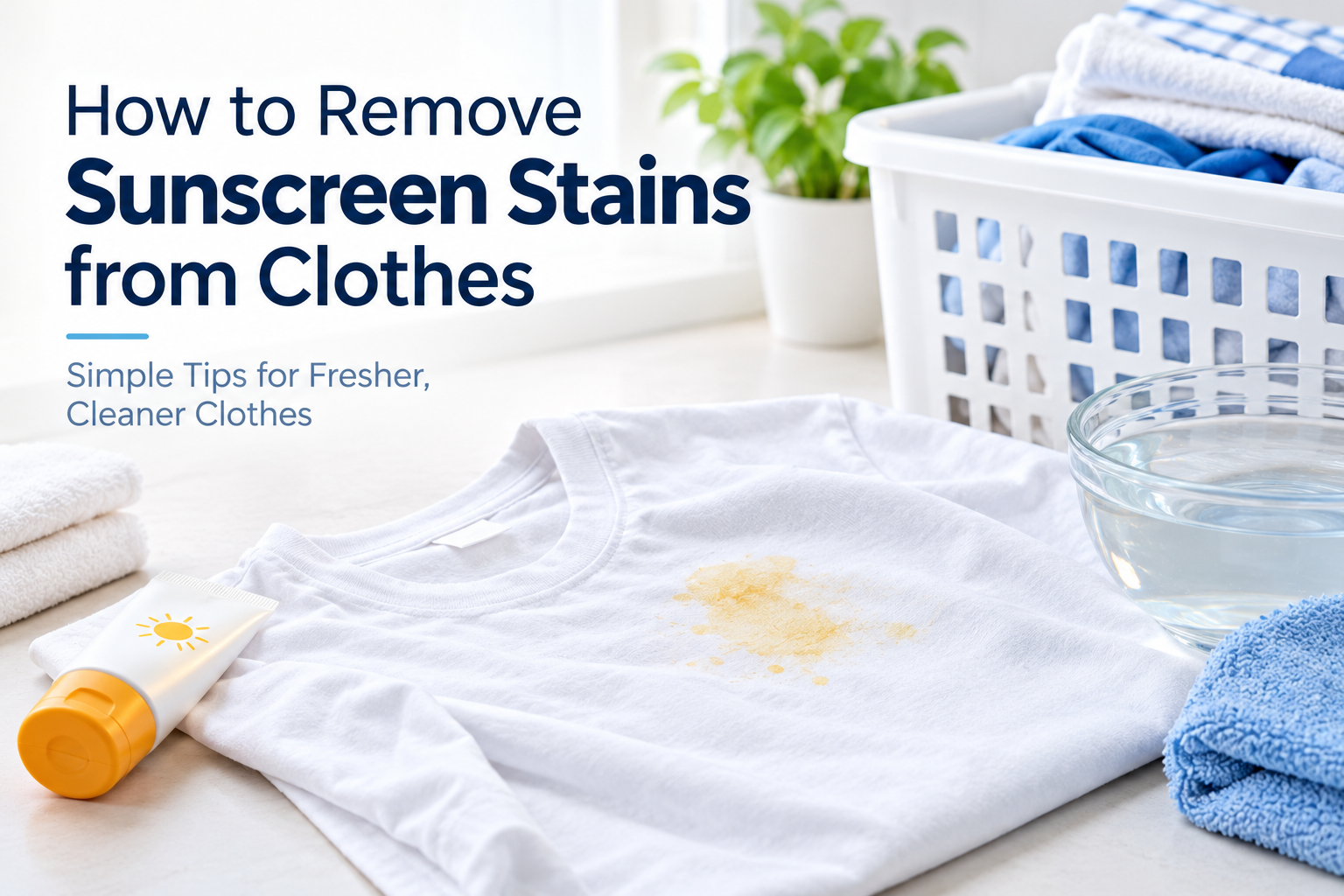
Sunscreen contains a mixture of ingredients that help protect your skin from ultraviolet radiation. Depending on the formula, these may include oils, emollients, waxes, and mineral UV filters such as zinc oxide or titanium dioxide. Some sunscreens also contain organic UV filters that can contribute to discolouration under certain conditions.
Different ingredients can leave different types of marks:
- Greasy stains: Oils and emollients can cling to fabric fibres and attract dirt.
- Yellow marks: Some sunscreen ingredients can react with fabric, sweat, or other substances and leave yellowish discoloration.
- Orange or rust-coloured stains: Certain sunscreen ingredients, particularly some products containing avobenzone, may react with minerals in water and produce orange or brown marks.
- White residue: Mineral sunscreens containing zinc oxide or titanium dioxide can leave visible white marks on dark clothing.
Not every sunscreen stain has the same cause. The best treatment depends on the sunscreen formula, fabric type, water conditions, and how long the stain has been present.
How to Remove Sunscreen Stains from Clothes Step by Step
For most washable garments, start with these steps before trying stronger stain treatments.
Step 1: Check the Fabric Care Label
Before treating the stain, read the garment’s care label. Cotton, polyester, denim, swimwear, silk, and wool can require different cleaning methods. If the item is labelled dry-clean only, take it to a professional cleaner and explain that the stain is from sunscreen.
Step 2: Remove Excess Sunscreen
If the stain is fresh, gently lift any excess sunscreen from the fabric with a spoon or the edge of a dull object. Avoid rubbing it deeper into the fibres or spreading it to a larger area.
If the sunscreen has dried, carefully remove any surface residue without scraping or damaging the material.
Step 3: Apply a Suitable Laundry Detergent
For a washable garment with a greasy sunscreen stain, apply a small amount of liquid laundry detergent directly to the affected area if the product label permits this type of pretreatment. Gently work it into the fabric with your fingertips or a soft cloth.
Leave it for the time recommended on the detergent label. Avoid vigorous scrubbing, particularly on delicate fabrics, printed designs, and dark garments. Always test a pretreatment product on a hidden area first if you are unsure how the fabric or dye will react.
Step 4: Rinse and Wash According to the Care Label
Rinse the treated area as directed by the detergent manufacturer. Then wash the garment using a suitable detergent, the correct dosage, and the warmest water temperature permitted by the care label.
Do not automatically use hot water. High temperatures can damage some fabrics and may make certain stains more difficult to remove. Follow both the garment-care instructions and the detergent’s directions.
Step 5: Check the Stain Before Drying
Inspect the garment in good light before placing it in a tumble dryer or ironing it. If the stain remains, repeat an appropriate pretreatment and wash again if the care label permits.
Heat from a dryer or iron can make some remaining stains more difficult to treat. Air-dry the garment until you are confident the mark has gone.
How to Remove Yellow Sunscreen Stains from White Clothes
Yellow sunscreen stains on white clothes can be particularly noticeable. They may be caused by oils, sunscreen ingredients, sweat, or a reaction between certain UV filters and minerals. Start with a detergent pretreatment rather than immediately reaching for bleach.
- Check the garment’s care label and identify any restrictions on stain removers.
- Gently remove any excess sunscreen from the fabric.
- Apply a suitable liquid laundry detergent to the stain and allow it to work according to the label.
- Wash the item using a fabric-safe temperature and the recommended detergent amount.
- Inspect the garment before drying and repeat treatment if necessary.
If a yellow mark remains, a colour-safe oxygen-based stain remover may be an option for compatible fabrics. Follow its instructions carefully and test it on a hidden area first.
Avoid chlorine bleach unless the garment label and stain-remover instructions explicitly allow it. Bleach can damage fabrics, affect dyes, and is not an appropriate solution for every sunscreen-related stain.
How to Remove Orange Sunscreen Stains from Clothes
Orange or rust-coloured sunscreen stains can be difficult to remove because some sunscreen ingredients may interact with minerals in hard water. Avobenzone, an ingredient used in some sunscreens, is associated with discoloration when it interacts with certain metal ions.
If you notice orange marks, take a cautious approach:
- Do not immediately apply chlorine bleach.
- Check the sunscreen ingredient list if the product is available.
- Test a suitable detergent or stain treatment on an inconspicuous area.
- Follow the product instructions and the garment’s care label.
- If the mark resembles rust and does not respond to normal pretreatment, seek advice about a fabric-safe rust remover.
Some rust removers contain acids and are unsuitable for particular fabrics or finishes. Never mix stain removers with bleach or other cleaning chemicals. If you are unsure about the cause of the stain, a professional cleaner may be the safest option.
How to Remove Greasy Sunscreen Stains from Clothing
Oily sunscreen can leave darker patches on shirts, dresses, collars, and other areas where the fabric touches the skin. These marks often respond best to a treatment designed to loosen oily residue.
- Blot fresh sunscreen gently without spreading it.
- Apply a small amount of suitable liquid laundry detergent to the stain.
- Work the product into the fabric gently and leave it for the recommended time.
- Wash according to the care label and detergent instructions.
- Check the garment before using a dryer.
For delicate fabrics, skip aggressive rubbing and use only products approved for the material. Avoid using a strong household degreaser on clothing unless it is specifically labelled as fabric-safe.
How to Remove Old Sunscreen Stains from Clothes
Old sunscreen stains may be harder to remove because the oily residue may have settled into the fibres or the garment may already have been exposed to dryer heat.
To treat an older stain:
- Inspect the fabric and check whether the stain is greasy, yellow, orange, or white.
- Choose a fabric-safe pretreatment that is suitable for the type of stain.
- Apply the treatment as directed, allowing enough time for it to work.
- Wash the garment at a permitted temperature.
- Air-dry and inspect the area before deciding whether another treatment is needed.
Stains that have been repeatedly dried or exposed to ironing may not come out completely. Repeated treatment can also affect dyes or fibres, so stop if the fabric shows signs of damage.
How to Remove Sunscreen Stains from Black Clothes
White mineral sunscreen residue and oily patches can stand out on black clothing. The challenge is removing the stain without fading the colour.
- Use a detergent suitable for dark or coloured fabrics.
- Test any stain-removal product on an inconspicuous area first.
- Avoid chlorine bleach and unapproved whitening products.
- Do not scrub aggressively, as this can create faded-looking patches.
- Wash and dry according to the care label.
If white residue remains, gently remove any loose surface material and rewash the item using the recommended detergent amount. Persistent marks may require a treatment specifically suited to the sunscreen ingredient and fabric.
How to Remove Sunscreen Stains from Swimwear
Swimwear is often made from elastic fibres such as elastane or spandex, which can be damaged by unsuitable chemicals, excessive heat, or harsh handling.
After wearing sunscreen, rinse swimwear as soon as practical in cool or lukewarm water if the care instructions permit. Pretreat any visible stain with a product approved for the fabric, then wash gently according to the label.
Avoid wringing, vigorous scrubbing, chlorine bleach, and high-temperature drying unless the manufacturer specifically permits them. Lay the garment flat or hang it to dry as directed.
Can Vinegar Remove Sunscreen Stains?
Vinegar is sometimes recommended as a home remedy for laundry stains, but it is not a reliable treatment for every sunscreen mark. It may not remove oily residue effectively, and it will not solve every stain caused by reactions with minerals.
Before using vinegar, check the garment and washing-machine manufacturer’s instructions. Never mix vinegar with chlorine bleach, because this can release dangerous chlorine gas. Do not combine vinegar with other cleaning products unless their labels explicitly confirm that doing so is safe.
Can Baking Soda Remove Sunscreen Stains?
Baking soda is a common household cleaning ingredient, but it is not a guaranteed solution for sunscreen stains. A paste or vigorous rubbing may also affect delicate fibres or certain finishes.
For most washable garments, begin with a fabric-compatible laundry detergent or a stain remover labelled for the material. Use baking soda only if the garment and product instructions permit it, and test the method on a hidden area first.
Common Mistakes to Avoid When Treating Sunscreen Stains
- Putting the garment straight into the dryer: Check that the stain has disappeared before applying heat.
- Rubbing the stain aggressively: This can spread oily residue or damage the fibres.
- Using chlorine bleach without checking: Some sunscreen-related marks may not respond well to bleach, and the product may damage the garment.
- Mixing household cleaning products: Dangerous reactions can occur when incompatible products are combined.
- Ignoring the fabric label: Delicate and elastic fabrics often need gentler treatment.
- Using too much detergent: Excess detergent can leave additional residue and make rinsing more difficult.
How to Prevent Sunscreen Stains on Clothes
Preventing sunscreen stains is usually easier than removing a stubborn mark. A few habits can reduce the chance of transferring sunscreen to your clothes.
- Allow sunscreen to absorb and dry according to its product directions before getting dressed.
- Apply sunscreen carefully around necklines, cuffs, and other areas that commonly touch clothing.
- Avoid wiping sunscreen-covered hands on shirts or towels.
- Rinse or pretreat visible stains as soon as practical.
- Check garments before drying them after washing.
- Follow care labels and use a suitable laundry detergent for the fabric.
If orange marks repeatedly appear after washing, your water quality may be a contributing factor. Consider checking your local water-hardness information and adjusting your laundry routine accordingly.
Frequently Asked Questions About Sunscreen Stains
What Is the Fastest Way to Remove Sunscreen Stains from Clothes?
For a fresh stain on a washable garment, remove excess sunscreen, pretreat the area with a suitable laundry detergent, and wash according to the care label. Check the stain before using a dryer.
Why Does Sunscreen Turn White Clothes Yellow?
Yellow discoloration may result from sunscreen ingredients, oils, sweat, or reactions with other substances. The cause varies by product and fabric, so start with a suitable detergent treatment and avoid harsh chemicals until you understand the stain.
Why Does Sunscreen Leave Orange Marks on Clothes?
Some sunscreen ingredients, including avobenzone in certain formulations, can react with minerals such as iron in water and contribute to orange or brown discoloration. Not all orange marks have this cause, so persistent stains may need specialist treatment.
Can Sunscreen Stains Be Removed After Drying?
They may still be removable, but dryer heat can make some stains more difficult to treat. Pretreat the affected area with a fabric-safe product, wash according to the care label, and avoid further heat until the stain is gone.
Does Liquid Laundry Detergent Remove Sunscreen?
A suitable liquid laundry detergent can help loosen oily sunscreen residue on many washable fabrics. Results depend on the sunscreen ingredients, fabric, and how long the stain has been present. Follow the detergent label and repeat treatment if the garment permits.
Should I Use Bleach on Sunscreen Stains?
Do not use bleach automatically. It can damage some fabrics and may not be suitable for orange or rust-like discoloration. Check the garment label and use only a treatment approved for the material and the specific stain.
Final Thoughts: Keep Sunscreen Stains from Ruining Your Clothes
Sunscreen stains can be stubborn, but prompt and careful treatment can improve your chances of removing them. Identify whether the mark is oily, yellow, orange, or white, choose a suitable treatment, and always follow the fabric care label.
Most importantly, inspect the garment before drying it. If the stain remains, repeat a safe treatment rather than applying unnecessary heat or harsh chemicals. With a consistent laundry routine, you can help protect your favourite clothes throughout the sunny season.
For more laundry advice, read our guides on how to get grease stains out of clothes, how to wash clothes in hard water, and how to choose laundry detergent for different fabrics.