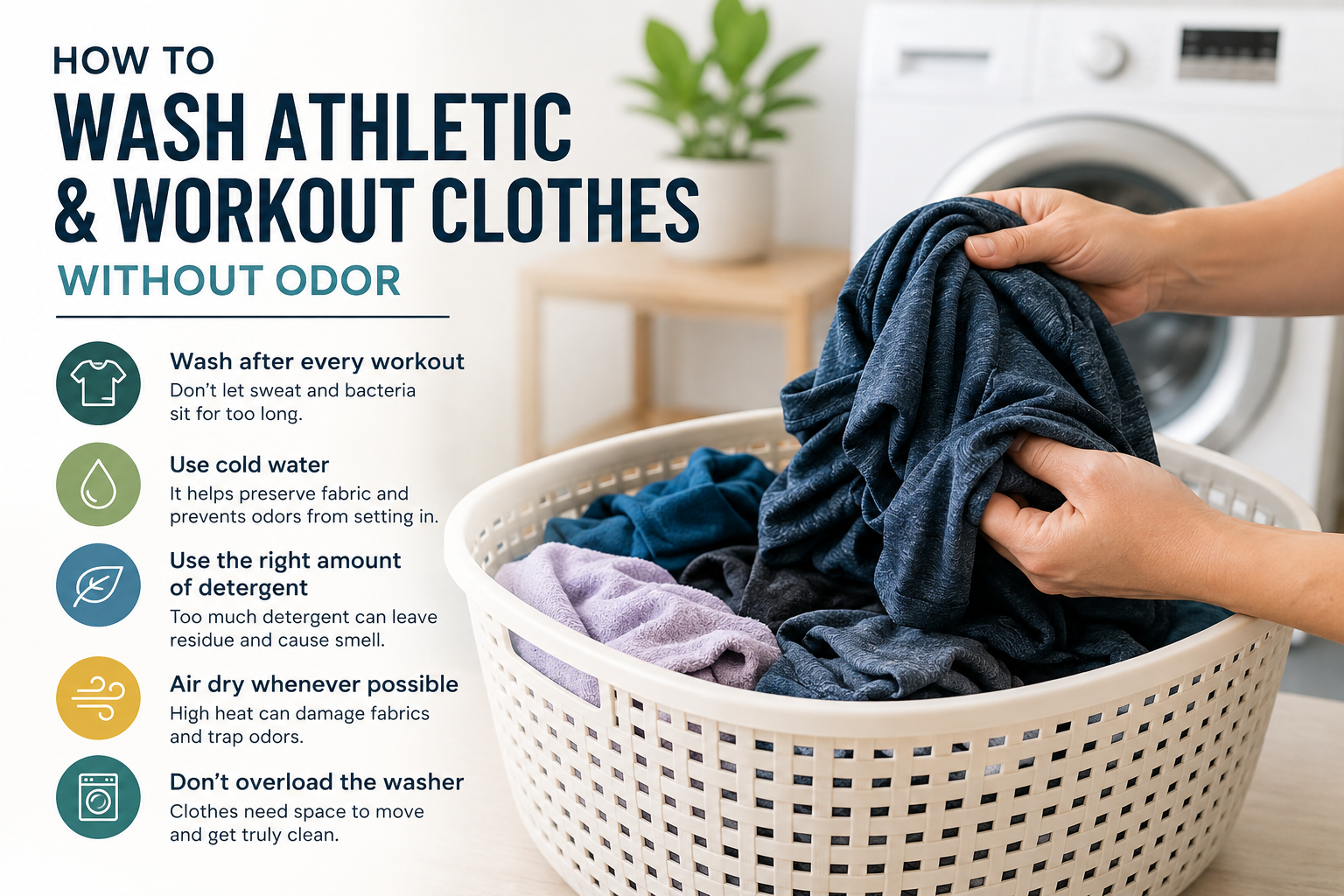


This guide explains how to wash workout clothes, how to wash activewear, how to wash gym clothes, and how to get sweat smell out of workout clothes while helping protect the fabric and performance of your favorite athletic clothing.
Why Do Workout Clothes Smell After Washing?
Workout clothes come into contact with sweat, body oils, and other residues during exercise. The problem can be particularly noticeable with synthetic fabrics such as polyester, nylon, and spandex, which are commonly used in athletic wear.
These materials are designed to move moisture away from your skin, but they can also retain oils and odor compounds differently from natural fibers.
That is why a workout shirt may smell clean when it comes out of the washing machine but develop a noticeable odor again when you start exercising.
If your workout clothes smell after washing, simply adding more detergent may not solve the problem. Your overall laundry routine may need a few simple changes.
How to Wash Workout Clothes Properly
Learning how to wash workout clothes correctly starts with a few simple habits. Follow these steps to keep your activewear cleaner and fresher.
1. Don’t Leave Sweaty Clothes in Your Gym Bag
One of the most common mistakes is leaving sweaty clothes inside a closed gym bag.
A damp workout shirt, pair of leggings, or sports bra can remain wet for hours when trapped inside a bag. This can make unpleasant odors more difficult to remove later.
After exercising, take your clothes out of your gym bag as soon as possible.
- Remove sweaty clothes from your gym bag.
- Hang them somewhere with good airflow.
- Allow them to dry if you cannot wash them immediately.
- Wash them as soon as practical.
Don’t leave damp gym clothes bunched together in a closed bag or laundry hamper.
2. Wash Workout Clothes After Heavy Workouts
If your workout clothes become heavily soaked with sweat, washing them after each use is a good laundry habit.
This is particularly important for clothing that sits directly against your skin, including:
- Sports bras
- Workout shirts
- Leggings
- Athletic underwear
- Gym shorts
- Compression clothing
- Athletic socks
Lightly worn outer layers may not always require the same washing frequency. Always check the garment’s care label for specific instructions.
3. Turn Activewear Inside Out Before Washing
Before putting your activewear into the washing machine, turn the garments inside out.
The inside of workout clothing is the area that comes into direct contact with your skin, sweat, and body oils. Turning garments inside out exposes these areas more directly to the wash water and detergent.
This simple step can also help protect printed designs, logos, and other exterior details from unnecessary friction during washing.
4. Check the Care Label
Before deciding exactly how to wash workout clothes, check the manufacturer’s care instructions.
Different athletic fabrics can have different requirements. Look for instructions regarding:
- Water temperature
- Washing cycle
- Detergent
- Bleach
- Fabric softener
- Tumble drying
- Air drying
This is especially important for expensive leggings, compression clothing, sports bras, and specialized performance fabrics.
5. Use the Right Amount of Detergent
Using more detergent does not necessarily mean cleaner workout clothes.
Too much detergent can leave residue behind, particularly in tightly woven synthetic fabrics. Over time, buildup can affect how fabrics feel and may contribute to a less-fresh smell.
Use the amount recommended by your detergent manufacturer based on the load size and washing machine.
If you’re looking for a convenient laundry routine, laundry detergent sheets can also provide a pre-measured format, making it easier to avoid accidentally using too much detergent.
6. Avoid Fabric Softener on Performance Activewear
If you’re wondering how to wash activewear while maintaining its performance, pay attention to fabric softener.
Traditional fabric softeners can leave a coating on fabrics. For some performance garments, this may interfere with moisture-wicking properties and contribute to unwanted residue.
For this reason, many activewear-care recommendations suggest avoiding traditional fabric softener unless the garment manufacturer specifically says it is suitable.
7. Use the Recommended Water Temperature
Hotter water is not automatically better for removing sweat smell from workout clothes.
Many athletic garments contain synthetic fibers, stretch materials, elastic, and specialized fabrics that may be affected by excessive heat.
For many garments, cold or cool water is an appropriate option, but the care label should always take priority.
The right combination of detergent, washing action, rinsing, and drying can be just as important as water temperature when cleaning activewear.
8. Don’t Overload the Washing Machine
Give your gym clothes enough room to move during the wash cycle.
An overloaded washing machine may prevent water and detergent from circulating effectively through the load. It can also make rinsing less effective.
Avoid stuffing too many clothes into one load and follow your washing machine manufacturer’s recommendations for load size.
9. Wash Similar Fabrics Together
When possible, wash lightweight athletic clothing with similar fabrics rather than heavy items such as towels and jeans.
Heavy fabrics can create additional friction and may release lint that sticks to synthetic activewear.
A dedicated activewear load might include:
- Workout shirts
- Leggings
- Sports bras
- Gym shorts
- Running clothes
- Athletic socks
Always separate garments according to their individual care instructions.
How to Get Sweat Smell Out of Workout Clothes
If you’re specifically searching for how to get sweat smell out of workout clothes, start by looking at what happens before and after the washing cycle.
Persistent odor can sometimes be connected to sweat, body oils, moisture, detergent buildup, or improper drying.
Air Out Sweaty Clothes Before Washing
If you cannot wash your workout clothes immediately, avoid leaving them wet and tightly packed together.
Hang the clothes somewhere with good airflow and allow them to dry before placing them in your laundry hamper.
This is especially useful after a long workout when your clothes are heavily damp with sweat.
Consider a Pre-Treatment for Stubborn Odor
For persistent activewear odor, a suitable pre-treatment may help loosen sweat and body-oil buildup before washing.
Choose a treatment that is compatible with the fabric and follow the product’s directions carefully.
If you use any household laundry treatment, never mix chlorine bleach with vinegar or other incompatible cleaning products.
For delicate or expensive athletic garments, follow the manufacturer’s cleaning instructions rather than experimenting with strong treatments.
Don’t Simply Add More Detergent
If your workout clothes still smell after washing, adding extra detergent isn’t necessarily the answer.
Excess detergent can leave residue behind, which may make it harder to achieve the fresh result you’re looking for.
Instead, review your complete laundry routine:
- Remove sweaty clothing from your gym bag quickly.
- Turn activewear inside out before washing.
- Use the recommended amount of detergent.
- Choose the water temperature recommended on the care label.
- Avoid unnecessary fabric softener.
- Don’t overload the washing machine.
- Dry workout clothing completely.
What Is the Best Detergent for Workout Clothes?
The best detergent for workout clothes is one that effectively cleans sweat and body-oil residue while being appropriate for the fabric and the manufacturer’s care instructions.
You don’t necessarily need a large amount of detergent to clean activewear effectively.
For people who prefer a convenient laundry option, laundry detergent sheets can make measuring easier because each sheet is pre-portioned.
Regardless of the detergent format you choose, following the recommended amount is important. More detergent does not automatically produce cleaner clothes.
How to Dry Workout Clothes Properly
Washing is only half of the laundry process. How you dry your activewear can also affect freshness and fabric life.
Air-Dry When Appropriate
Air drying is a gentle option for many workout garments.
After washing:
- Remove the clothes from the washing machine promptly.
- Shake them out.
- Hang them in a well-ventilated area.
- Make sure they are completely dry before storing them.
Avoid Excessive Heat
Some athletic fabrics contain elastic or stretch fibers that may be affected by excessive heat.
If the care label allows tumble drying, use the recommended dryer setting rather than automatically choosing the hottest temperature.
For garments that recommend air drying, allow them to dry naturally.
Why Do Polyester Workout Clothes Smell?
Polyester workout clothes are popular because they are lightweight, durable, and commonly used for moisture-wicking athletic clothing.
However, polyester can interact with sweat, body oils, and odor compounds differently from natural fibers. This can contribute to noticeable activewear odor, particularly after repeated workouts.
If a polyester workout shirt repeatedly develops a smell, changing your washing and drying routine may help.
Pay particular attention to how quickly you wash the garment after exercising, how much detergent you’re using, and whether the clothing is drying completely.
Why Do My Gym Clothes Smell Worse When I Start Sweating?
This is a common problem with activewear.
Your gym clothes may smell fine immediately after washing but develop a strong odor once you begin exercising again.
Moisture and body heat can make previously retained odor compounds more noticeable. Synthetic fabrics such as polyester are commonly used in performance clothing and may retain body oils and odor compounds differently from cotton.
If this keeps happening, review your complete workout clothes washing routine instead of simply adding more detergent.
How Often Should You Wash Workout Clothes?
How often you should wash workout clothes depends on how much you sweat and how the garment was used.
Heavily sweaty clothing should generally be washed after each use.
This includes:
- Sports bras
- Workout tops
- Leggings
- Compression shorts
- Underwear
- Athletic socks
Outer layers that were lightly worn and did not become sweaty may have different washing requirements.
When in doubt, check the garment care label.