


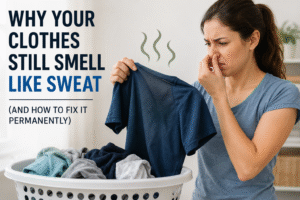
Why Your Clothes Still Smell Like Sweat After Washing (and How to Fix It Permanently)
Have you ever pulled a freshly washed gym shirt out of the laundry, put it on, and noticed a sour or sweaty smell returning after just a few minutes? You are not alone.
Sometimes clothes can smell clean immediately after washing but develop an unpleasant odor again once they warm up against your body. This is especially common with workout clothes, synthetic fabrics, towels, and shirts that have been exposed to sweat repeatedly.
The good news is that there are practical ways to remove persistent sweat odors and prevent them from coming back. In this guide, we will explain why clothes still smell like sweat after washing, how to remove the odor, and what laundry habits can help keep your clothes fresh for longer.
Why Do Clothes Still Smell Like Sweat After Washing?
Sweat itself is mostly made up of water, salts, and other substances. The unpleasant smell develops when sweat mixes with body oils and microorganisms on the skin.
When these substances become trapped inside clothing fibers, a normal wash cycle may not always remove all of the residue. The clothes may smell fresh when they come out of the washer, but the remaining buildup can become noticeable again when the fabric warms up.
This is one reason a shirt can smell clean in the laundry room but start smelling like sweat shortly after you put it on.
Why Synthetic Fabrics Often Hold Onto Sweat Odors
Workout clothing is commonly made from synthetic materials such as polyester, nylon, and spandex. These fabrics are popular because they are lightweight, flexible, and designed to dry quickly.
However, synthetic fibers can also hold onto body oils and odor-causing residue more easily than some natural fabrics. Over time, repeated exposure to sweat can create buildup that becomes difficult to remove with ordinary washing.
This is why a favorite workout shirt may continue to smell even after it has been washed several times.
Can Too Much Detergent Make Clothes Smell Worse?
Yes. Using more detergent than recommended does not necessarily make clothes cleaner.
Excess detergent can leave behind residue, especially when the washing machine is overloaded or the clothes do not receive enough water for a proper rinse. This residue can combine with body oils and other buildup inside the fabric.
For best results, always follow the detergent manufacturer’s recommended dosage and avoid adding extra detergent simply because clothing smells particularly dirty.
Does Fabric Softener Cause Workout Clothes to Smell?
Fabric softener can leave a coating on some fabrics. This coating may affect how certain performance fabrics absorb and release moisture.
For this reason, many people prefer to avoid liquid fabric softener when washing active wear and moisture-wicking clothing. Instead, follow the care instructions on the garment and use a suitable detergent for the type of fabric you are washing.
How to Remove Sweat Smell from Clothes
If your clothes still smell like sweat after washing, try the following methods.
1. Do Not Leave Sweaty Clothes Damp in a Hamper
One of the easiest ways to prevent bad odors is to avoid leaving sweaty clothing in a dark, enclosed laundry basket for long periods.
Damp clothing can develop unpleasant odors when it sits without proper airflow. Instead:
- Hang sweaty workout clothes to dry before placing them in the hamper.
- Wash heavily sweaty clothing as soon as reasonably possible.
- Avoid leaving wet towels and gym clothes in a closed bag overnight.
Simply allowing damp clothing to dry before washing can help prevent odors from becoming more difficult to remove.
2. Turn Clothes Inside Out Before Washing
Turning shirts and workout clothes inside out can help expose the areas that come into direct contact with your skin.
The inside of a shirt is often where sweat, body oils, and deodorant residue accumulate. Washing the garment inside out can help the detergent and water reach these areas more effectively.
3. Use the Correct Amount of Laundry Detergent
Using the correct amount of detergent is important for effective cleaning.
Too little detergent may not provide enough cleaning power for heavily soiled clothing. However, using too much can create residue that is difficult to rinse away.
Always check the detergent instructions and consider factors such as:
- The size of the laundry load
- How heavily soiled the clothes are
- The hardness of your water
- The type of washing machine you use
4. Use the Warmest Water Allowed by the Care Label
Water temperature can affect how well oils and residues are removed from fabric.
Whenever the garment care label allows it, washing clothes in warm water may help remove body oils more effectively than using cold water alone.
However, always check the care label first. Some fabrics can shrink, fade, or lose their shape when washed at high temperatures.
5. Use an Appropriate Pre-Treatment for Persistent Odors
For clothing with stubborn sweat smells, pre-treating the affected areas before washing can help.
Pay particular attention to:
- Underarm areas
- Collars
- Workout clothing
- Areas that come into frequent contact with the skin
You can use a laundry pre-treatment product designed for the fabric and type of stain. Enzyme-based laundry products may be particularly useful for breaking down organic residues such as sweat, body oils, and food stains.
Always follow the product instructions and test any new treatment on an inconspicuous area if you are concerned about fabric damage.
How to Remove Sweat Smell from Workout Clothes
Workout clothes often require special care because they are exposed to large amounts of sweat and body oils.
Follow these steps:
- Remove sweaty clothes from your body soon after exercising.
- Allow damp clothing to dry if you cannot wash it immediately.
- Turn the clothing inside out before washing.
- Use the correct amount of laundry detergent.
- Avoid using fabric softener if it is not recommended for the fabric.
- Do not overload the washing machine.
- Remove clothing from the washer promptly after the cycle ends.
Overloading the washing machine can prevent water and detergent from moving freely through the clothing. This can make it harder to remove sweat and odor-causing buildup.
Can Laundry Detergent Sheets Help with Sweat Odors?
Laundry detergent sheets can be a convenient option for everyday laundry because they are pre-measured, lightweight, and easy to store.
When dealing with persistent sweat odors, the most important factors are still proper washing habits, using the correct amount of detergent, avoiding overloaded washing machines, and not allowing damp clothes to sit for long periods.
A convenient laundry detergent sheet can make it easier to use a consistent amount of detergent with each wash. This can help avoid the common problem of using too much liquid or powdered detergent.
For heavily soiled or strongly scented clothing, always follow the product instructions and consider pre-treating the affected areas when necessary.
Should You Use Vinegar to Remove Sweat Smells?
Some people use distilled white vinegar as part of their laundry routine to help reduce odors and detergent residue.
If you choose to use vinegar, use it carefully and follow the instructions for your washing machine and clothing. Never mix vinegar with chlorine bleach. Combining these products can create dangerous fumes.
Vinegar should not be considered a replacement for proper washing or a guaranteed disinfectant. For persistent odors, proper cleaning, suitable detergent, and good laundry habits are usually more important.
What About Baking Soda for Smelly Clothes?
Baking soda is commonly used in household cleaning and laundry routines. It may help freshen laundry and reduce some unpleasant odors.
However, baking soda is not a magic solution for every type of fabric buildup. For persistent sweat odors, it is important to identify the cause of the problem and use a cleaning method suitable for the garment.
Always check the fabric care label before trying any homemade cleaning method.
Why You Should Not Dry Smelly Clothes Immediately
If clothing still smells strongly after washing, avoid immediately placing it in a hot dryer.
Heat can make some odors more difficult to remove if residue is still present in the fabric. Instead, check the garment after washing and repeat an appropriate cleaning or pre-treatment process if necessary.
When possible, air-drying clothes can also help you identify whether an odor has actually been removed before applying additional heat.
How to Prevent Sweat Smells from Coming Back
Removing an existing odor is only part of the solution. The following habits can help prevent the problem from returning.
Wash Sweaty Clothes Promptly
Do not allow sweaty clothes to remain damp in a closed bag or laundry basket for extended periods.
Do Not Overload Your Washing Machine
Clothes need enough space for water and detergent to move through the fabric. An overloaded machine may not clean clothing effectively.
Use the Correct Detergent Amount
More detergent does not always mean cleaner laundry. Follow the recommended dosage for your load size and washing machine.
Clean Your Washing Machine Regularly
Sometimes the source of a bad smell is the washing machine itself.
Moisture, detergent residue, and buildup can accumulate inside washing machines over time. Follow your washing machine manufacturer’s instructions for cleaning the appliance.
Helpful habits include:
- Wiping moisture from the door seal when necessary.
- Leaving the door or lid open after washing when safe to do so.
- Removing wet clothes promptly after the wash cycle.
- Running the machine’s cleaning cycle according to the manufacturer’s instructions.
Simple Laundry Habits That Make a Big Difference
| Do This | Avoid This |
|---|---|
| Turn sweaty clothes inside out | Always washing them right-side out |
| Allow damp clothes to dry before placing them in a hamper | Leaving wet clothes in a closed laundry basket |
| Use the recommended amount of detergent | Adding extra detergent for every load |
| Follow the garment care label | Using excessive heat on delicate fabrics |
| Remove clothes from the washer promptly | Leaving wet laundry in the washing machine for hours |
| Clean your washing machine regularly | Ignoring persistent odors coming from the appliance |
When Should You Replace a Smelly Garment?
Sometimes a garment has accumulated years of buildup or has become damaged. If you have tried appropriate washing and pre-treatment methods several times and the odor continues to return, the fabric may be permanently holding onto residue.
This can happen particularly with older synthetic workout clothing.
Before replacing the garment, make sure you have checked:
- Whether the washing machine itself has an odor problem.
- Whether you are using too much or too little detergent.
- Whether the garment is being left damp for too long.
- Whether fabric softener is affecting the material.
- Whether the clothing is being washed according to its care instructions.
Final Thoughts: How to Keep Clothes Smelling Fresh
If your clothes still smell like sweat after washing, the problem is usually related to a combination of trapped body oils, fabric buildup, improper washing habits, or damp clothing being left for too long before washing.
The best approach is to create a consistent laundry routine:
- Do not leave sweaty clothes damp in a closed hamper.
- Turn workout clothes inside out before washing.
- Use the correct amount of detergent.
- Choose the warmest safe wash temperature for the fabric.
- Consider pre-treating persistent odor areas.
- Avoid unnecessary fabric softener on performance fabrics.
- Clean your washing machine regularly.
With the right habits and a suitable laundry detergent, most persistent sweat odors can be significantly reduced. The key is to deal with the buildup before it has a chance to become deeply embedded in the fabric.
Frequently Asked Questions
Why do my clothes smell like sweat after washing?
Clothes may still smell like sweat after washing because body oils, sweat residue, detergent buildup, or odor-causing residue can remain trapped in the fabric. Synthetic fabrics are particularly likely to hold onto these odors.
Why do my clothes smell clean but then smell bad when I wear them?
Body heat and moisture can make leftover odor-causing residue more noticeable. This is why a garment may smell fresh when it is cold but develop an unpleasant odor after being worn.
How do I get sweat smell out of workout clothes?
Wash workout clothes promptly, avoid leaving them damp in a closed hamper, turn them inside out, use the correct amount of detergent, and follow the garment care instructions. Persistent odors may require a suitable pre-treatment.
Does using more detergent remove sweat smell better?
Not necessarily. Too much detergent can leave residue behind and may make it more difficult to rinse clothing properly. Always follow the detergent manufacturer’s recommended amount.
Should I use fabric softener on workout clothes?
Fabric softener may leave a coating on some performance fabrics. Check the garment care instructions and consider avoiding fabric softener if the manufacturer does not recommend it.