


How Much Laundry Detergent Should You Use? The Right Amount
How Much Laundry Detergent Should You Use?
Using the correct amount of laundry detergent is important because it helps you achieve cleaner clothes, better washing performance, and a longer-lasting washing machine.
However, many people make the mistake of adding too much detergent because they believe extra soap means cleaner laundry. In reality, using more detergent than necessary can actually create problems such as residue buildup, unpleasant smells, stiff fabrics, and poor rinsing.
Furthermore, modern washing machines, especially High-Efficiency (HE) models, use much less water than older machines. Therefore, they require less detergent to clean clothes effectively. At the same time, many modern detergents are highly concentrated, which means a small amount is often enough.
In this guide, you will learn exactly how much laundry detergent you should use based on your washing machine type, load size, clothing condition, water hardness, and detergent concentration.
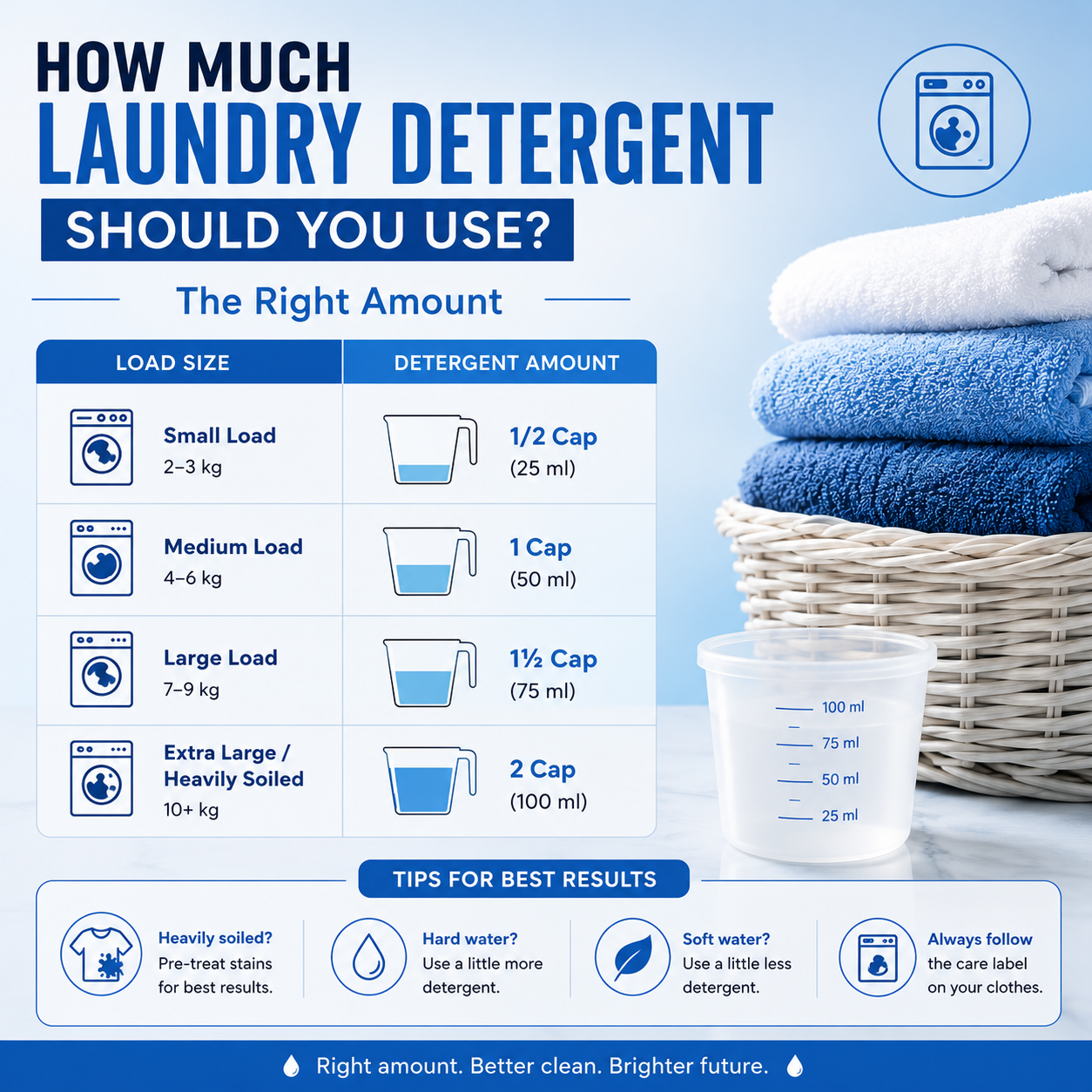
Quick Guide: How Much Laundry Detergent Should You Use?
The correct detergent amount depends on several factors. For example, your washing machine type, detergent strength, and laundry load size all affect how much product you need.
Generally, HE machines require less detergent because they use less water. On the other hand, standard washing machines may require slightly more detergent because they use larger amounts of water.
However, always check your detergent label because different brands have different concentration levels.
4 Factors That Determine How Much Laundry Detergent You Need
1. Your Washing Machine Type
First, consider the type of washing machine you use. This is one of the most important factors because different machines are designed to work with different detergent amounts.
High-Efficiency (HE) Washing Machines
HE washing machines use less water and require specially designed low-sudsing detergents. As a result, they need much smaller detergent amounts compared with traditional machines.
Because less water is available during the wash cycle, excess detergent may not rinse away properly. Therefore, too much detergent can cause:
- Detergent buildup inside the machine
- Musty smells
- Stiff clothing
- Poor rinsing performance
For this reason, most HE washers work best when you use a small amount of concentrated detergent.
Standard Washing Machines
Similarly, standard top-loading washing machines require careful detergent measurement. Although these machines usually use more water, adding extra detergent is not always necessary.
Instead, follow the recommended amount on the detergent packaging and adjust only when needed.
2. Load Size and Clothing Condition
In addition to your washing machine type, your laundry load size also affects detergent requirements.
For example, a small load of lightly worn clothes needs much less detergent than a large load of towels or heavily stained clothing.
Light Loads
For lightly soiled clothes, such as office shirts or delicate fabrics, use the minimum recommended detergent amount. This helps prevent residue while still providing effective cleaning.
Normal Loads
For everyday laundry, a medium detergent dose is usually enough. In most cases, regular clothing does not require extra detergent.
Heavy Loads
However, heavily stained clothes require a different approach. Instead of simply adding more detergent, pre-treat stains before washing. As a result, you can remove tough marks more effectively while avoiding detergent buildup.
What Happens When You Use Too Much Laundry Detergent?
Many people believe that more detergent creates cleaner clothes. However, the opposite can happen when too much product is used.
For instance, excess detergent can leave behind residue, which affects both your clothes and your washing machine.
1. Clothes Feel Stiff and Rough
First of all, extra detergent can create a coating on fabric fibres. Over time, this buildup can make towels and clothing feel stiff instead of soft.
2. Clothes Develop Bad Odours
Additionally, detergent residue can trap body oils, sweat, dirt, and bacteria inside fabrics. Consequently, clothes may develop unpleasant smells even after washing.
3. Your Washing Machine Can Develop Odours
Similarly, detergent buildup inside the washing machine can create problems. For example, residue may collect in drum seals, detergent drawers, and internal parts.
As a result, mold and mildew may grow, causing unwanted smells.
4. Dark Clothes May Look Faded
Finally, excess detergent can leave marks on dark fabrics. Therefore, black clothes and jeans may appear dull over time.
Final Thoughts
In conclusion, using the correct amount of laundry detergent is one of the simplest ways to improve your washing results.
Although many people assume that more detergent means cleaner clothes, the right amount is actually more effective. Furthermore, using the correct dose helps protect fabrics, prevent odors, and keep your washing machine working efficiently.
Therefore, start with a smaller amount, adjust according to your load size and water conditions, and always follow your detergent manufacturer’s instructions.