


The good news is that you can reduce this problem with a few simple laundry habits. The secret is to separate lint-producing fabrics, prepare your clothes properly, use suitable washing settings, and keep your washing machine and dryer clean. In this guide, you will learn how to prevent lint on black clothes, remove existing lint, and keep dark garments looking their best.
What Causes Lint on Black Clothes After Washing?
Lint consists of small fibres that come loose from fabrics during washing, drying, and everyday wear. These fibres can transfer from one garment to another or become trapped on textured fabrics. Static electricity can also make loose fibres cling to clothing.
Black and dark-coloured garments do not necessarily attract more lint than every other colour. However, white and light-coloured fibres are much easier to see against a dark background.
Common causes of lint on black clothes include:
- Washing black clothes with towels: Towels can release large amounts of loose fibres.
- Mixing dark clothes with fleece: Fleece blankets, fluffy sweatshirts, and bathrobes can shed lint.
- Overloading the washing machine: Crowded loads can prevent clothes from moving and rinsing properly.
- Static electricity: Dry air and tumble drying can cause loose fibres to cling to garments.
- Excessive friction: Rough washing cycles can loosen fibres and contribute to fabric wear.
- Tissues left in pockets: Small pieces of paper can break apart and spread throughout a load.
- Dirty appliance filters: Accumulated lint may interfere with effective collection and airflow in some machines.
How to Prevent Lint on Black Clothes After Washing
Preventing lint starts before you put your clothes in the washing machine. Follow these practical steps to reduce loose fibres and keep dark garments looking cleaner.
1. Wash Black Clothes Separately from Towels
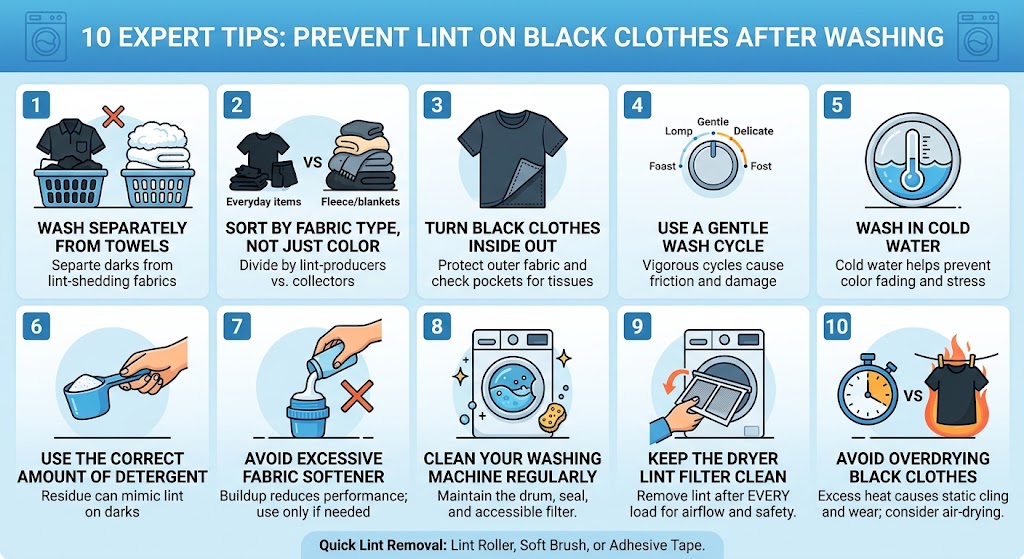
One of the most effective ways to prevent lint on black clothes is to keep them away from heavy lint-producing fabrics. Bath towels, flannel items, fleece blankets, chenille fabrics, and fluffy robes can release fibres during washing.
Wash towels together in a separate load and keep black shirts, trousers, and jeans with similar dark garments. Separate delicate and heavily textured fabrics when necessary.
This simple change can significantly reduce the amount of loose lint transferred to dark clothing.
2. Separate Clothes by Fabric Type, Not Just Colour
Sorting laundry by colour is important, but fabric type also matters. Some fabrics shed fibres, while others are particularly good at collecting them.
For better results, try separating your laundry into these groups:
- Black and dark everyday clothing: Shirts, trousers, jeans, and similar items.
- Lint-producing fabrics: Towels, fleece, flannel, and fluffy blankets.
- Delicate clothing: Fine knits and garments requiring gentle care.
- Heavily soiled items: Clothing that needs a different wash treatment.
Always follow garment care labels and avoid mixing items that could snag or damage one another.
3. Turn Black Clothes Inside Out Before Washing
Turning black clothes inside out helps protect the outer surface from friction during washing. It can also reduce visible abrasion and help preserve the appearance of dark fabrics.
Before washing, turn black T-shirts, jeans, sweatshirts, and other suitable garments inside out. Close zippers and fasteners to reduce snagging, and check pockets for tissues, receipts, and other paper items.
This habit will not eliminate every loose fibre, but it can help reduce visible lint and surface wear.
4. Use a Gentle Wash Cycle
Vigorous agitation can increase friction between garments and contribute to fibre damage. A gentle or delicate cycle may help protect suitable fabrics, especially lightweight shirts, knits, and dark garments that show wear easily.
Choose the cycle according to the garment care label. Use a normal cycle when required for more heavily soiled clothing, rather than choosing a delicate setting for every load.
Avoid overloading the drum. Clothes need enough room to move freely so that water and detergent can circulate and rinse away effectively.
5. Wash Black Clothes in Cold Water When Suitable
Cold water is often a good choice for black clothing because it can help reduce colour fading compared with repeated hot washes. Combined with a suitable cycle, it may also help protect fabrics from unnecessary stress.
However, cold water does not prevent all lint. Sorting fabrics and reducing friction remain important. Follow the care label and detergent instructions, particularly when washing items with heavy soil or specific cleaning requirements.
6. Use the Correct Amount of Laundry Detergent
Using too much detergent can leave residue on clothing, while using too little may not provide the cleaning performance your load needs. Residue can sometimes look like white lint or powdery marks on black garments.
Measure detergent according to the manufacturer’s instructions, taking load size, soil level, and water hardness into account. If your clothes repeatedly come out with pale streaks, check the dosage, avoid overloading the washer, and consider an extra rinse if the garment and machine instructions permit it.
A detergent designed for dark clothing may help maintain colour when used as directed, but it cannot replace proper laundry sorting.
7. Avoid Excessive Fabric Softener
Fabric softener may reduce static cling in some laundry loads, which can make loose fibres less likely to stick to garments. However, it is not a complete solution for lint transfer.
Use fabric softener only when suitable for the garment and washing machine, and follow the product’s dosage instructions. Excessive use can leave buildup, and some performance fabrics, towels, and moisture-wicking garments may not be compatible with softener.
Never add several cleaning products together unless their labels explicitly confirm that they are compatible.
8. Clean Your Washing Machine Regularly
Residue, loose fibres, and dirt can accumulate in parts of a washing machine. Regular maintenance helps keep the appliance working as intended and reduces the chance of debris affecting your laundry.
Follow the manufacturer’s instructions to:
- Clean the drum using the recommended maintenance cycle.
- Clean the detergent drawer and accessible seals.
- Inspect and clean any user-accessible filter as instructed.
- Remove visible lint and debris from accessible areas.
- Leave the door open when appropriate to allow the drum to dry.
Not all washing machines have the same type of lint filter, so check your appliance manual before removing or cleaning any component.
9. Keep the Dryer Lint Filter Clean
If you use a tumble dryer, clean its lint screen after every load according to the manufacturer’s instructions. A blocked screen can restrict airflow and affect drying performance. Cleaning it regularly is also an important fire-safety habit.
Separate lint-producing fabrics from black clothing during drying, too. Washing items separately will not prevent lint transfer if you mix them together in the dryer afterward.
Check the dryer vent and arrange appropriate maintenance if you notice persistent airflow problems or unusually heavy lint accumulation. Follow the manufacturer’s safety guidance.
10. Avoid Overdrying Black Clothes
Excessive heat and tumbling can contribute to fabric wear and static cling. Where the garment label permits, use a low-heat or suitable air-dry setting and remove clothes promptly when the cycle finishes.
Air-drying is another option for many black garments. Hang or lay each item according to its care instructions, and avoid prolonged direct sunlight if you want to reduce fading.
How to Remove Lint from Black Clothes After Washing
If your black clothes already have lint on them, you can usually remove loose fibres without washing the entire load again.
Use a Lint Roller
A lint roller is one of the easiest ways to remove visible lint from black shirts, trousers, jackets, and jeans. Roll gently over the fabric in one direction, replacing the adhesive sheet when it becomes covered with fibres.
For delicate materials, test the roller on a hidden area first to ensure it does not pull at the fabric.
Try a Soft Clothes Brush
A soft clothes brush can help lift loose lint from suitable woven fabrics and coats. Brush gently in one direction and avoid pressing too hard, especially on fine knits or fabrics that may snag.
Use Garment-Safe Adhesive Tape
If you do not have a lint roller, a small piece of low-tack adhesive tape may help lift loose fibres. Press it lightly against the affected area and lift it away rather than rubbing it back and forth.
Test the tape on a hidden area first. Strong adhesive tape can leave residue, pull threads, or damage delicate finishes.
Rewash the Garment if Necessary
If a garment is covered with loose fibres, shake it out and inspect the care label. You may be able to run an appropriate rinse or wash cycle to remove remaining debris.
Do not add towels or fleece to the load in an attempt to remove lint. They may introduce even more fibres. Check the washing machine for visible debris and correct the cause before washing again.
Lint vs. Pilling: What Is the Difference?
Lint and pilling can look similar on black clothing, but they are not the same problem.
- Lint: Loose fibres that come from garments, tissues, towels, or other items and stick to the fabric.
- Pilling: Small balls of fibres that form on the garment’s own surface because of friction and wear.
A lint roller or clothes brush is usually suitable for loose lint. Pilling may require a fabric shaver designed for the material, used carefully according to its instructions.
Do not use a fabric shaver on loose knits, delicate fabrics, or garments for which the tool is unsuitable. Prevention through gentler care can help reduce future pilling, although some fabrics naturally develop it over time.
Why Do Black Clothes Still Have White Marks After Washing?
White marks on black clothes are not always lint. They may be detergent residue, mineral deposits from hard water, tissue fragments, deodorant, or fibres from other garments.
To identify the likely cause:
- Check whether the marks look fluffy or fibrous, which may indicate lint.
- Inspect whether the residue is powdery or streak-like, which may indicate detergent buildup.
- Look for small paper fragments if a tissue may have been left in a pocket.
- Review your detergent dosage and washing-machine loading.
For loose lint, use a lint roller or soft brush. For suspected detergent residue, check the detergent instructions, correct the dosage, and consider an extra rinse if suitable. Treat stains or deposits according to their cause instead of applying bleach or other strong chemicals unnecessarily.
Common Mistakes That Cause Lint on Black Clothes
- Washing black clothing with fluffy towels or fleece blankets.
- Mixing lint-producing fabrics with dark synthetic garments.
- Overloading the washing machine or dryer.
- Forgetting tissues and paper in pockets.
- Using excessive detergent or fabric softener.
- Ignoring the care label and using an unsuitable wash cycle.
- Failing to clean the dryer lint screen after each load.
- Confusing pilling or detergent residue with ordinary lint.
Frequently Asked Questions About Lint on Black Clothes
Why Do My Black Clothes Come Out of the Washing Machine Covered in Lint?
The most common causes include washing dark clothing with lint-producing fabrics, tissues left in pockets, friction between garments, and static cling. Separate fabrics by type, check pockets, and use suitable washing settings to reduce the problem.
What Is the Best Way to Prevent Lint on Black Clothes?
Wash black clothes separately from towels, fleece, and other heavy lint-shedding items. Turn garments inside out, avoid overloading the machine, use a suitable cycle, and maintain your washing machine and dryer.
Does Washing Black Clothes Inside Out Prevent Lint?
Turning clothes inside out can reduce visible lint and friction on the outer surface, but it will not eliminate lint transfer completely. Sorting laundry by fabric type is equally important.
Can I Use Vinegar to Stop Lint from Sticking to Clothes?
Vinegar is not a guaranteed lint-removal treatment. Its suitability depends on your washing machine and garment instructions. Never mix vinegar with chlorine bleach, and do not use it in your washer unless the manufacturer permits it.
Does Fabric Softener Prevent Lint?
Fabric softener may reduce static cling in some loads, helping loose fibres detach more easily. However, it does not stop fabrics from shedding. Use it only when appropriate for your clothing and appliance.
How Do I Remove White Fluff from Black Jeans?
Use a lint roller or soft clothes brush to remove loose fibres. If the marks remain, check whether they are detergent residue or pilling rather than lint. Follow the care label before trying any additional treatment.
Can Too Much Detergent Cause White Residue on Black Clothes?
Yes. Excess detergent may not rinse away completely and can leave pale streaks or residue. Measure the detergent according to the label, avoid overloading the machine, and use an additional rinse if appropriate.
Final Thoughts: Keep Black Clothes Clean and Lint-Free
Lint on black clothes after washing is frustrating, but a few changes can make a noticeable difference. Separate dark garments from towels and fleece, turn clothes inside out, choose suitable wash settings, and use the correct amount of detergent.
Remember to clean your dryer lint screen after every load and check your clothes before drying. If lint is already present, use a lint roller or soft brush to remove it safely.
For more laundry advice, explore our guides on how to wash black clothes without fading, how to wash clothes properly, and how to clean your washing machine and remove bad smells.