


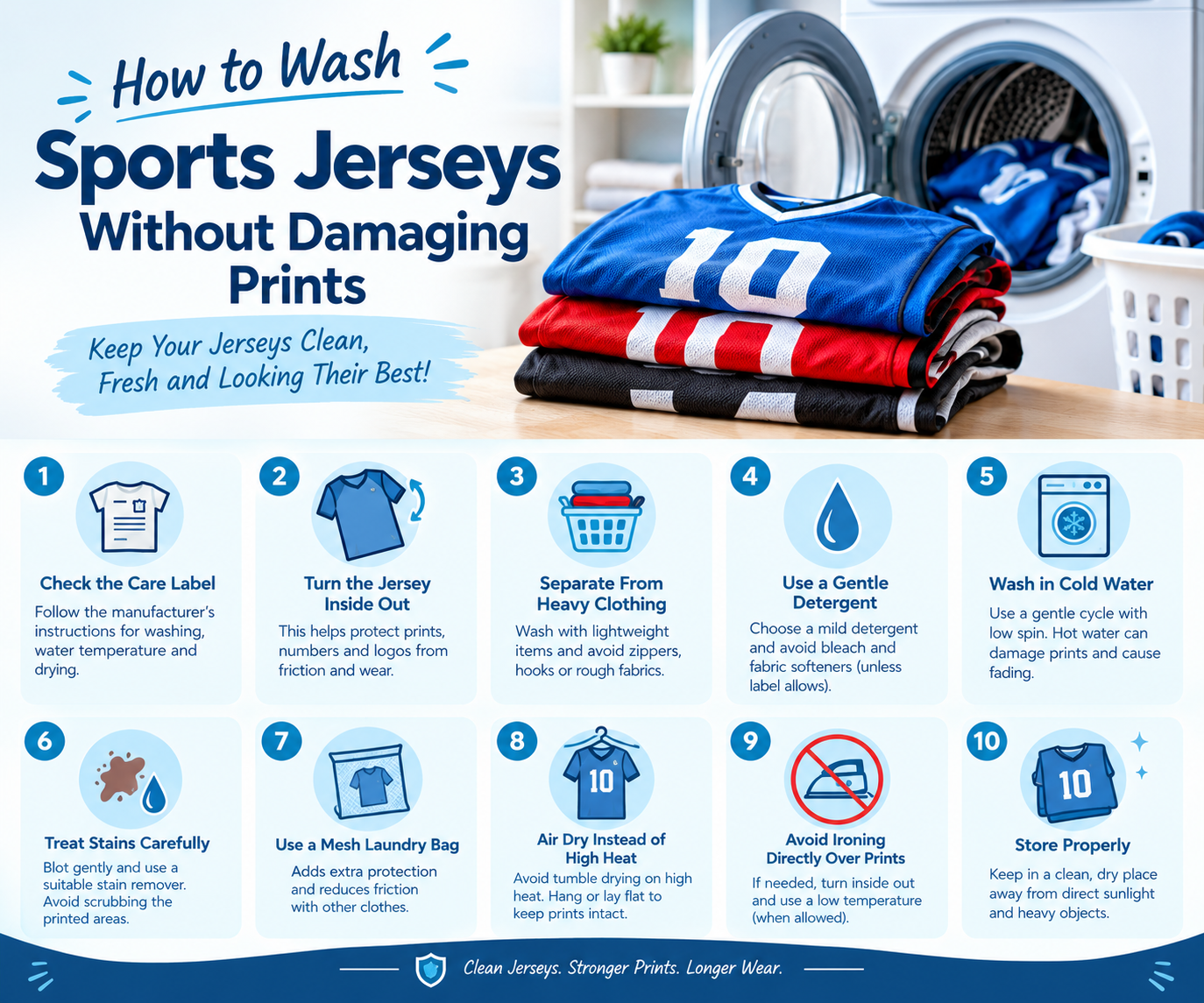
How to Wash Sports Jerseys Without Damaging Prints
How to Wash Sports Jerseys Without Damaging Prints
Sports jerseys are designed for movement, sweat, and regular wear, but their printed numbers, team logos, names, and decorative details need special care. Washing them incorrectly can cause peeling, cracking, fading, shrinking, or damage to delicate fabrics.
Whether you wear a football jersey, basketball uniform, soccer shirt, or another type of sportswear, learning how to wash sports jerseys properly can help keep them fresh, comfortable, and looking their best.
With the right washing method, a suitable detergent, and careful drying, you can clean your jerseys while helping protect their prints.
Why Do Sports Jersey Prints Get Damaged?
Sports jerseys often feature heat-applied numbers, vinyl lettering, screen-printed graphics, embroidered logos, and lightweight synthetic fabrics. These materials may react differently to heat, friction, and certain cleaning products.
- High temperatures: Hot water and high dryer heat can weaken some print adhesives and affect certain fabrics.
- Aggressive washing: Excessive friction can wear down printed designs and damage delicate stitching.
- Harsh cleaning products: Bleach and unsuitable stain removers may discolor fabrics or damage graphics.
- Incorrect drying: Direct high heat can cause some prints to crack, peel, or lose their finish.
- Leaving sweat untreated: Sweat, body oils, and dirt can build up and cause persistent odors or stains.
1. Check the Care Label Before Washing
Before putting your jersey in the washing machine, read the manufacturer’s care label. It provides important instructions about water temperature, washing methods, drying, and any restrictions.
Most polyester sports jerseys can be machine-washed, but some have special finishes, delicate embellishments, or construction details that require extra care.
Check whether the label recommends machine washing or hand washing, a specific water temperature, a gentle cycle, or air drying. If the label says not to machine-wash the jersey, follow those instructions.
2. Turn the Jersey Inside Out
One of the simplest ways to help protect jersey prints is to turn the garment inside out before washing. This places the printed surface on the inside, reducing direct contact with other clothes, zippers, buttons, and the washing machine drum.
Turning your jersey inside out can help reduce friction against printed numbers and logos, protect lettering from unnecessary abrasion, and minimize surface wear during washing.
Make sure the jersey is fully turned inside out, including the sleeves, before placing it in the machine.
3. Separate Jerseys From Heavy Clothing
Sports jerseys are often lightweight, while jeans, towels, hoodies, and other heavy garments can create extra friction during a wash cycle.
Wash jerseys with similar lightweight clothing whenever possible. Avoid washing them with garments that have exposed zippers, hooks, rough fasteners, or abrasive materials.
If you have several jerseys, avoid overcrowding the washing machine. Clothes need enough room to move freely for effective cleaning and rinsing.
4. Choose a Gentle Detergent
Choosing a suitable laundry detergent is important when cleaning printed sportswear. A detergent designed for routine laundry can help remove sweat, body oils, and everyday dirt without requiring aggressive scrubbing.
- Choose a detergent suitable for the jersey’s fabric and care instructions.
- Measure the detergent according to the product directions.
- Avoid chlorine bleach unless the garment label and product instructions specifically permit its use.
- Avoid fabric softeners if the jersey manufacturer advises against them, particularly for performance fabrics designed to manage moisture.
- Do not combine cleaning chemicals.
Clean Laundry Detergent™ can be considered as part of your regular laundry routine when its product directions are suitable for the jersey’s fabric and care requirements.
5. Wash Sports Jerseys in Cold Water
Cold water is generally a good choice for machine-washable sports jerseys because it can help reduce the risk of heat-related damage and color fading.
Follow these steps for a gentle wash:
- Place the jersey inside out in the washing machine.
- Select cold water or the temperature specified on the care label.
- Choose a gentle or delicate cycle with a moderate or low spin setting.
- Add the appropriate amount of detergent.
- Allow the wash cycle to finish.
Avoid unnecessarily long or aggressive wash cycles, especially for jerseys with heat-applied numbers, names, or logos.
6. Treat Sweat and Stains Carefully
Sports jerseys can develop sweat marks, grass stains, mud, and food stains during games or training sessions. Treating stains before washing can improve cleaning results, but aggressive rubbing may damage the printed surface.
- Check the garment label and identify the stained area.
- Rinse or gently blot the stain with cool water, where appropriate.
- Apply a small amount of suitable detergent if the care instructions permit it.
- Let the product work according to its directions.
- Wash the jersey using the recommended cycle.
Avoid scrubbing directly over printed numbers, logos, or lettering. For stubborn stains, test a suitable treatment on an inconspicuous area first. Never mix bleach, ammonia, or other cleaning chemicals.
7. Use a Mesh Laundry Bag for Extra Protection
A mesh laundry bag can provide an additional layer of protection for delicate or valuable jerseys. It helps limit direct contact with other garments and reduces the chance of printed areas catching on fasteners.
- Turn the jersey inside out first.
- Place it loosely inside a suitable mesh laundry bag.
- Avoid squeezing multiple garments into one small bag.
- Select the appropriate gentle washing cycle.
A mesh bag is particularly useful for jerseys with delicate detailing, although it cannot completely prevent damage caused by excessive heat, unsuitable chemicals, or incorrect washing settings.
8. Never Rush the Drying Process
Drying is just as important as washing when it comes to protecting sports jersey prints. High dryer temperatures can damage some printed designs and may affect synthetic fabrics. For many jerseys, air drying is the gentlest option.
- Remove the jersey promptly after washing.
- Gently reshape it without pulling on the printed areas.
- Hang it on a suitable hanger or lay it flat, depending on the fabric and garment construction.
- Keep it away from direct heat.
- Allow it to dry completely before storing.
Avoid wringing the jersey aggressively because this can stretch the fabric and put unnecessary stress on the graphics. If the care label permits tumble drying, follow its temperature and cycle recommendations.
9. Avoid Ironing Directly Over Prints
Direct ironing can damage heat-applied numbers, vinyl lettering, and other printed designs. If your jersey becomes wrinkled, check the care label before using an iron or garment steamer.
When ironing is permitted, turn the jersey inside out and follow the manufacturer’s temperature instructions. Avoid direct contact between a hot iron and printed or decorated areas.
Do not apply heat to a print simply to flatten it or repair peeling edges. Heat may make the damage worse if the design is not intended to be reheated.
10. Store Your Sports Jerseys Properly
Once your jersey is completely dry, store it in a clean, dry place away from direct sunlight and excessive heat.
- Make sure the jersey is completely dry before putting it away.
- Fold it gently without creating sharp creases across printed numbers.
- Use a suitable hanger if hanging is preferable.
- Keep jerseys away from damp areas.
- Avoid placing heavy objects on top of delicate prints.
- Wash sweaty jerseys soon after use rather than leaving them damp in a sports bag.
For signed, collectible, or particularly valuable jerseys, consider specialist care and storage recommendations.
Common Mistakes to Avoid When Washing Sports Jerseys
Even a good-quality jersey can deteriorate if it is repeatedly washed incorrectly. Avoid these common mistakes:
- Using hot water without checking the label: High temperatures can affect certain fabrics and print adhesives.
- Washing jerseys with rough clothing: Zippers, hooks, and heavy garments can increase friction.
- Using too much detergent: Excess detergent can leave residue and may require additional rinsing.
- Scrubbing printed areas: Aggressive rubbing can damage the graphic’s surface.
- Using bleach indiscriminately: Bleach may discolor the garment or damage its decoration.
- Tumble drying on high heat: Excessive heat can weaken some prints and affect synthetic fabrics.
- Storing a damp jersey: Moisture trapped in folded clothing can encourage unpleasant odors and mildew.
Avoiding these mistakes helps keep your jerseys cleaner and reduces unnecessary wear.
Frequently Asked Questions
Can You Wash Sports Jerseys in a Washing Machine?
Yes, many sports jerseys are machine-washable. Check the care label first, turn the jersey inside out, use a suitable detergent, and choose a gentle cycle with the recommended water temperature.
How Do You Wash Football Jerseys Without Damaging the Numbers?
Turn the jersey inside out, wash it in cold water when permitted, avoid aggressive cycles, and air dry it if recommended. These steps help reduce friction and heat exposure that can damage printed numbers.
Should Sports Jerseys Be Washed in Hot or Cold Water?
Cold water is generally a suitable choice for many machine-washable sports jerseys. However, always follow the manufacturer’s care instructions because materials and printed finishes can vary.
Can You Put Printed Jerseys in the Dryer?
Some jerseys allow tumble drying, but others require air drying. Check the care label and avoid high heat unless the manufacturer specifically permits it.
Should You Use Fabric Softener on Sports Jerseys?
It depends on the fabric and manufacturer’s instructions. Some performance garments can be affected by fabric softeners, which may interfere with moisture-management properties. When unsure, leave it out.
How Often Should You Wash a Sports Jersey?
Wash a jersey after each strenuous game or workout, particularly when it becomes sweaty. For lightly worn jerseys, follow the care label and use your judgment based on odor, dirt, and use.
How Can You Remove Sweat Smells From Sports Jerseys?
Wash the jersey promptly after use, choose a suitable detergent, avoid overloading the machine, and allow the garment to dry completely. If the odor persists, check the care label and consider a fabric-compatible treatment.
Final Thoughts
Knowing how to wash sports jerseys without damaging prints helps you protect your favorite team shirts, training tops, and uniforms from avoidable wear.
The most important habits are simple: check the care label, turn the jersey inside out, use a suitable detergent, wash gently, treat stains carefully, and avoid excessive heat when drying.
With a little extra care, you can keep your sports jerseys fresh, comfortable, and ready for the next game while helping preserve their colors, numbers, and logos.
For everyday laundry, Clean Laundry Detergent™ may be part of your routine when used according to its product instructions and the garment’s care requirements.
Keep your jerseys clean. Protect the prints. Make every wash count.