

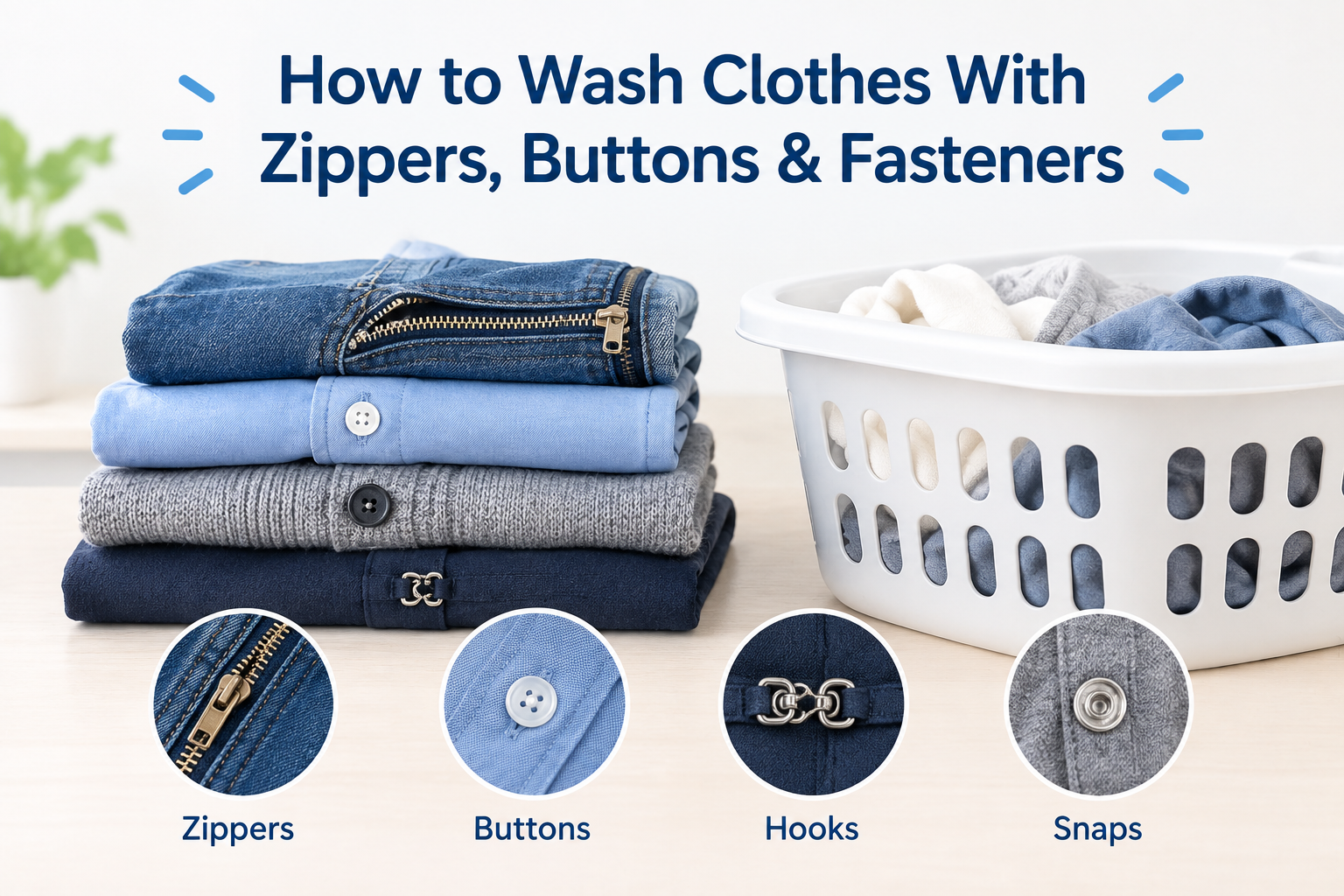
How to Wash Clothes With Zippers, Buttons and Other Fasteners
How to Wash Clothes With Zippers, Buttons and Other Fasteners
Clothing fasteners may seem like small details, but zippers, buttons, hooks, snaps, buckles and other hardware can affect how your clothes should be washed. When fasteners are left open or handled incorrectly, they can snag other garments, scratch delicate fabrics, become damaged or put unnecessary stress on seams.
Learning how to wash clothes with zippers, buttons and other fasteners can help extend the life of your favorite jeans, jackets, shirts, uniforms, dresses, sweaters and everyday clothing. A few simple preparation steps before putting clothes into the washing machine can make a big difference.
The good news is that you usually do not need a complicated laundry routine. The key is to check the care label, prepare the fasteners correctly, choose a suitable wash cycle, avoid overcrowding the machine and dry the garment according to its fabric and care instructions.
Why Fasteners Matter When Washing Clothes
Zippers, buttons, hooks, snaps and buckles are often made from materials that behave differently from the fabric around them. Metal and hard plastic components can rub against clothing during the wash cycle, while open hooks or zippers can catch on other garments.
Inside a washing machine, clothes constantly move, tumble and rub against one another. This mechanical movement is an important part of cleaning, but it can also create friction between garments and their fasteners.
For example, an open zipper can catch on a knitted sweater. A bra hook can snag a delicate shirt. A loose button can pull against its thread. A metal buckle can rub against another garment and create marks or scratches.
Properly preparing fasteners before washing helps reduce these problems while allowing your clothes to get thoroughly cleaned.
Always Check the Care Label First
Before washing any garment, check its care label. The label provides important information about whether the item can be machine washed, hand washed or dry cleaned, as well as recommended water temperature, drying method and other care instructions.
This step is especially important for clothing with decorative buttons, leather details, delicate trims, coated zippers or specialty hardware.
If a garment says dry clean only, do not automatically assume that it is safe to put into the washing machine simply because the main fabric looks washable. Some garments have special construction, trims, buttons, dyes or other components that may be damaged by water or machine agitation.
When in doubt, follow the manufacturer’s care instructions rather than relying on the appearance of the fabric.
Should You Zip Clothes Before Washing?
In most cases, it is a good idea to close zippers before washing clothes. A closed zipper is less likely to catch onto other garments during the wash cycle.
Open zippers have exposed teeth and edges that can grab onto knitwear, lace, thin fabrics and other clothing. They can also become bent or damaged if they repeatedly catch against other items.
Before placing a garment with a zipper into the washing machine:
- Check that the zipper is not damaged.
- Remove anything from the zipper area or pockets.
- Zip the garment completely.
- Make sure the zipper pull is positioned securely.
- Turn delicate garments inside out if recommended by the care label.
Closing zippers is particularly useful for jeans, hoodies, jackets, sweatshirts, trousers, children’s clothing and other garments with exposed zipper teeth.
How to Wash Clothes With Metal Zippers
Metal zippers can be more abrasive than soft fabric components, so preparation is important. Close the zipper before washing and check that there are no sharp, bent or broken teeth.
If the garment is heavily decorated or contains other metal hardware, separate it from extremely delicate clothing whenever possible.
For everyday washable garments, use the wash temperature and cycle recommended on the care label. Avoid unnecessarily aggressive washing if the garment does not require it.
After washing, inspect the zipper before drying. If the zipper has become bent, stuck or damaged, repair it before the garment is washed again.
How to Wash Clothes With Plastic Zippers
Plastic zippers are common on sportswear, jackets, children’s clothing, bags and casual garments. They are generally lightweight, but they can still catch onto other clothing if left open.
Close plastic zippers before washing and follow the garment’s care instructions. If the item is made from a delicate synthetic fabric, a gentle or delicate cycle may be appropriate.
Do not force a zipper that is already stuck. A damaged zipper can become worse during washing and may eventually pull away from the fabric.
Should You Button Clothes Before Washing?
Buttons require a little more consideration because different types of buttons react differently to washing.
For shirts and similar garments, many people prefer to leave most buttons undone while washing. This can reduce unnecessary stress on the button threads and buttonholes during the movement of the wash cycle.
However, the best approach can depend on the garment’s construction and care instructions.
Before washing buttoned clothing:
- Check the buttons for looseness or cracks.
- Repair loose buttons before washing when possible.
- Check the care label.
- Do not overload the washing machine.
- Wash delicate garments using an appropriate cycle.
If a button is already hanging by a few threads, washing the garment without repairing it first can cause the button to come off completely.
How to Protect Buttons From Damage
Buttons can break when they are repeatedly pulled, twisted or pressed against other items. Large decorative buttons may be particularly vulnerable.
If a garment has oversized, decorative or delicate buttons, turn the garment inside out if the care instructions allow it. This can reduce direct contact between the buttons and other clothing during washing.
For particularly delicate garments, consider using a mesh laundry bag. A laundry bag can help reduce rubbing and prevent small components from becoming caught on other items.
How to Wash Clothes With Hooks and Eyes
Hooks and eyes are common on bras, lingerie, skirts, dresses and other fitted garments. Open hooks can easily catch on fabric during washing.
Always fasten hooks before placing these garments in the washing machine. This is especially important for bras and other garments with multiple hooks.
For delicate lingerie, use a mesh laundry bag and choose the gentle or delicate cycle if permitted by the care label.
Fastening the hooks helps prevent them from catching on knitwear, lace, thin fabrics and other delicate garments.
How to Wash Bras Without Damaging the Hooks
Bras need extra care because they combine elastic, fabric, hooks, underwires and other components.
Before washing a bra:
- Fasten the hooks.
- Place the bra in a suitable mesh laundry bag if machine washing is allowed.
- Use a gentle cycle when recommended.
- Avoid washing with items that have sharp or abrasive hardware.
- Follow the drying instructions on the care label.
Never force a damaged hook closed. If the hook or eye is bent, repair it before washing.
How to Wash Clothes With Snaps and Press Studs
Snaps and press studs are found on baby clothes, shirts, jackets, uniforms and casual clothing. They can be strong, but repeated rough washing can eventually weaken the attachment points.
Close snaps before washing when recommended by the garment manufacturer. Check that each snap is properly attached to the fabric and that none are loose.
If a snap is already separating from the garment, repair it before washing. Otherwise, the movement of the machine may make the damage worse.
How to Wash Clothes With Buckles
Buckles can be found on belts, dresses, uniforms, shoes, bags and specialty clothing. Because buckles can be hard and heavy, they can create additional friction inside a washing machine.
If the buckle is removable, remove it before washing if the garment instructions permit. If it cannot be removed, secure the garment as recommended and avoid washing it with extremely delicate fabrics.
Large metal buckles may also make noise during the wash cycle. This does not necessarily mean something is wrong, but inspect the garment and washing machine afterward if you hear unusual or repeated banging.
Should You Turn Clothes Inside Out Before Washing?
Turning clothes inside out can be helpful for many garments, particularly items with printed designs, decorative surfaces, dark colors or delicate exterior details.
It can reduce direct contact between the outside of the garment and other clothes, helping minimize friction during washing.
Turning clothes inside out can be particularly useful for:
- Printed T-shirts
- Dark clothing
- Clothing with embroidery
- Garments with decorative details
- Synthetic knits
- Some garments with exposed hardware
However, always prioritize the garment care instructions.
How to Prevent Zippers From Snagging Other Clothes
One of the biggest laundry problems caused by zippers is snagging. The teeth, edges or zipper pull can catch on other fabrics while clothes move around the washing machine.
To reduce the risk:
- Close the zipper before washing.
- Separate heavily textured items from delicate fabrics.
- Use a mesh laundry bag for particularly delicate garments.
- Avoid overloading the washing machine.
- Turn delicate garments inside out when appropriate.
- Check damaged zippers before washing.
The American Cleaning Institute specifically recommends fastening zippers, buckles, hooks and eyes before washing because unfastened hardware can contribute to holes, tears and snags. :contentReference[oaicite:1]{index=1}
How to Prevent Buttons From Coming Off in the Wash
A button that is already loose is much more likely to come off during washing. Before starting a load, quickly inspect shirts, coats, school uniforms and other buttoned clothing.
If you notice a loose button:
- Check the button thread.
- Repair the button before washing if possible.
- Check the fabric around the button for damage.
- Wash the garment according to its care label.
This simple inspection can save you from losing buttons and having to repair the garment after every wash.
Do Not Overload the Washing Machine
Overloading is one of the easiest ways to increase friction between clothes. When the drum is packed too tightly, garments have less room to move freely through the wash water.
Fasteners can then rub against other clothing more frequently, increasing the chance of snags, tangling and fabric damage.
Give your laundry enough room to circulate. The American Cleaning Institute recommends allowing the wash load to circulate freely rather than overloading the machine. :contentReference[oaicite:2]{index=2}
A properly sized load also gives detergent and water enough opportunity to move through the clothing.
Choose the Right Washing Cycle
The washing cycle you select can make a major difference in how much mechanical stress your clothes experience.
For sturdy everyday garments, a normal cycle may be appropriate if permitted by the care label. Delicate garments may require a gentle or delicate cycle with less aggressive movement.
Consider the following general approach:
- Normal cycle: Suitable for many durable everyday garments.
- Gentle cycle: Better suited to fragile fabrics and garments that need less agitation.
- Heavy-duty cycle: Designed for heavily soiled, durable items when the care label allows it.
- Quick wash: Useful for lightly soiled loads when appropriate.
Always use the garment care label as the final guide because different fabrics and garment constructions require different treatment. :contentReference[oaicite:3]{index=3}
What Water Temperature Should You Use?
There is no single water temperature that is best for every garment. The correct temperature depends on the fabric, dye, level of soil and care instructions.
Cold water is suitable for many everyday washable garments and can be a useful choice when the care label permits it. Some heavily soiled items may require warmer water, but higher temperatures should never be used simply because you think they will clean better.
Always check the garment label before selecting hot water.
How Much Laundry Detergent Should You Use?
Using more detergent does not automatically mean cleaner clothes. Too much or too little detergent can contribute to poor laundry results.
Follow the detergent manufacturer’s recommended dosage and adjust according to the load size and product instructions.
For clothes with zippers, buttons and other fasteners, the detergent amount should generally be based on the overall laundry load rather than the presence of the fasteners.
Using the correct amount of detergent helps provide effective cleaning without unnecessarily leaving excess product behind on fabrics.
Should You Use a Laundry Bag for Clothes With Fasteners?
A mesh laundry bag can be useful for delicate garments or smaller items with hooks, straps and other components that may become tangled.
It can provide an additional layer of separation between the garment and the rest of the load.
Consider using a laundry bag for:
- Bras
- Delicate underwear
- Lingerie
- Fine knits
- Small garments with hooks
- Delicate clothing with decorative hardware
Do not overfill the laundry bag. Clothes still need enough space for water and detergent to circulate.
How to Wash Jeans With Zippers and Buttons
Jeans are generally durable, but their zippers, buttons, seams and denim fabric can still experience unnecessary wear during repeated washing.
Before washing jeans, check the care label and close the zipper. Inspect the button and fly area for loose stitching.
Turn jeans inside out when appropriate, especially if you want to help protect their exterior appearance. Use the recommended water temperature and cycle, and avoid excessive heat during drying.
Do not wash jeans with extremely delicate fabrics that could easily catch on their hardware.
How to Wash Jackets With Zippers and Snaps
Jackets can contain several different fasteners at once, including zippers, snaps, buttons, drawcords and buckles.
Before washing a jacket:
- Empty all pockets.
- Close the main zipper.
- Fasten snaps when appropriate.
- Secure removable components according to the care label.
- Check for loose seams or damaged hardware.
- Follow the recommended washing cycle.
Some jackets have special coatings, insulation or trims that require specific care. Never assume that a jacket is machine washable simply because it is made from a washable-looking fabric.
How to Wash Children’s Clothes With Buttons and Snaps
Children’s clothing often contains snaps, buttons, zippers and decorative attachments. These garments can also experience frequent washing because children tend to get clothing dirty more quickly.
Before washing children’s clothing, inspect buttons and snaps for loose pieces. Close zippers and fasteners according to the garment’s care instructions.
Pay particular attention to decorative elements. If a button, snap or decorative piece is already loose, repair it before washing rather than allowing it to become detached inside the machine.
How to Protect Delicate Fabrics From Fasteners
Delicate fabrics can be damaged more easily by friction than sturdy cotton or denim.
If you are washing a delicate garment together with items containing zippers, hooks or hard buttons, consider separating the loads. This is especially important for lace, fine knits, lightweight fabrics and other materials that can snag easily.
Turning the delicate garment inside out or placing it inside a mesh laundry bag can provide additional protection when appropriate.
What to Do If a Zipper Gets Stuck
If a zipper becomes stuck after washing, do not pull it aggressively. Forcing a zipper can damage the zipper teeth, slider or surrounding fabric.
Allow the garment to dry according to its care instructions and gently inspect the zipper. Look for trapped fabric, bent teeth or a damaged slider.
If the zipper is physically damaged, it may require repair or replacement rather than repeated attempts to force it open.
What to Do If a Button Comes Off in the Wash
If you discover a missing button after washing, check the washing machine drum and surrounding laundry before starting another load.
Look at the garment to determine whether the button thread has broken or whether the fabric around the button has also been damaged.
If the fabric is intact, replacing the button may be a simple repair. If the fabric or buttonhole is torn, repair the damaged area before wearing or washing the garment again.
How to Dry Clothes With Zippers and Fasteners
Washing is only part of garment care. Drying can also affect fasteners and the surrounding fabric.
Use the drying method recommended on the care label. Some garments can be tumble dried, while others should be air dried, drip dried or dried flat.
When using a dryer, choose the recommended heat setting. High heat is not appropriate for every fabric and can contribute to shrinkage or damage in garments that are sensitive to heat.
Remove clothing promptly when the drying cycle finishes when practical. This can also help reduce unnecessary wrinkles.
Should You Dry Clothes With Zippers Closed?
If you closed a zipper for washing, you can generally leave it closed during drying unless the garment’s care instructions say otherwise.
The important consideration is to use the appropriate drying temperature and method for the garment. A zipper itself may tolerate heat differently from the fabric around it, so the care label remains the best guide.
Common Mistakes When Washing Clothes With Fasteners
Avoid these common laundry mistakes if you want your clothing to last longer:
- Leaving zippers open: Open zipper teeth can catch on other garments.
- Leaving hooks unfastened: Hooks can snag delicate fabrics.
- Ignoring loose buttons: A loose button can easily come off during washing.
- Overloading the washer: Excessive crowding increases friction and reduces free movement.
- Mixing delicate clothing with abrasive items: Hard fasteners can damage fragile fabrics.
- Ignoring care labels: Different garments require different washing and drying methods.
- Using excessive heat: Heat can damage or shrink some fabrics.
- Using an overly aggressive cycle: Strong mechanical action can increase wear.
- Washing damaged garments without repair: Existing tears, loose buttons or broken fasteners can become worse.
- Forcing damaged zippers: Pulling too hard can damage both the zipper and fabric.
Step-by-Step Guide: How to Wash Clothes With Zippers, Buttons and Other Fasteners
For an easy laundry routine, follow these steps before every wash:
- Read the care label. Check the washing, drying and temperature instructions.
- Sort the laundry. Separate clothing by color, fabric type and care requirements.
- Empty pockets. Remove coins, tissues, pens and other objects.
- Inspect fasteners. Check zippers, buttons, hooks, snaps and buckles for damage.
- Close zippers. Zip garments completely to help prevent snagging.
- Fasten hooks. Close hooks and eyes on bras and similar garments.
- Check buttons. Repair loose buttons before washing whenever possible.
- Turn suitable garments inside out. This can help protect exterior surfaces.
- Use a mesh laundry bag when appropriate. This is especially useful for delicate garments.
- Do not overload the washer. Give clothes enough room to move freely.
- Add the correct amount of detergent. Follow the detergent label.
- Select the appropriate cycle and temperature. Follow the garment care label.
- Inspect clothes after washing. Look for remaining stains or damaged fasteners before drying.
- Dry according to the care instructions. Use the appropriate heat and drying method.
- Repair damage promptly. Fix loose buttons, broken hooks or damaged zippers before the next wash.
How to Make Clothes With Fasteners Last Longer
Good laundry habits can significantly reduce unnecessary wear. Instead of thinking only about how to get clothes clean, consider how each wash affects the fabric, seams and fasteners.
Sort laundry carefully, use the correct amount of detergent, avoid overloading the washer and select an appropriate cycle. Protect delicate garments from hard or abrasive fasteners and repair small problems before they become larger ones.
The American Cleaning Institute recommends sorting clothes according to color, fabric and care instructions and choosing washer and dryer settings appropriate for the clothing. :contentReference[oaicite:4]{index=4}
Frequently Asked Questions About Washing Clothes With Fasteners
Should zippers be open or closed when washing clothes?
In general, close zippers before washing to reduce the chance of the zipper catching on other clothing. Always follow the specific garment care instructions.
Should I button a shirt before washing it?
Check the garment’s care instructions and inspect the buttons first. Many shirts are washed with their buttons undone to avoid unnecessary stress on the button threads, while other garments may have different recommendations.
Should hooks be fastened before washing?
Yes. Fastening hooks helps prevent them from catching onto other garments during the wash cycle. This is particularly important for bras and delicate clothing.
Can metal zippers damage clothes?
Metal zippers can potentially catch or rub against other garments, especially delicate fabrics. Closing the zipper and separating delicate items can help reduce the risk.
Can I wash clothes with buttons and zippers together?
Yes, many garments with buttons and zippers can be washed together as long as their care instructions, colors and fabric requirements are compatible. Prepare the fasteners properly and avoid mixing hard hardware with extremely delicate fabrics.
Do laundry bags protect clothes with fasteners?
A mesh laundry bag can help protect delicate garments and reduce tangling. It is particularly useful for lingerie, bras and other small delicate garments with hooks or straps.
Why do my clothes get holes after washing?
Holes and snags can have several causes, including damaged fasteners, open zippers or hooks, overloaded washing machines, existing fabric damage and excessive friction. Fastening zippers, hooks and other hardware before washing can help reduce some of these problems. :contentReference[oaicite:5]{index=5}
Can I wash a dry-clean-only garment with buttons or zippers?
If the garment is labeled dry clean only, follow that instruction. Some garments have special trims, buttons, dyes, construction or fabrics that may be damaged by normal washing. :contentReference[oaicite:6]{index=6}
Final Thoughts
Knowing how to wash clothes with zippers, buttons and other fasteners is a simple but important part of good clothing care. Fasteners can protect a garment, improve its fit and make clothing easier to use, but they can also create problems when they are left open, damaged or washed with delicate fabrics.
Before every load, take a few seconds to check your clothes. Close zippers, fasten hooks, inspect buttons, secure appropriate snaps, repair damaged areas and follow the care label. Then choose the right detergent, water temperature, wash cycle and drying method for the load.
These small habits can help reduce snags, protect delicate fabrics, prevent unnecessary fastener damage and keep your favorite clothes looking better for longer.
When it comes to laundry, a few seconds of preparation before washing can save you from much bigger repairs later.