


How to Remove Coffee Stain From Clothes Tea Stains Too
Everyone has done it. You grab your morning cup, hit a bump, and now there’s a brown splash across your favourite shirt. The good news: you can remove coffee stain from clothes at home, and tea stains come out the same way. The trick is knowing what the stain is made of, how fresh it is, and what fabric you’re dealing with.
This guide covers fresh spills, old dried stains, white shirts, and delicate fabrics like linen and silk, so you can pick the right method the first time.
Why Coffee and Tea Stains Are So Stubborn (Tannin Stain Removal Basics)
Coffee and tea both contain tannins, natural plant compounds that give the drinks their colour and slight bitterness. Tannins bind easily to fabric fibres, especially natural ones like cotton and linen, and they darken and set over time.
That’s why tannin stain removal works best when you follow three rules:
- Act fast. Fresh stains lift far more easily than old ones.
- Avoid heat. Hot water on an untreated stain, or a tumble dryer, can lock the stain in.
- Use an oxidiser. Tannin stains are bleachable, so detergents with oxygen bleach or a little hydrogen peroxide work well on suitable fabrics.
Quick Steps to Remove Coffee Stain From Clothes When It’s Fresh
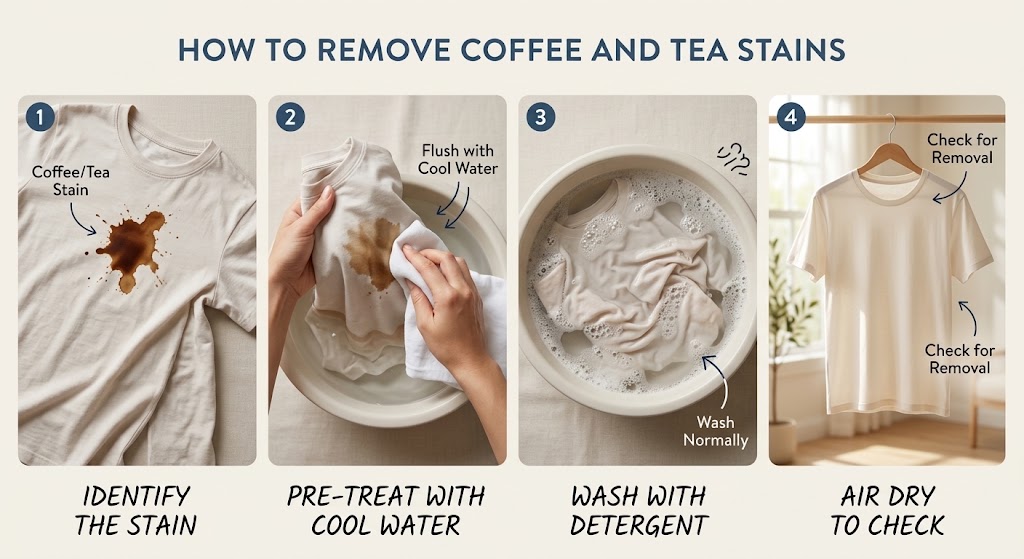
If the spill just happened, do this straight away:
- Blot, don’t rub. Press a clean cloth or paper towel on the stain to soak up the liquid. Rubbing pushes it deeper and spreads it.
- Flush with cold water from the back. Run cold water through the reverse side of the fabric so the stain is pushed out, not further in.
- Apply liquid detergent. Work a small amount into the stain with your fingers and leave it for 5 to 10 minutes.
- Wash as normal. Use the warmest water the care label allows.
- Check before drying. If any brown shadow remains, repeat the treatment. Only dry the garment once the stain is fully gone.
Most fresh stains come out after one wash if you follow these steps.
How to Remove Tea Stain From a White Shirt
White shirts show every drop, and tea leaves a yellow-brown tint that can look worse than coffee. To remove a tea stain from a white shirt:
- Blot the excess and rinse the back of the stain with cold water.
- Soak the shirt in lukewarm water with a scoop of oxygen-based whitener or your regular detergent for 30 to 60 minutes.
- For leftover marks, dab on a solution of 1 part 3% hydrogen peroxide to 2 parts water and leave it for 10 minutes.
- Rinse, then wash on the hottest setting the label allows.
- Air dry and check the stain in daylight before using the dryer.
Note: Hydrogen peroxide can lighten coloured fabrics. Use it on whites or colourfast items only, and test a hidden spot first.
Old or Dried Coffee Stain Removal: What Actually Works
A stain that has been sitting for days, or has already been through the dryer, is tougher but not hopeless. For old coffee stain removal, you need more time and a stronger soak.
Step-by-step for old stains
- Pre-soak. Mix lukewarm water with a good laundry detergent or oxygen bleach and soak the garment for at least an hour. Stubborn stains may need an overnight soak.
- Pre-treat. Rub a little liquid detergent directly into the stain.
- Wash. Use the hottest water safe for the fabric.
- Repeat if needed. Old stains often need two rounds. Don’t dry until the mark is gone.
Does coffee stain come out after drying?
Sometimes, yes. Heat from a dryer sets the tannins, so the stain becomes harder to remove, but it’s still worth trying. Re-wet the area, treat it with detergent, and do a long oxygen-bleach soak. Results are best on white and colourfast cotton. If the stain has been set through several dry cycles, expect it to fade rather than vanish completely.
Coffee Stain Remedies: Baking Soda, Vinegar and Hydrogen Peroxide
These household ingredients can help, especially when you don’t have a stain remover on hand. Here’s how each one works and when to use it.
Coffee stain and baking soda
Baking soda acts as a mild abrasive and helps absorb moisture. Mix it with a few drops of water to make a thick paste, spread it on the stain, and gently rub it in with your fingers or a soft brush. Leave it for 30 minutes, rinse, then wash as usual. It’s best for light, fresh stains on sturdy fabrics.
Coffee stain and white vinegar
White vinegar is mildly acidic and can loosen tannins. Mix equal parts white vinegar and cold water, dab it onto the stain with a cloth, let it sit for 10 to 15 minutes, then rinse and wash. Vinegar is a gentle option for fresh stains and is a good first step before detergent.
Coffee stain and hydrogen peroxide
3% hydrogen peroxide is the strongest of the three and works well on white cotton. Dilute it with water (1 part peroxide to 2 parts water), apply, wait 10 minutes, then rinse and wash. Always test on a hidden area first, since it can bleach dyes.
| Remedy | Best for | Strength | Avoid on |
|---|---|---|---|
| Baking soda paste | Fresh, light stains | Mild | Delicate weaves you can’t scrub |
| White vinegar + water | Fresh stains, first-aid step | Mild to medium | Silk (use only if care label allows) |
| Hydrogen peroxide (3%, diluted) | Old stains on whites | Strong | Coloured fabrics, silk, wool |
How to Remove Coffee Stain on Cotton, Linen and Silk
The right method depends on the fabric. Always read the care label first.
Cotton
Cotton is the easiest. It handles warm water, liquid detergent, oxygen bleach, and repeated washing. For white cotton, hydrogen peroxide is safe when diluted. For coloured cotton, stick to detergent and oxygen bleach after a colourfast test.
Linen
Linen is strong but wrinkles and can lose colour with harsh treatment. Blot, rinse with cold water, and apply liquid detergent. Soak in lukewarm water with a gentle oxygen-based cleaner if needed. Avoid heavy scrubbing, which roughens the fibres, and air dry flat or on a hanger.
Silk
Silk is delicate and can water-mark or lose sheen. Blot gently with a clean cloth, rinse the back of the stain with cool water, and dab with a mild detergent made for silk. Do not rub, use hot water, or apply bleach or hydrogen peroxide. If the stain remains or the item is valuable, take it to a professional dry cleaner and point out the stain.
Common Mistakes That Make Coffee and Tea Stains Worse
- Rubbing the stain instead of blotting.
- Drying the garment before the stain is completely gone.
- Using hot water on a fresh stain before pre-treating.
- Skipping the care label and the colourfast test.
- Mixing chemicals such as bleach and vinegar. Never combine cleaning products.
Frequently Asked Questions
What is the fastest way to remove coffee stain from clothes?
Blot the spill, flush it with cold water from the back of the fabric, apply liquid detergent, and wash as soon as you can. Speed matters more than any product.
Can tea stains be removed the same way as coffee stains?
Yes. Both are tannin stains, so the same steps work: blot, rinse cold, pre-treat with detergent, and use an oxygen-based soak for stubborn marks.
Does baking soda remove old coffee stains?
It can help lift light residue, but old stains usually need a longer soak with detergent or oxygen bleach. Use baking soda as a boost, not the whole treatment.
Is vinegar or hydrogen peroxide better for coffee stains?
Vinegar is gentler and better for fresh stains and mixed fabrics. Diluted hydrogen peroxide is stronger and suits old stains on white, colourfast cotton.
Why did my coffee stain come back after washing?
Leftover tannins can oxidise and darken as the fabric dries. Re-treat the stain and wash again before you use any heat.
Final Thoughts
To remove coffee stain from clothes, act fast, skip the heat until the stain is gone, and match the method to the fabric. Fresh spills need a quick blot, cold rinse, and detergent. Old or dried stains need a longer soak and sometimes a second round. Keep a good laundry detergent or oxygen booster at home, and most coffee and tea stains won’t stand a chance.