

Laundry Symbols Explained: What Every Washing Care Label Means
Laundry Symbols Explained: What Every Washing Care Label Means Every piece of clothing has a small tag. That tag carries tiny pictures that many people ignore. However, those icons aren’t decoration. They’re instructions. Manufacturers add them so you know how to wash, dry, bleach, and iron the fabric without damaging it. If you skip them often enough, you could shrink a favorite sweater. You might also bleed color across a white shirt. Worse, you could melt delicate fibers under a hot iron.
Fortunately, understanding these symbols is easier than it looks. This guide breaks down every laundry symbol by category. Once you learn them, you’ll know exactly what any care tag is asking you to do.
Why Laundry Symbols Exist in the First Place
Clothing brands sell their products across dozens of countries. Because not everyone speaks the same language, manufacturers need a simple way to communicate care instructions. Therefore, the textile industry uses a universal picture system. This system follows international standards, allowing care symbols to communicate instructions without relying on written language.
For example, a symbol on a shirt made in Portugal can communicate the same type of care instruction as that symbol on a shirt made in Vietnam. As a result, you can learn the icons once and use that knowledge when caring for clothing from almost any brand or country.
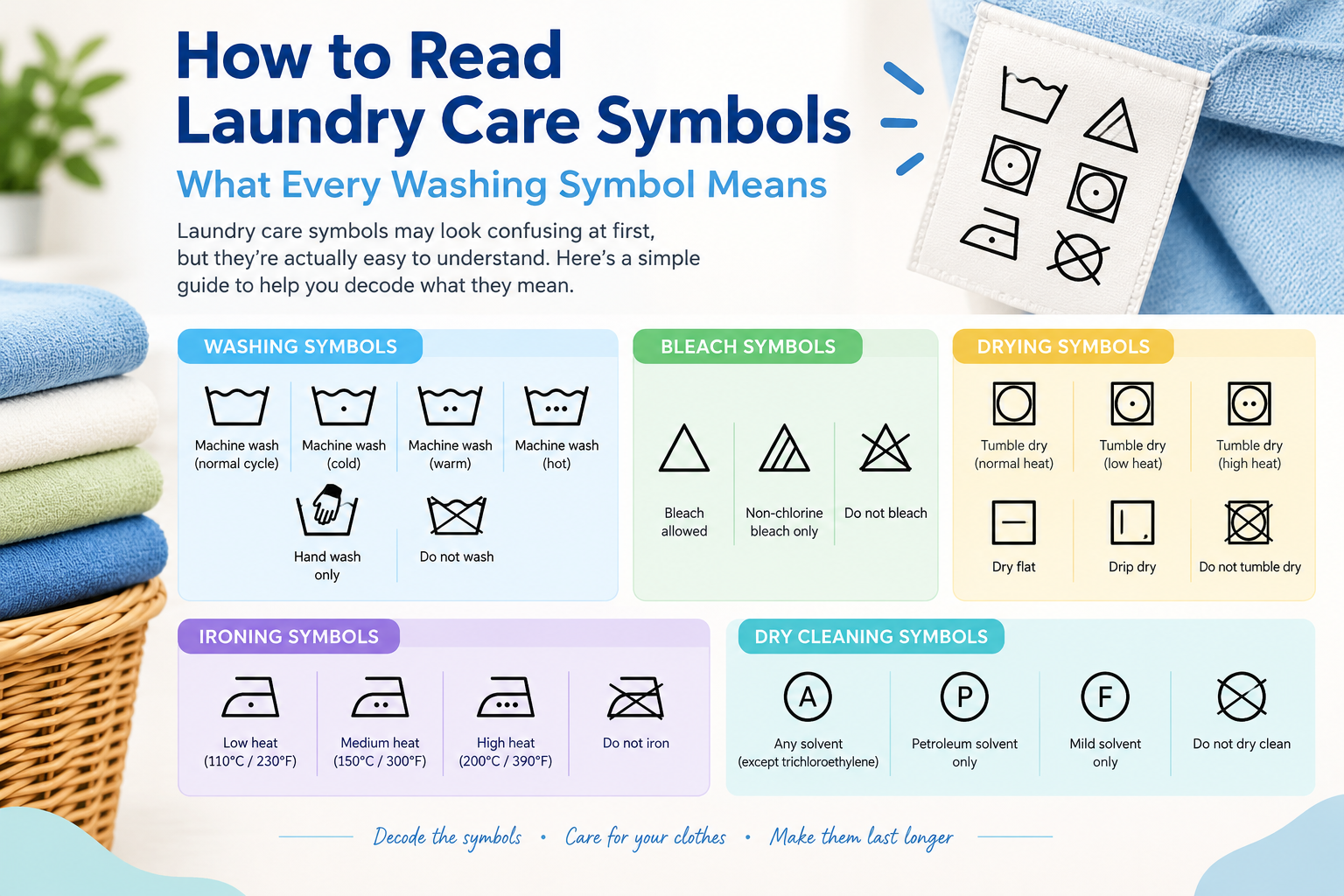
In general, the symbols use five basic shapes. Each shape governs one part of the laundering process. A tub means washing, while a triangle means bleaching. Similarly, a square means drying, an iron means pressing, and a circle means professional cleaning. In addition, extra marks such as dots, lines, or an X provide more specific instructions.
Washing Symbols: The Tub Shape
The washtub icon looks like a small basin filled with water. Usually, it is the first symbol on a care tag. This shape controls the washing method and water temperature.
A plain tub with no numbers or dots generally means machine washing is allowed without a special temperature indication. However, dots inside the tub indicate the maximum water temperature. In general, more dots mean that a higher temperature is permitted. Some tags, particularly on European-made clothing, display the exact temperature in Celsius instead of using dots.
Additionally, a line under the tub calls for a gentler cycle. Two lines mean an even more delicate, low-agitation setting. Meanwhile, a hand dipped into the tub means hand wash only, so you should skip the washing machine entirely. Finally, an X through the tub means the garment should not be washed with water at all. In that case, the item may require professional cleaning.
Bleaching Symbols: The Triangle Shape
The triangle shape covers bleach instructions. Because it is small, people often miss it. However, checking this symbol before treating stains can prevent serious fabric damage.
An empty, unmarked triangle means bleach can be used. On the other hand, two diagonal lines inside the triangle limit you to oxygen-based, non-chlorine bleach. Therefore, using chlorine bleach on a garment with this symbol could cause discoloration or weaken the fibers.
Finally, a triangle with an X through it means no bleach at all. You’ll often see this warning on colored fabrics, wool, and synthetic blends that may react poorly to bleaching agents.
Drying Symbols: The Square Shape
The square icon handles drying instructions. When you see a circle inside the square, the garment can generally be tumble dried. In addition, dots inside that circle indicate the heat level. Fewer dots mean lower heat, which is especially important for synthetic fabrics that can warp or become damaged under high temperatures.
On the other hand, a plain square with no circle points to air-drying instead. A horizontal line through the square means the item should be laid flat. This is particularly important for knits and sweaters because laying them flat can help prevent stretching.
Similarly, a curved line near the top of the square indicates line drying or drip drying, depending on the specific symbol. Finally, an X through the circle means never tumble dry the garment, even on a low-heat setting.
Ironing Symbols: The Iron Shape
The ironing symbol is one of the easiest to recognize because it looks like an actual iron. As with washing and drying symbols, dots inside the shape indicate the maximum safe heat.
One dot means use the lowest heat setting, which is generally suitable for synthetics and delicate fabrics. Two dots indicate medium heat, which is suitable for many cotton-polyester blends. Meanwhile, three dots allow the highest heat setting, which is commonly used for fabrics such as cotton or linen when permitted by the care label.
However, an iron with an X through it means don’t iron the item at all. This warning is especially important for garments with plastic prints, sequins, or heat-sensitive synthetic materials that could scorch or melt.
Professional Cleaning Symbols: The Circle Shape
The circle shape indicates professional cleaning instructions. In other words, the garment may require a professional cleaning process rather than normal home laundering.
An empty circle means the item can be professionally dry-cleaned. Meanwhile, a letter inside the circle provides information about the cleaning process or solvent that the professional cleaner should use.
In contrast, an X through the circle means the garment should not be dry-cleaned. You may see this warning on certain plastics, vinyl trims, and specialty coatings that can be damaged by cleaning solvents. Additionally, a circle containing a W indicates professional wet cleaning, which is a specialized cleaning process offered by some professional cleaners.
Reading Multiple Symbols Together
Care tags rarely show just one symbol. Instead, most tags display four or five symbols in a row. Generally, you can read them from left to right in this order: wash, bleach, dry, iron, and professional cleaning.
For example, imagine a tag with a tub showing two dots, a triangle with two lines, a square with a circle and one dot, and an iron with two dots. Together, these symbols indicate that the garment can be washed in warm water, should only use non-chlorine bleach if needed, can be tumble dried on low heat, and can be ironed on medium heat.
Now consider a different tag with a tub marked with an X, an empty circle, and an iron with one dot. In this case, the garment requires professional dry cleaning and should be kept away from water at home. If ironing is permitted, it should be done using the lowest heat setting. This type of combination may appear on structured garments, silk items, or clothing with delicate linings.
Common Mistakes People Make With Care Labels
One of the most common mistakes is ignoring temperature instructions and simply using hot water for everything. As a result, colors can bleed and cotton fabrics may shrink. Therefore, always check the temperature symbol before starting a wash cycle.
Another common mistake is putting rayon, silk, or garments marked for flat drying into a tumble dryer. In particular, heat and tumbling can stretch, shrink, or otherwise damage delicate fibers.
People also sometimes treat a hand-wash symbol as optional advice. However, it usually indicates that the fabric, construction, or embellishments may not tolerate machine agitation. Similarly, many garments are damaged because the bleach symbol wasn’t checked before treating a stain.
For example, using chlorine bleach on a garment that only permits oxygen-based bleach can cause discoloration or weaken the material. Therefore, checking the triangle symbol before applying any bleach is an important laundry habit.
A Few Practical Habits for Better Laundry Days
First, consider sorting laundry by care symbol and then by color. Two shirts may have the same color but require completely different water temperatures or drying methods. Therefore, symbol-first sorting can provide an additional layer of protection for your clothes.
Next, consider keeping a printed laundry symbol chart inside a cabinet near your washing machine. This can be especially useful while you’re learning the different icons. After a few laundry cycles, you’ll likely recognize the symbols that appear most often on your own clothing.
Finally, match your detergent and laundry routine to the care instructions. For example, choose an appropriate detergent for garments that require cold-water washing. Likewise, consider a gentler, dye-safe formula for items marked delicate or hand-wash only.
Most importantly, read the care label first and then choose your washing, drying, and cleaning method. By following the symbols consistently, you can help protect your clothes while keeping them looking their best for longer.