

Why Look for Bleach Alternatives for Laundry?
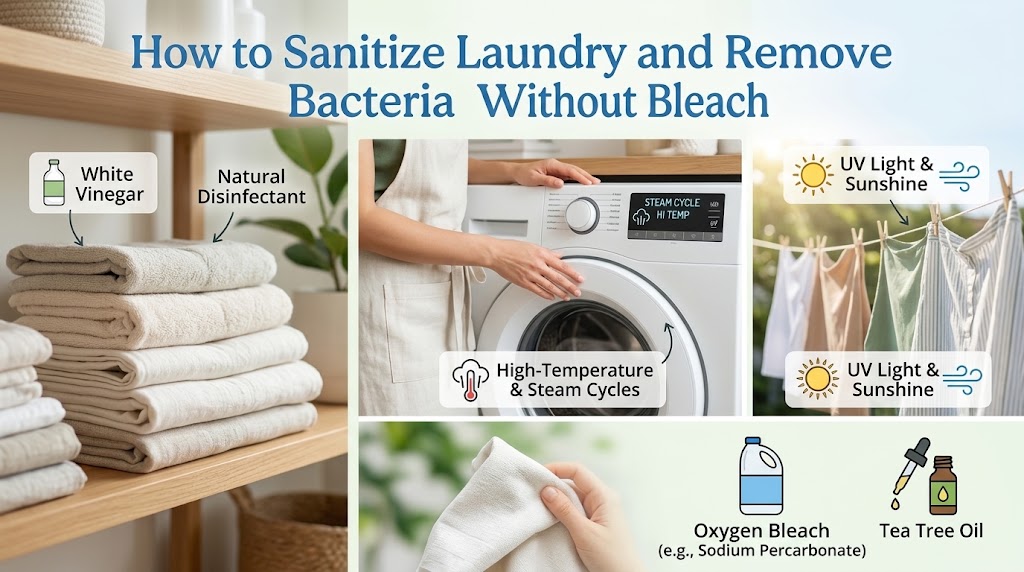
Many people search for bleach alternatives for laundry because bleach can weaken fibers over time, fade colors, and release strong fumes. It can also trigger allergies or skin irritation in people with sensitive skin. Fortunately, there are several eco-friendly laundry sanitizer and chemical-free laundry disinfectant options that work just as well.
Natural Ways to Sanitize Laundry
If you’re looking for natural ways to sanitize laundry, the following methods are backed by both tradition and science.
1. Use Hot Water to Kill Bacteria
Heat is one of the most effective ways to kill bacteria in a washing machine without bleach. Water at 140°F (60°C) or higher is generally needed to kill most bacteria and viruses on fabric.
Best temperature to kill germs in washing machine: Set your machine to the “hot” or “sanitize” cycle if available. This alone answers the common question, “can hot water alone sanitize laundry?” — for many everyday germs, yes, though combining it with another method below improves results, especially for heavily soiled items.
2. Vinegar to Sanitize Laundry
White distilled vinegar is a popular, affordable option for how to disinfect clothes without bleach. Add one cup of white vinegar to the rinse cycle. It helps break down bacteria, removes odors, and softens fabric naturally.
Does vinegar sanitize laundry? Vinegar has mild antimicrobial properties and works well for everyday laundry, though it’s not as strong as hydrogen peroxide or heat for heavily contaminated loads.
3. Hydrogen Peroxide Laundry Sanitizer
Hydrogen peroxide is one of the most effective non-toxic ways to disinfect laundry. It acts as a natural oxygen-based bleach alternative and is safe for most colored fabrics.
- Add ½ to 1 cup of 3% hydrogen peroxide to the wash cycle.
- Always test on a hidden fabric area first.
- Is hydrogen peroxide safe for colored clothes? Generally yes, at the standard 3% concentration, but always spot-test first since some dyes may still react.
How to Sanitize Towels Without Bleach
Towels harbor bacteria due to constant moisture. To sanitize towels without bleach, wash them on the hottest safe setting, add ½ cup of vinegar or hydrogen peroxide, and dry completely in a hot dryer cycle — heat from the dryer adds an extra layer of disinfection.
How to Sanitize Baby Clothes Without Bleach
Babies have sensitive skin, so a gentle laundry sanitizer for sensitive skin is essential. Use a fragrance-free detergent, add ¼ cup of white vinegar to the rinse cycle, and wash on the warmest temperature the fabric care label allows