


4 Hidden Laundry Detergent Ingredients Many Consumers Choose to Avoid
Laundry Detergent Ingredients are one of the most important factors to consider when choosing a detergent for your home. Understanding laundry detergent ingredients helps you compare products, protect your fabrics, and make informed decisions based on your cleaning preferences. In this guide, we’ll explain seven common laundry detergent ingredients, what they do, and what to look for when selecting a detergent.
Why Understanding Laundry Detergent Ingredients Matters
When shopping for laundry detergent, most people focus on price, fragrance, or brand. However, understanding what’s inside your detergent can help you make informed choices for your clothes, your family, and the environment.
Laundry detergents contain a combination of cleaning agents, enzymes, fragrances, preservatives, and other ingredients that work together to remove dirt and stains while keeping fabrics fresh. While many of these ingredients serve an important purpose, some consumers prefer products that limit or avoid certain additives based on their personal preferences, skin sensitivities, or environmental concerns.
Learning about common laundry detergent ingredients doesn’t mean every ingredient is harmful. Instead, it helps you understand what each ingredient does and allows you to choose a product that best fits your household’s needs.
In this guide, we’ll explore seven common laundry detergent ingredients many people choose to learn more about and explain what to look for when selecting a detergent.
Why More Consumers Are Reading Laundry Detergent Labels
Today’s consumers are paying closer attention to product labels than ever before. Whether they’re looking for environmentally conscious cleaning products, gentle formulas for sensitive skin, or effective stain removal, ingredient transparency has become increasingly important.
Many shoppers now compare detergents based on:
- Cleaning performance
- Biodegradable ingredients
- Fabric care
- Fragrance options
- Environmental impact
- Concentrated formulas
Understanding ingredient labels allows consumers to compare products more confidently and make informed purchasing decisions.
Understanding Laundry Detergent Ingredients
Laundry detergents are carefully formulated using several types of ingredients, each serving a different purpose. Some ingredients help lift dirt and grease from fabrics, while others improve stain removal, soften water, preserve the formula, or enhance fragrance.
Below are seven commonly discussed laundry detergent ingredients and why many consumers choose to learn more about them before purchasing a product
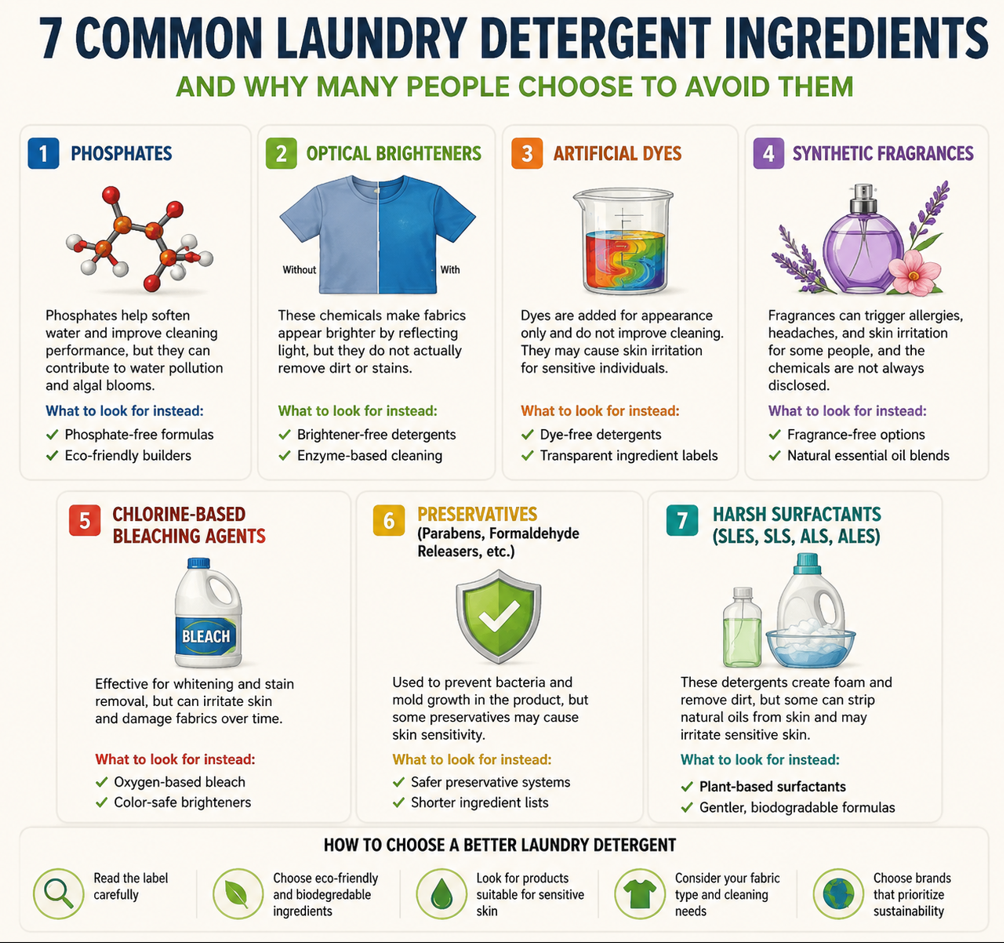
1. Phosphates
Phosphates were once commonly used in laundry detergents because they soften hard water and improve cleaning performance. They work by binding naturally occurring minerals such as calcium and magnesium, allowing detergents to clean more effectively.
While phosphates can improve cleaning results, many countries and states have restricted or banned their use in household laundry detergents due to concerns about water quality. Excess phosphates entering rivers and lakes may contribute to excessive algae growth, which can affect aquatic ecosystems.
Today, many manufacturers use alternative builders that deliver effective cleaning while complying with environmental regulations.
What to look for instead:
- Phosphate-free formulas
- Biodegradable builders
- Environmentally responsible formulations
2. Optical Brighteners
Optical brighteners are ingredients designed to make white and light-colored fabrics appear brighter. Rather than removing stains, they absorb ultraviolet light and emit blue light, creating the appearance of cleaner clothing.
Many consumers appreciate brighter-looking fabrics, while others prefer detergents without optical brighteners because they would rather rely on cleaning performance than visual enhancement.
Whether a detergent contains optical brighteners is largely a matter of personal preference.
Alternative options include:
- Brightener-free detergents
- Plant-based cleaning formulas
- Enzyme-powered stain removal
3. Artificial Dyes
Artificial dyes are often added to laundry detergents to create an attractive appearance or to distinguish different product varieties. These dyes generally do not contribute to cleaning performance.
Some shoppers prefer detergents without added dyes, particularly when selecting products for babies, sensitive skin, or fragrance-free laundry routines.
Many modern detergents now offer dye-free options while maintaining excellent cleaning results.
Many consumers choose products that are:
- Dye-free
- Colorant-free
- Suitable for everyday laundry
4. Synthetic Fragrances
Fragrance is one of the most noticeable characteristics of laundry detergent. It helps clothes smell fresh after washing and can remain on fabrics for days.
Some people enjoy long-lasting scents, while others prefer fragrance-free or lightly scented detergents. Personal preference, household needs, and skin sensitivity often influence this choice.
Many manufacturers now provide multiple fragrance options, allowing consumers to select products that best match their preferences.
Popular alternatives include:
- Fragrance-free detergents
- Lightly scented formulas
- Plant-derived fragrance blends (where available)
Choosing the Right Laundry Detergent
Instead of focusing on a single ingredient, consider the overall formula. The best detergent for your home should deliver reliable cleaning performance while matching your household’s preferences for fragrance, fabric care, sustainability, and convenience.
In the next section, we’ll look at three more common detergent ingredients, explain what they do, and share practical tips for selecting a laundry detergent that fits your lifestyle.
5. Chlorine-Based Bleaching Agents
Chlorine-based bleaching agents are used in some laundry products to help remove stubborn stains and brighten white fabrics. While they can be effective for specific cleaning tasks, they are generally not suitable for every fabric type. Delicate materials and colored garments may require gentler alternatives to help preserve their appearance.
Many households reserve chlorine bleach for occasional use and choose everyday laundry detergents that clean effectively without relying on chlorine-based ingredients.
What to look for instead:
- Oxygen-based stain removers
- Color-safe whitening formulas
- Gentle everyday detergents
6. Preservatives
Preservatives help keep liquid laundry detergents stable during storage by preventing the growth of bacteria, mold, and yeast. Without preservatives, many liquid cleaning products would have a much shorter shelf life.
Some consumers prefer detergents formulated with carefully selected preservatives or products that use alternative preservation systems. Reading the ingredient label can help you understand how a product is formulated.
When choosing a detergent, consider:
- Shelf life
- Storage recommendations
- Fragrance preferences
- Product transparency
7. Harsh Surfactants
Surfactants are the primary cleaning agents in laundry detergent. Their job is to lift dirt, grease, and stains away from fabrics so they can be rinsed away with water. Different detergents use different types of surfactants depending on the intended cleaning performance.
Many modern laundry detergents use blends of surfactants that provide powerful stain removal while remaining suitable for everyday laundry. Consumers who are looking for more environmentally conscious cleaning products often compare surfactant systems when selecting a detergent.
Many shoppers look for detergents that offer:
- Biodegradable surfactants
- Plant-based cleaning ingredients (where applicable)
- High cleaning performance
- Fabric-friendly formulas
Choosing Laundry Detergent Ingredients That Fit Your Needs
Rather than focusing on a single ingredient, it’s helpful to evaluate the overall formulation of a laundry detergent. Consider factors such as cleaning performance, fabric care, fragrance, ingredient transparency, and environmental impact. The best detergent for your home is one that meets your household’s laundry needs while aligning with your personal preferences.
Understanding laundry detergent ingredients allows you to compare products with confidence and make informed purchasing decisions based on facts rather than marketing claims.