

Eco-Friendly Laundry Habits That Actually Work
Sustainability starts at home, and one of the easiest ways to reduce your environmental impact is by improving your laundry routine. Most households do several loads of laundry every week, using large amounts of water, electricity, and detergent.
The good news is that adopting eco-friendly laundry habits doesn’t require major lifestyle changes. Small adjustments can significantly reduce waste, lower utility bills, and help protect the environment while keeping your clothes clean and fresh.
In this guide, we’ll explore practical eco-friendly laundry habits that actually work and how they can benefit both your household and the planet.
Why Eco-Friendly Laundry Habits Matter
Traditional laundry practices can contribute to environmental problems through:
- Excessive water consumption
- High energy usage
- Plastic detergent waste
- Chemical pollution
- Microfiber pollution from synthetic fabrics
By making smarter laundry choices, families can reduce their environmental footprint while maintaining excellent cleaning results.
1. Wash Full Loads Whenever Possible
One of the easiest eco-friendly laundry habits is running full loads.
- Reduced water usage
- Lower electricity consumption
- Improved washing efficiency
- Fewer laundry cycles each week
Avoid overloading the machine, as this can reduce cleaning performance.
2. Use Cold Water for More Eco-Friendly Laundry
Heating water accounts for a significant portion of laundry-related energy consumption.
- Reduce electricity use
- Lower utility bills
- Preserve fabric quality
- Prevent colors from fading
Most modern detergents are specifically designed to clean effectively in cold water.
3. Switch to Laundry Detergent Sheets
Traditional liquid detergents often come in bulky plastic containers that contribute to landfill waste.
Detergent sheets offer several eco-friendly advantages:
- Reduced plastic packaging
- Lightweight transportation
- Compact storage
- Pre-measured convenience
- Less product waste
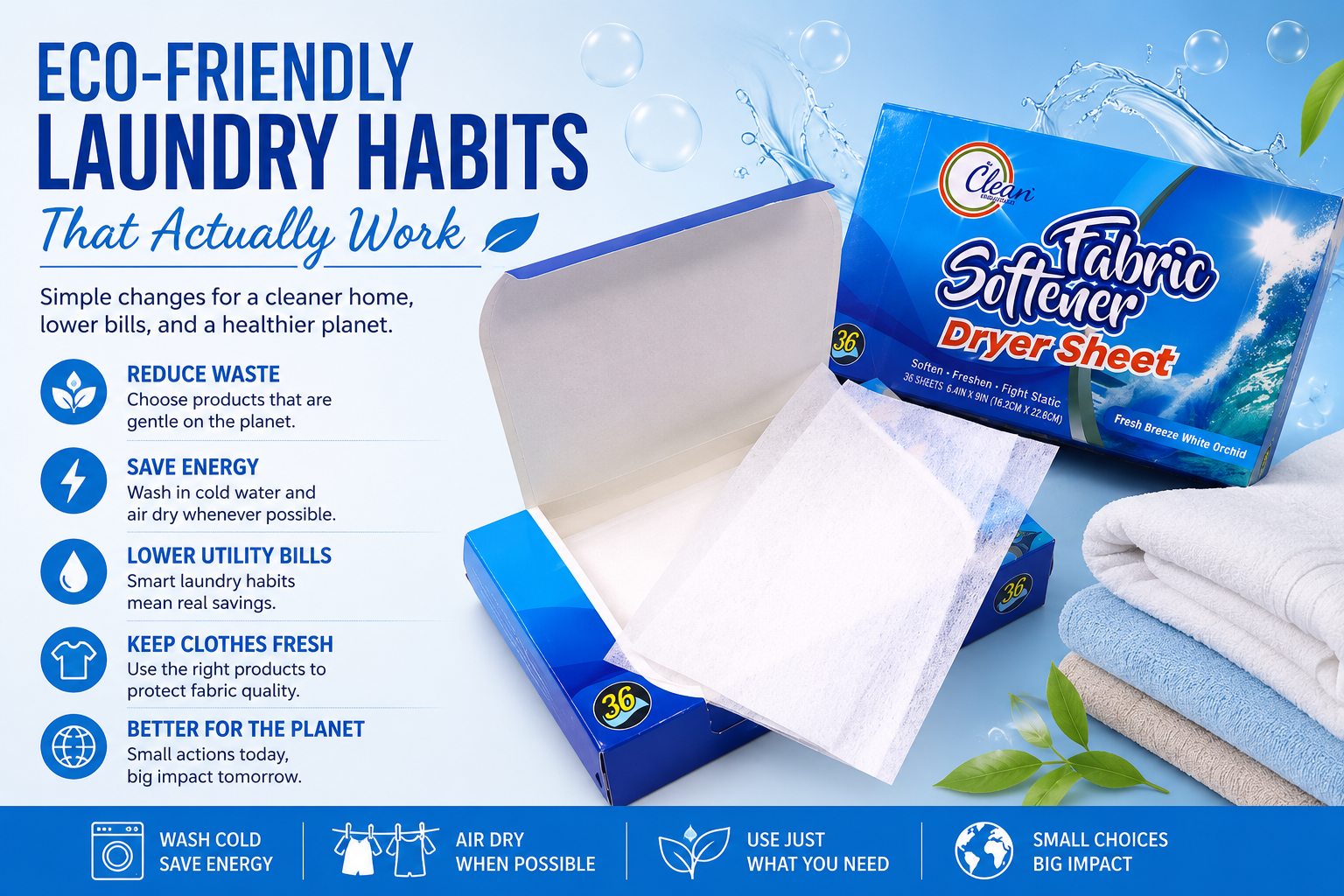
For environmentally conscious households, Clean Laundry Detergent™ Sheets provide an easy way to reduce plastic consumption while maintaining powerful cleaning performance.
4. Avoid Using Too Much Detergent
Many people believe that more detergent means cleaner clothes. In reality, excess detergent can:
- Leave residue on fabrics
- Increase wastewater pollution
- Reduce washing efficiency
- Waste money
Always follow the manufacturer’s recommended dosage.
5. Air Dry Clothes Whenever Possible
Air drying is one of the most effective eco-friendly laundry habits for reducing household energy use.
- Lower electricity bills
- Reduced carbon footprint
- Longer garment lifespan
- Less shrinking and fading
Whenever weather permits, use a clothesline or drying rack instead of a dryer.
6. Wash Clothes Only When Necessary
Not every item needs washing after a single wear.
- Jeans
- Jackets
- Sweaters
- Casual outerwear
Washing less frequently saves water, energy, and detergent while helping clothing last longer.
7. Upgrade to a High-Efficiency Washing Machine
If you’re replacing an older appliance, consider a high-efficiency (HE) washing machine.
- Uses less water
- Consumes less energy
- Provides excellent cleaning performance
- Reduces long-term utility costs
8. Sort Laundry Properly
Proper sorting improves washing efficiency and protects fabrics.
- Color
- Fabric Type
- Soil Level
This simple step helps prevent damage and extends the life of clothing.
9. Choose Eco-Friendly Laundry Products
Selecting environmentally responsible laundry products can make a significant difference.
- Biodegradable ingredients
- Reduced harsh chemicals
- Sustainable packaging
- Effective cleaning performance
Many consumers are now choosing detergent sheets as a cleaner, more sustainable alternative to traditional detergents.
10. Maintain Your Washing Machine
A well-maintained washing machine operates more efficiently and lasts longer.
- Clean filters regularly
- Check hoses
- Remove detergent buildup
- Run cleaning cycles
Reducing Microfiber Pollution
Synthetic fabrics release tiny plastic fibers during washing that can enter waterways.
- Wash synthetic fabrics less often
- Use lower agitation settings
- Use microfiber-catching laundry bags
- Choose natural fibers when possible
Small changes can have a meaningful environmental impact.
Financial Benefits of Eco-Friendly Laundry Habits
- Lower electricity bills
- Reduced water consumption
- Less detergent waste
- Longer-lasting clothing
- Reduced appliance wear
Many households discover that eco-friendly laundry habits benefit both their budget and the planet.
Conclusion
Eco-friendly laundry habits are practical, affordable, and effective. By making small changes to the way you wash clothes, you can significantly reduce waste, save energy, lower utility bills, and extend the life of your garments.
Whether you’re switching to detergent sheets, washing with cold water, or air drying your clothes, every positive change contributes to a cleaner and more sustainable future.
Looking for an easy way to make your laundry routine more environmentally friendly? Try Clean Laundry Detergent™ Sheets and combine them with these eco-friendly laundry habits to reduce waste, save energy, and keep clothes fresh every day.
Frequently Asked Questions
Is cold water really effective for laundry?
Yes. Most modern detergents are formulated to clean effectively in cold water while using less energy.
Do laundry detergent sheets reduce waste?
Yes. They typically require less packaging and eliminate bulky plastic detergent bottles.
Does air drying save money?
Absolutely. Air drying reduces electricity consumption and lowers utility bills.
How often should I wash jeans?
Many experts recommend washing jeans only when necessary to preserve fabric quality and reduce water usage.
What is the easiest eco-friendly laundry habit to start with?
Switching to cold-water washing is one of the simplest and most effective ways to reduce energy consumption.
“`