


How to Prevent Lint on Black Clothes After Washing
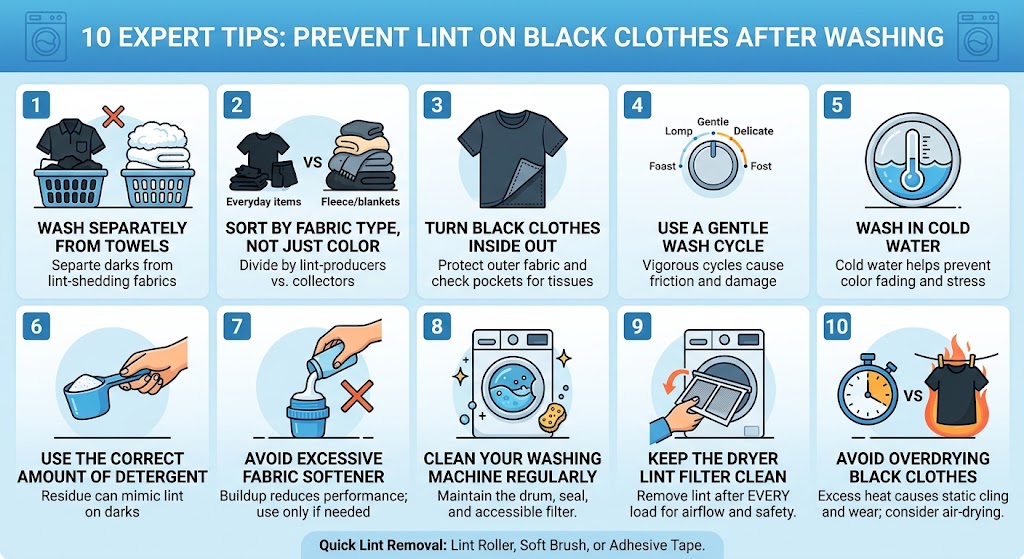
Have you ever taken your favourite black shirt, jeans, or trousers out of the washing machine only to find them covered in white fluff and tiny fabric fibres? Lint on black clothes after washing can make even freshly cleaned garments look untidy. The good news is that you can reduce this problem with a few simple laundry habits. The secret is to separate lint-producing fabrics, prepare your clothes properly, use suitable washing settings, and keep your washing machine and dryer clean. In this guide, you will learn how to prevent lint on black clothes, remove existing lint, and keep dark garments looking their best. What Causes Lint on Black Clothes After Washing? Lint consists of small fibres that come loose from fabrics during washing, drying, and everyday wear. These fibres can transfer from one garment to another or become trapped on textured fabrics. Static electricity can also make loose fibres cling to clothing. Black and dark-coloured garments do not necessarily attract more lint than every other colour. However, white and light-coloured fibres are much easier to see against a dark background. Common causes of lint on black clothes include: Washing black clothes with towels: Towels can release large amounts of loose fibres. Mixing dark clothes with fleece: Fleece blankets, fluffy sweatshirts, and bathrobes can shed lint. Overloading the washing machine: Crowded loads can prevent clothes from moving and rinsing properly. Static electricity: Dry air and tumble drying can cause loose fibres to cling to garments. Excessive friction: Rough washing cycles can loosen fibres and contribute to fabric wear. Tissues left in pockets: Small pieces of paper can break apart and spread throughout a load. Dirty appliance filters: Accumulated lint may interfere with effective collection and airflow in some machines. How to Prevent Lint on Black Clothes After Washing Preventing lint starts before you put your clothes in the washing machine. Follow these practical steps to reduce loose fibres and keep dark garments looking cleaner. 1. Wash Black Clothes Separately from Towels One of the most effective ways to prevent lint on black clothes is to keep them away from heavy lint-producing fabrics. Bath towels, flannel items, fleece blankets, chenille fabrics, and fluffy robes can release fibres during washing. Wash towels together in a separate load and keep black shirts, trousers, and jeans with similar dark garments. Separate delicate and heavily textured fabrics when necessary. This simple change can significantly reduce the amount of loose lint transferred to dark clothing. 2. Separate Clothes by Fabric Type, Not Just Colour Sorting laundry by colour is important, but fabric type also matters. Some fabrics shed fibres, while others are particularly good at collecting them. For better results, try separating your laundry into these groups: Black and dark everyday clothing: Shirts, trousers, jeans, and similar items. Lint-producing fabrics: Towels, fleece, flannel, and fluffy blankets. Delicate clothing: Fine knits and garments requiring gentle care. Heavily soiled items: Clothing that needs a different wash treatment. Always follow garment care labels and avoid mixing items that could snag or damage one another. 3. Turn Black Clothes Inside Out Before Washing Turning black clothes inside out helps protect the outer surface from friction during washing. It can also reduce visible abrasion and help preserve the appearance of dark fabrics. Before washing, turn black T-shirts, jeans, sweatshirts, and other suitable garments inside out. Close zippers and fasteners to reduce snagging, and check pockets for tissues, receipts, and other paper items. This habit will not eliminate every loose fibre, but it can help reduce visible lint and surface wear. 4. Use a Gentle Wash Cycle Vigorous agitation can increase friction between garments and contribute to fibre damage. A gentle or delicate cycle may help protect suitable fabrics, especially lightweight shirts, knits, and dark garments that show wear easily. Choose the cycle according to the garment care label. Use a normal cycle when required for more heavily soiled clothing, rather than choosing a delicate setting for every load. Avoid overloading the drum. Clothes need enough room to move freely so that water and detergent can circulate and rinse away effectively. 5. Wash Black Clothes in Cold Water When Suitable Cold water is often a good choice for black clothing because it can help reduce colour fading compared with repeated hot washes. Combined with a suitable cycle, it may also help protect fabrics from unnecessary stress. However, cold water does not prevent all lint. Sorting fabrics and reducing friction remain important. Follow the care label and detergent instructions, particularly when washing items with heavy soil or specific cleaning requirements. 6. Use the Correct Amount of Laundry Detergent Using too much detergent can leave residue on clothing, while using too little may not provide the cleaning performance your load needs. Residue can sometimes look like white lint or powdery marks on black garments. Measure detergent according to the manufacturer’s instructions, taking load size, soil level, and water hardness into account. If your clothes repeatedly come out with pale streaks, check the dosage, avoid overloading the washer, and consider an extra rinse if the garment and machine instructions permit it. A detergent designed for dark clothing may help maintain colour when used as directed, but it cannot replace proper laundry sorting. 7. Avoid Excessive Fabric Softener Fabric softener may reduce static cling in some laundry loads, which can make loose fibres less likely to stick to garments. However, it is not a complete solution for lint transfer. Use fabric softener only when suitable for the garment and washing machine, and follow the product’s dosage instructions. Excessive use can leave buildup, and some performance fabrics, towels, and moisture-wicking garments may not be compatible with softener. Never add several cleaning products together unless their labels explicitly confirm that they are compatible. 8. Clean Your Washing Machine Regularly Residue, loose fibres, and dirt can accumulate in parts of a washing machine. Regular maintenance helps keep the appliance working as intended and reduces the chance of debris affecting your laundry. Follow the manufacturer’s instructions to: Clean the