

How to Wash Clothes in Hard Water: 9 Easy Laundry Tips
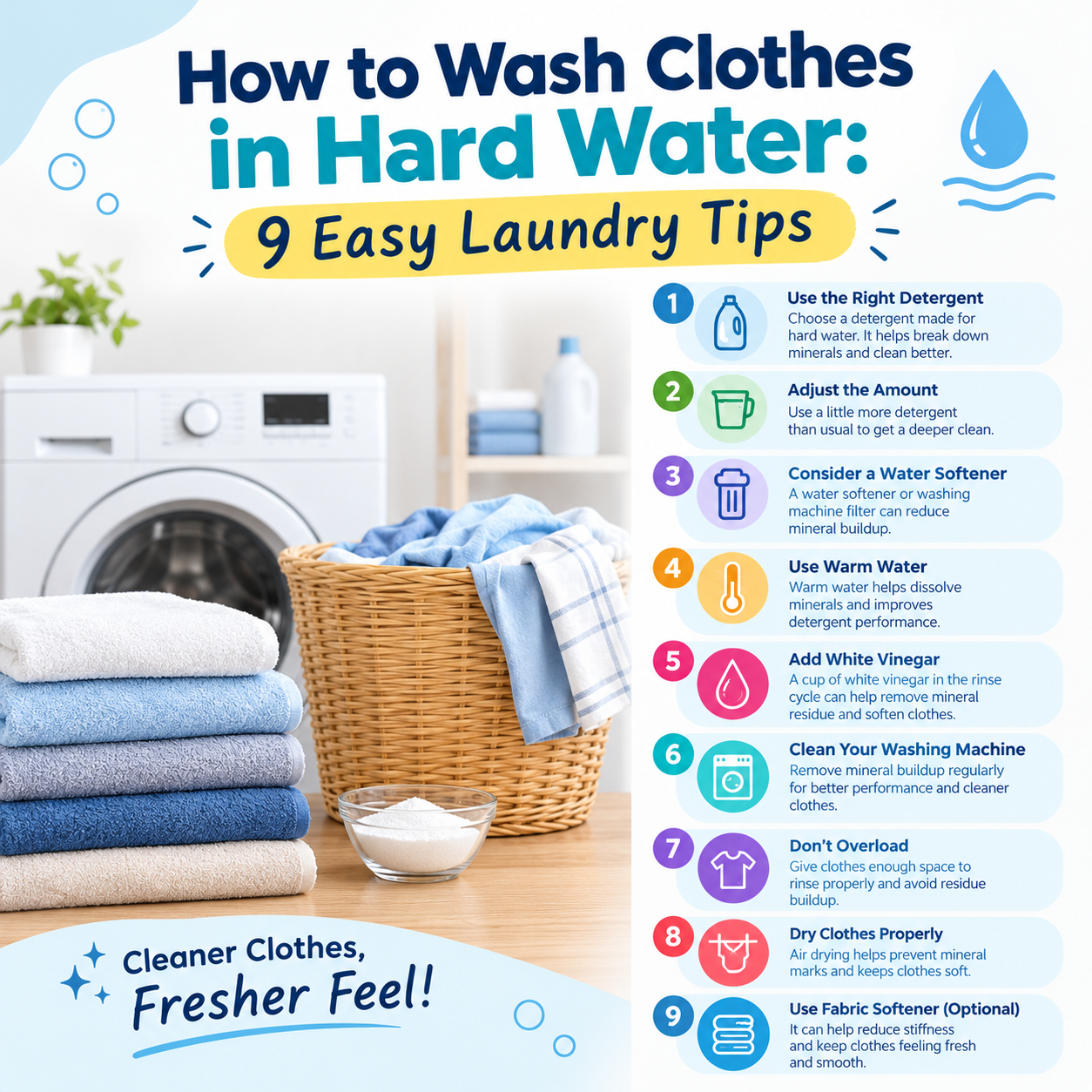
Do your clothes feel stiff after washing, look dull even when they are clean, or show white marks after coming out of the washing machine? Hard water could be contributing to the problem. Washing clothes in hard water can be challenging because it contains minerals that interfere with cleaning and may leave deposits on fabrics and inside your washing machine.The good news is that you can improve your laundry results with a few simple changes. In this guide, you will learn how to wash clothes in hard water, choose the right detergent, reduce residue, and keep your clothes feeling fresh and comfortable. What Is Hard Water? Hard water is water that contains relatively high levels of dissolved minerals, particularly calcium and magnesium. These minerals occur naturally as water moves through rocks and soil. Water hardness varies by location and water source. Hard water is generally safe to use for everyday household tasks, but it can make cleaning more difficult. The minerals can react with traditional soap, reduce lather, and contribute to deposits on fabrics and household surfaces. The U.S. Geological Survey explains that water hardness is mainly determined by its dissolved calcium and magnesium content. How Does Hard Water Affect Laundry? If your laundry does not look or feel as clean as you expect, your water quality may be one factor. Common hard-water laundry problems include: Stiff or rough clothes: Mineral and detergent residues may build up on fabric fibres. Dull-looking whites: Deposits and trapped soil can make white garments appear grey or less bright. White marks on dark clothes: Undissolved detergent or mineral deposits may leave visible streaks. Reduced cleaning performance: Hard water can interfere with some cleaning ingredients, especially in products not designed for the water conditions. Unpleasant lingering odours: Residue and trapped soil may contribute to laundry that does not smell fresh. Mineral buildup in the washing machine: Hard water can contribute to scale on internal components over time. These symptoms can have other causes too, such as overloading the washer, using too much detergent, or leaving damp clothes in the machine. Check your laundry routine before assuming hard water is the only cause. How to Tell If You Have Hard Water You do not need to guess. Look for a few common signs around your home: White, chalky deposits on taps, showerheads, or kettles. Soap that produces less lather than expected. Clothes or towels that regularly feel rough after washing. Recurring residue on laundry or scale inside appliances. For a more reliable answer, check your local water supplier’s quality report or use a water-hardness test kit. A simple soap-and-water bottle test can offer a rough indication, but it does not measure hardness accurately. How to Wash Clothes in Hard Water: 9 Practical Tips 1. Choose a Detergent Suitable for Hard Water Start by choosing a quality laundry detergent that is formulated to work with your water conditions. Many modern detergents contain ingredients designed to help manage hardness minerals and support cleaning performance. Read the product label to see whether dosage recommendations vary according to water hardness, load size, or soil level. A suitable formula can help you clean effectively without relying on excessive amounts of product. 2. Measure Your Laundry Detergent Correctly Using more detergent than recommended does not automatically make clothes cleaner. Excess detergent may be difficult to rinse away and can contribute to residue, especially when the washing machine is overloaded. Follow the dosing instructions on your detergent packaging. Consider the water hardness, the size of your load, and how dirty the clothes are. If your detergent provides a separate dosage for hard water, use that guidance rather than guessing. 3. Consider a Laundry Water-Softening Booster A laundry water-softening booster can help manage calcium and magnesium in hard water. Some products are designed to improve detergent performance and reduce mineral-related residue. Choose a booster specifically labelled for laundry and follow its instructions. Check fabric-care labels and product compatibility before use, especially for delicate garments. Do not combine cleaning products unless their labels say they can be used together. 4. Avoid Overloading Your Washing Machine Clothes need enough room to move freely through the water. An overloaded drum can prevent detergent from distributing evenly and make rinsing less effective. Leave sufficient space in the drum, follow your machine’s load recommendations, and separate heavily soiled items when necessary. Smaller, properly loaded washes can help reduce detergent residue and improve cleaning. 5. Select the Right Wash Cycle and Temperature Choose a cycle and temperature that suit the fabric, soil level, and detergent instructions. Warm water may help with some oily soils when the garment care label permits it, while cold water is often suitable for everyday laundry and many coloured fabrics. Hotter water does not remove water hardness. Avoid using high temperatures simply to compensate for hard water, because heat can shrink, fade, or damage certain fabrics. 6. Add an Extra Rinse When Needed If clothes repeatedly come out with detergent streaks or feel soapy, try an additional rinse. This may help remove excess detergent and loosened residue from the fabric. An extra rinse is not a permanent solution for very hard water, but it can be useful while you adjust detergent dosage and washing-machine settings. If residue continues, review the load size and detergent instructions as well. 7. Treat Stiff Towels and Rough Clothes Carefully Hard-water minerals and leftover detergent can contribute to towels feeling stiff or scratchy. Begin by washing towels in a correctly sized load and using the recommended detergent amount. A laundry water-softening product may help if mineral deposits are the main issue. Avoid using too much fabric softener, which can build up on towels and reduce their absorbency. Always follow the towel care label. 8. Use Vinegar Carefully and Never Mix Cleaning Products White vinegar is often suggested as a home remedy for hard-water laundry, but it is not the best solution for every fabric or washing machine. Frequent or concentrated use may affect some materials, machine components, or manufacturer warranties.