

How to Clean Microfiber Cloths Without Losing Their Effectiveness
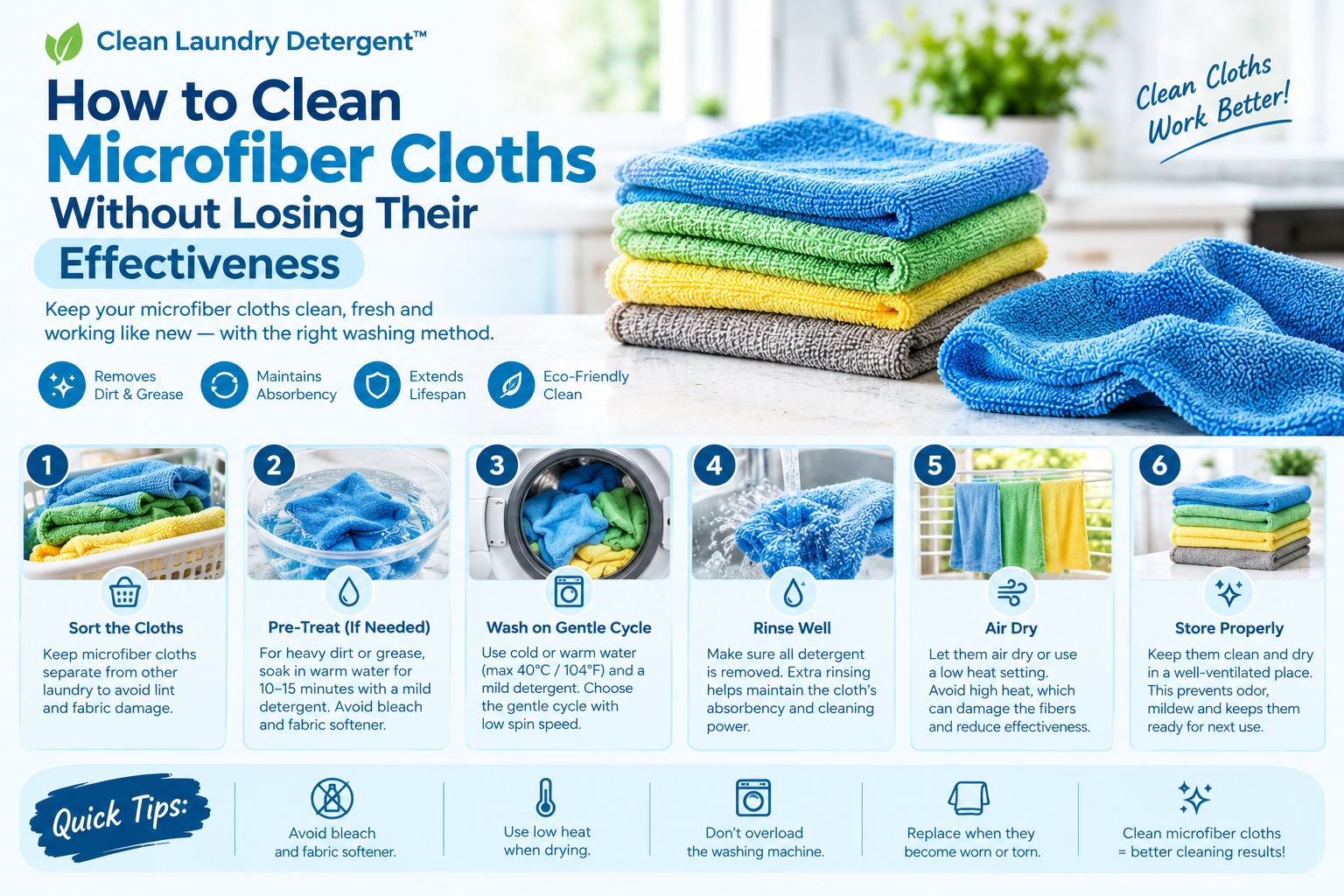
How to clean microfiber cloths without ruining them is one of the most common cleaning questions out there, and the answer is simpler than most people think. Microfiber cloths are reusable cleaning cloths that trap dust, grease, and bacteria far better than cotton rags. But wash them the wrong way, and they turn streaky, stiff, and useless. This guide covers microfiber cloth care from start to finish, so your cloths stay absorbent, soft, and streak-free for years. Whether you want to know how to wash microfiber cloths, how to wash microfiber towels for your car, or how to revive old microfiber cloths that stopped working, you will find a clear answer below. Moreover, you will learn how to clean microfiber cloths without losing effectiveness by avoiding the three biggest mistakes: fabric softener, bleach, and high heat. Quick answer: Wash microfiber cloths in warm water with a small amount of liquid, fragrance-free detergent. Skip fabric softener and bleach. Then air dry them or tumble dry on low heat. Why Microfiber Cloths Lose Their Effectiveness To understand cleaning microfiber cloths properly, it helps to know how they work. Microfiber is a blend of polyester and polyamide (nylon) fibers. During manufacturing, these fibers are split into thousands of tiny strands. These split fibers create a huge surface area and a natural static charge. That is why microfiber grabs dust and absorbs liquid so well. Over time, however, those split fibers get clogged. The most common causes are: Fabric softener residue that coats the fibers and blocks absorbency Detergent residue from using too much soap Grease and oil that build up from kitchen and car use Mineral deposits from hard water Excess heat that melts or flattens the fibers When the fibers are clogged, the cloth cannot trap dirt. Instead, it smears it around. That is why a microfiber cloth that is not cleaning well usually needs a proper wash, not a replacement. What to Avoid When Cleaning Microfiber Cloths Before the step-by-step instructions, here are the main things to avoid. These are the habits that cause most microfiber cloths to lose their effectiveness. Fabric softener and dryer sheets: They leave a waxy film on the fibers. Bleach: It breaks down the synthetic fibers. High heat: Very hot dryers can damage the fibers. Too much detergent: Extra soap leaves residue behind. Washing with lint-heavy items: Cotton towels shed lint that clings to microfiber. Can You Use Fabric Softener on Microfiber Cloths? No. This is the number one reason people ask why microfiber cloths stop working. A microfiber cloth ruined by fabric softener loses its ability to absorb water and attract dust. Fabric softener is designed to coat fibers with a silky layer. On a towel, that feels nice. On microfiber, it clogs the split fibers completely. So if you are wondering why you should not use fabric softener on microfiber, the short answer is this: softener fills the tiny gaps that make microfiber effective. The same goes for dryer sheets. If your cloths are already coated, do not worry. The restoring steps later in this guide can often fix them. Can You Use Bleach on Microfiber Cloths? It is best not to. Bleach weakens the polyester and polyamide fibers, which makes the cloth thinner and less effective. It can also discolor colored cloths. If you need to sanitize, use hot water or a dedicated disinfecting method instead (see the disinfecting section below). What Temperature to Wash Microfiber Cloths Warm water works best for most cloths. As a general rule, a warm cycle (around 40°C or 104°F) cleans well without stressing the fibers. A hot water wash can help with heavy grease or disinfecting, but always check the care label first, since some manufacturers recommend lower temperatures. Cold water is fine for lightly used cloths, though it removes oils less effectively. Best Detergent for Microfiber Cloths The best detergent for microfiber cloths is a gentle liquid detergent with no added softeners. Look for these features: Liquid formula: It rinses out more completely than powder. Fragrance-free and dye-free: Fewer additives mean less residue. No built-in fabric softener: Avoid “2-in-1” products. Eco-friendly and plant-based: These tend to be gentler and rinse cleaner. If you are shopping for the best laundry detergent for microfiber cloths, choose an eco-friendly laundry detergent that is also non-toxic and hypoallergenic. A plant-based, biodegradable laundry detergent is a good fit for sustainable cleaning, and fragrance-free laundry detergent is ideal for kitchen cloths and cleaning rags. In short, the best eco-friendly detergent for microfiber cloths is a laundry detergent without fabric softener, built for cleaning cloths and everyday laundry alike. How to Wash Microfiber Cloths in a Washing Machine (Step by Step) Here is the simplest way to clean microfiber cloths in a washing machine: Shake out loose dirt. Take the cloths outside and shake off dust and debris. Sort by color and use. Practice color separation, and keep heavily soiled cloths (grease, car wax) away from light-duty ones. Pre-rinse if needed. Rinse very greasy cloths in warm water first. Add a small amount of liquid detergent. One or two teaspoons is enough for a small load. Skip softener and bleach. Leave the softener compartment empty. Choose a warm, gentle cycle. Add an extra rinse if you have hard water. Remove promptly. Take the cloths out as soon as the cycle ends. Can You Wash Microfiber Cloths With Regular Laundry? It is possible, but not ideal. Microfiber attracts lint like a magnet, so washing it with cotton items leaves fuzz all over your cloths. That lint is also the reason some people ask why microfiber cloths leave lint on glass. For the same reason, avoid washing microfiber cloths with towels. If you must mix, wash them with other synthetic, low-lint items. Otherwise, run a separate load of microfiber only. It costs a little more time, but your cloths will last far longer. Can You Hand Wash Microfiber Cloths? Yes, hand washing works well, especially for a few cloths: Fill a basin with