

How to Wash Clothes With Zippers, Buttons and Other Fasteners
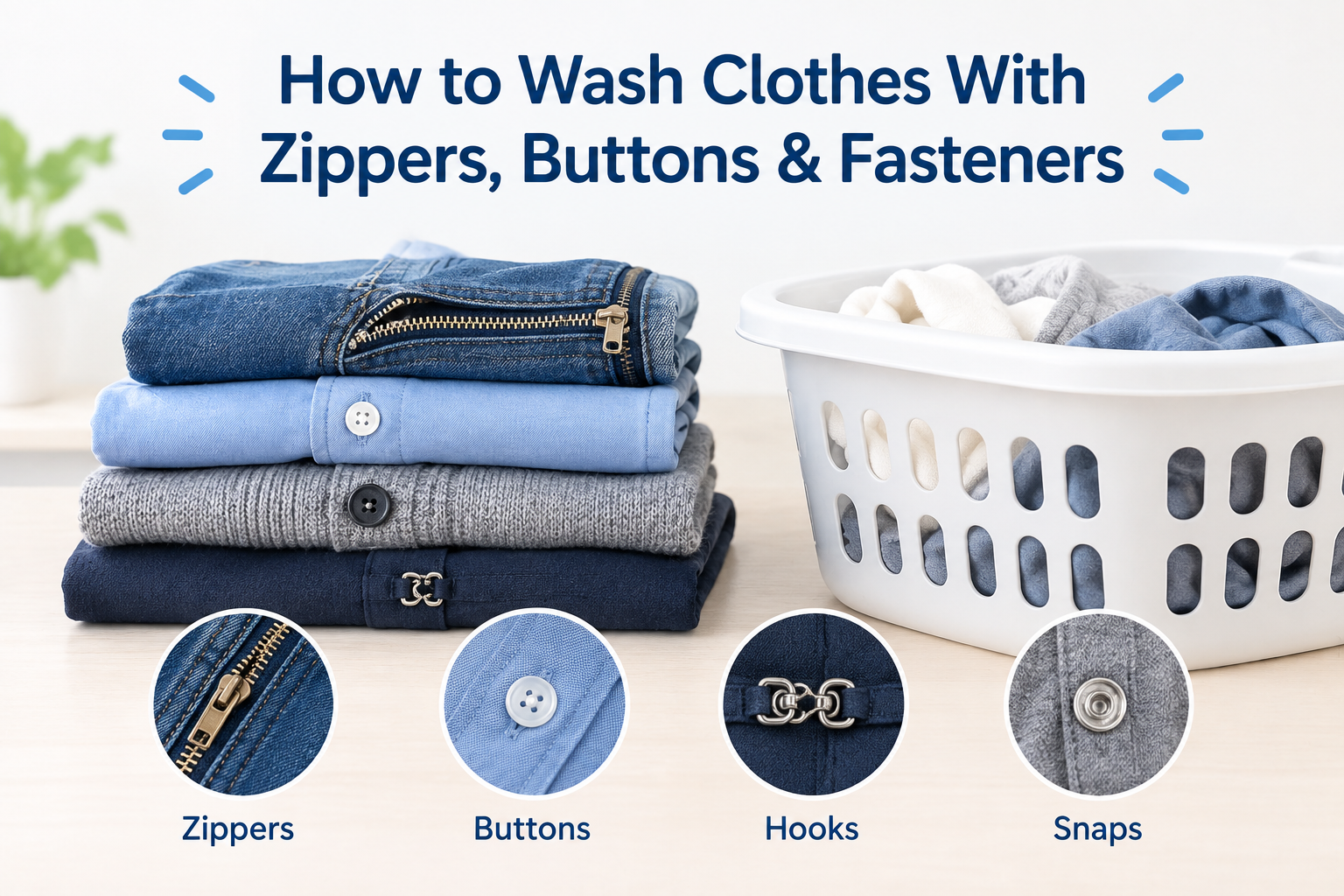
How to Wash Clothes With Zippers, Buttons and Other Fasteners Clothing fasteners may seem like small details, but zippers, buttons, hooks, snaps, buckles and other hardware can affect how your clothes should be washed. When fasteners are left open or handled incorrectly, they can snag other garments, scratch delicate fabrics, become damaged or put unnecessary stress on seams. Learning how to wash clothes with zippers, buttons and other fasteners can help extend the life of your favorite jeans, jackets, shirts, uniforms, dresses, sweaters and everyday clothing. A few simple preparation steps before putting clothes into the washing machine can make a big difference. The good news is that you usually do not need a complicated laundry routine. The key is to check the care label, prepare the fasteners correctly, choose a suitable wash cycle, avoid overcrowding the machine and dry the garment according to its fabric and care instructions. Why Fasteners Matter When Washing Clothes Zippers, buttons, hooks, snaps and buckles are often made from materials that behave differently from the fabric around them. Metal and hard plastic components can rub against clothing during the wash cycle, while open hooks or zippers can catch on other garments. Inside a washing machine, clothes constantly move, tumble and rub against one another. This mechanical movement is an important part of cleaning, but it can also create friction between garments and their fasteners. For example, an open zipper can catch on a knitted sweater. A bra hook can snag a delicate shirt. A loose button can pull against its thread. A metal buckle can rub against another garment and create marks or scratches. Properly preparing fasteners before washing helps reduce these problems while allowing your clothes to get thoroughly cleaned. Always Check the Care Label First Before washing any garment, check its care label. The label provides important information about whether the item can be machine washed, hand washed or dry cleaned, as well as recommended water temperature, drying method and other care instructions. This step is especially important for clothing with decorative buttons, leather details, delicate trims, coated zippers or specialty hardware. If a garment says dry clean only, do not automatically assume that it is safe to put into the washing machine simply because the main fabric looks washable. Some garments have special construction, trims, buttons, dyes or other components that may be damaged by water or machine agitation. When in doubt, follow the manufacturer’s care instructions rather than relying on the appearance of the fabric. Should You Zip Clothes Before Washing? In most cases, it is a good idea to close zippers before washing clothes. A closed zipper is less likely to catch onto other garments during the wash cycle. Open zippers have exposed teeth and edges that can grab onto knitwear, lace, thin fabrics and other clothing. They can also become bent or damaged if they repeatedly catch against other items. Before placing a garment with a zipper into the washing machine: Check that the zipper is not damaged. Remove anything from the zipper area or pockets. Zip the garment completely. Make sure the zipper pull is positioned securely. Turn delicate garments inside out if recommended by the care label. Closing zippers is particularly useful for jeans, hoodies, jackets, sweatshirts, trousers, children’s clothing and other garments with exposed zipper teeth. How to Wash Clothes With Metal Zippers Metal zippers can be more abrasive than soft fabric components, so preparation is important. Close the zipper before washing and check that there are no sharp, bent or broken teeth. If the garment is heavily decorated or contains other metal hardware, separate it from extremely delicate clothing whenever possible. For everyday washable garments, use the wash temperature and cycle recommended on the care label. Avoid unnecessarily aggressive washing if the garment does not require it. After washing, inspect the zipper before drying. If the zipper has become bent, stuck or damaged, repair it before the garment is washed again. How to Wash Clothes With Plastic Zippers Plastic zippers are common on sportswear, jackets, children’s clothing, bags and casual garments. They are generally lightweight, but they can still catch onto other clothing if left open. Close plastic zippers before washing and follow the garment’s care instructions. If the item is made from a delicate synthetic fabric, a gentle or delicate cycle may be appropriate. Do not force a zipper that is already stuck. A damaged zipper can become worse during washing and may eventually pull away from the fabric. Should You Button Clothes Before Washing? Buttons require a little more consideration because different types of buttons react differently to washing. For shirts and similar garments, many people prefer to leave most buttons undone while washing. This can reduce unnecessary stress on the button threads and buttonholes during the movement of the wash cycle. However, the best approach can depend on the garment’s construction and care instructions. Before washing buttoned clothing: Check the buttons for looseness or cracks. Repair loose buttons before washing when possible. Check the care label. Do not overload the washing machine. Wash delicate garments using an appropriate cycle. If a button is already hanging by a few threads, washing the garment without repairing it first can cause the button to come off completely. How to Protect Buttons From Damage Buttons can break when they are repeatedly pulled, twisted or pressed against other items. Large decorative buttons may be particularly vulnerable. If a garment has oversized, decorative or delicate buttons, turn the garment inside out if the care instructions allow it. This can reduce direct contact between the buttons and other clothing during washing. For particularly delicate garments, consider using a mesh laundry bag. A laundry bag can help reduce rubbing and prevent small components from becoming caught on other items. How to Wash Clothes With Hooks and Eyes Hooks and eyes are common on bras, lingerie, skirts, dresses and other fitted garments. Open hooks can easily catch on fabric during washing. Always fasten hooks before placing these garments in