Small adjustments such as cold water, mesh bags, air drying, and proper folding can help clothes keep their shape wash after wash. Another useful step is learning what the symbols on clothing care labels mean before washing each garment. Our laundry symbols guide explains common washing, drying, bleaching, and ironing symbols. Why Do Clothes Stretch After Washing? Before jumping into fixes, it helps to understand the cause. Fabric fibers absorb water and expand during washing. When they’re agitated too roughly, spun too fast, or hung up while still wet and heavy, those fibers can stretch out and don’t always bounce back. Heat from dryers can make things worse by relaxing elastic fibers permanently. Understanding these causes makes it easier to learn how to prevent clothes from stretching. How to Keep Clothes From Losing Shape in the Wash Sort Fabrics by Weight and Type Heavy items like jeans or towels can pull and stretch lighter garments when washed together. Separate delicates, knits, and stretchy fabrics from heavier pieces to avoid unnecessary strain and help prevent clothes from stretching. Use Cold Water and a Gentle Cycle Gentle cycle vs regular cycle for clothes makes a real difference. Regular cycles use faster spins and more aggressive agitation, which can stretch fibers over time. Cold water on a gentle cycle keeps fabric relaxed and helps prevent unwanted stretching. Turn Sweaters and Knits Inside Out This simple step is one of the easiest ways to learn how to stop sweaters from stretching. It reduces friction on the outer fibers and protects the shape of the garment during agitation. Choose a Gentle, Fabric-Friendly Detergent Harsh detergents can weaken fibers over repeated washes, making them more prone to stretching. A gentle, fabric-friendly detergent can clean effectively while helping protect elastic and natural fibers. How to Wash Clothes Without Stretching Them Don’t Overload the Washing Machine A packed machine forces clothes to twist and pull against each other. Leave enough room for water and detergent to move freely. This is one of the simplest laundry tips to preserve fabric and prevent clothes from losing their shape. Use a Mesh Laundry Bag for Delicates Bras, knitwear, and stretchy activewear can benefit from being washed inside a mesh laundry bag. The bag helps limit stretching, tangling, and unnecessary friction. How to Dry Clothes Without Stretching Prevent Clothes From Stretching in the Dryer High heat is one of the biggest problems when trying to prevent clothes from stretching. Use a low-heat or air-dry setting whenever possible, and remove items while they’re still slightly damp. Air Drying vs Machine Drying: Which Protects Shape Better? Air drying vs machine drying clothes is a common question when caring for delicate fabrics. For shape retention, air drying is generally the gentler option. When drying knits and stretchy fabrics, lay them flat on a drying rack rather than hanging them. Gravity can pull damp, heavy fabric downward, causing the shoulders and hem to stretch. Reshape Garments While Damp Gently reshape sweaters, t-shirts, and dresses back to their original size right after washing, then let them dry flat. This helps the garment maintain its intended shape as it dries. How to Maintain Clothing Shape Long-Term Store Clothes to Keep Their Shape Knowing how to store clothes to keep their shape matters as much as how you wash them. Fold sweaters and heavy knits instead of hanging them. Hangers can cause shoulder stretching and shape distortion over time. Use padded hangers for structured items like blazers. Fold, Don’t Hang, Stretch-Prone Items Reserve hangers for shirts, jackets, and pants. Sweaters, bras, and knitwear should generally be folded to reduce gravity-related stretching. Rotate Your Wardrobe Wearing the same pieces too often can speed up fabric fatigue. Rotating your clothes gives the fabric time to recover its shape between wears and can help prevent clothes from stretching prematurely. Clothes Stretched Out? How to Fix Them If damage is already done, not all hope is lost. For natural fibers like cotton or wool, soak the item in lukewarm water with a small amount of gentle detergent for 15–20 minutes. Then reshape it while damp and lay it flat to dry. This approach may help mildly stretched natural-fiber garments, although it won’t reliably restore badly overstretched synthetic fibers. Final Thoughts Preventing clothes from stretching comes down to three things: gentler washing, smarter drying, and better storage. Small adjustments such as cold water, mesh bags, air drying, and proper folding can help clothes keep their shape wash after wash. You can also learn more about proper clothing-care symbols in our laundry symbols guide. For additional information about clothing care labels, you can also refer to the Federal Trade Commission’s care-labeling information. SHOP NOW
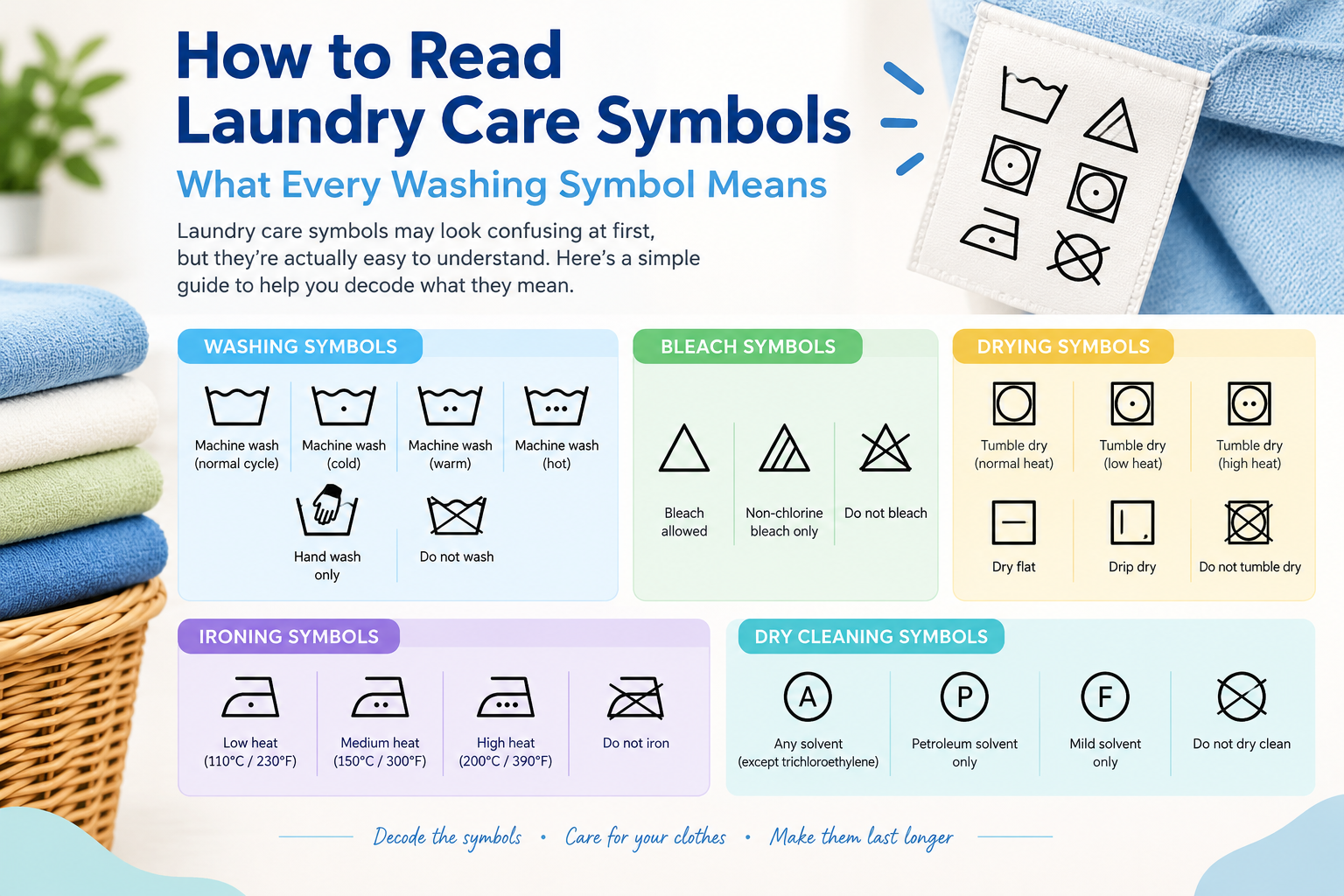
Laundry Symbols Explained: What Every Washing Care Label Means Every piece of clothing has a small tag. That tag carries tiny pictures that many people ignore. However, those icons aren’t decoration. They’re instructions. Manufacturers add them so you know how to wash, dry, bleach, and iron the fabric without damaging it. If you skip them often enough, you could shrink a favorite sweater. You might also bleed color across a white shirt. Worse, you could melt delicate fibers under a hot iron. Fortunately, understanding these symbols is easier than it looks. This guide breaks down every laundry symbol by category. Once you learn them, you’ll know exactly what any care tag is asking you to do. Why Laundry Symbols Exist in the First Place Clothing brands sell their products across dozens of countries. Because not everyone speaks the same language, manufacturers need a simple way to communicate care instructions. Therefore, the textile industry uses a universal picture system. This system follows international standards, allowing care symbols to communicate instructions without relying on written language. For example, a symbol on a shirt made in Portugal can communicate the same type of care instruction as that symbol on a shirt made in Vietnam. As a result, you can learn the icons once and use that knowledge when caring for clothing from almost any brand or country. In general, the symbols use five basic shapes. Each shape governs one part of the laundering process. A tub means washing, while a triangle means bleaching. Similarly, a square means drying, an iron means pressing, and a circle means professional cleaning. In addition, extra marks such as dots, lines, or an X provide more specific instructions. Washing Symbols: The Tub Shape The washtub icon looks like a small basin filled with water. Usually, it is the first symbol on a care tag. This shape controls the washing method and water temperature. A plain tub with no numbers or dots generally means machine washing is allowed without a special temperature indication. However, dots inside the tub indicate the maximum water temperature. In general, more dots mean that a higher temperature is permitted. Some tags, particularly on European-made clothing, display the exact temperature in Celsius instead of using dots. Additionally, a line under the tub calls for a gentler cycle. Two lines mean an even more delicate, low-agitation setting. Meanwhile, a hand dipped into the tub means hand wash only, so you should skip the washing machine entirely. Finally, an X through the tub means the garment should not be washed with water at all. In that case, the item may require professional cleaning. Bleaching Symbols: The Triangle Shape The triangle shape covers bleach instructions. Because it is small, people often miss it. However, checking this symbol before treating stains can prevent serious fabric damage. An empty, unmarked triangle means bleach can be used. On the other hand, two diagonal lines inside the triangle limit you to oxygen-based, non-chlorine bleach. Therefore, using chlorine bleach on a garment with this symbol could cause discoloration or weaken the fibers. Finally, a triangle with an X through it means no bleach at all. You’ll often see this warning on colored fabrics, wool, and synthetic blends that may react poorly to bleaching agents. Drying Symbols: The Square Shape The square icon handles drying instructions. When you see a circle inside the square, the garment can generally be tumble dried. In addition, dots inside that circle indicate the heat level. Fewer dots mean lower heat, which is especially important for synthetic fabrics that can warp or become damaged under high temperatures. On the other hand, a plain square with no circle points to air-drying instead. A horizontal line through the square means the item should be laid flat. This is particularly important for knits and sweaters because laying them flat can help prevent stretching. Similarly, a curved line near the top of the square indicates line drying or drip drying, depending on the specific symbol. Finally, an X through the circle means never tumble dry the garment, even on a low-heat setting. Ironing Symbols: The Iron Shape The ironing symbol is one of the easiest to recognize because it looks like an actual iron. As with washing and drying symbols, dots inside the shape indicate the maximum safe heat. One dot means use the lowest heat setting, which is generally suitable for synthetics and delicate fabrics. Two dots indicate medium heat, which is suitable for many cotton-polyester blends. Meanwhile, three dots allow the highest heat setting, which is commonly used for fabrics such as cotton or linen when permitted by the care label. However, an iron with an X through it means don’t iron the item at all. This warning is especially important for garments with plastic prints, sequins, or heat-sensitive synthetic materials that could scorch or melt. Professional Cleaning Symbols: The Circle Shape The circle shape indicates professional cleaning instructions. In other words, the garment may require a professional cleaning process rather than normal home laundering. An empty circle means the item can be professionally dry-cleaned. Meanwhile, a letter inside the circle provides information about the cleaning process or solvent that the professional cleaner should use. In contrast, an X through the circle means the garment should not be dry-cleaned. You may see this warning on certain plastics, vinyl trims, and specialty coatings that can be damaged by cleaning solvents. Additionally, a circle containing a W indicates professional wet cleaning, which is a specialized cleaning process offered by some professional cleaners. Reading Multiple Symbols Together Care tags rarely show just one symbol. Instead, most tags display four or five symbols in a row. Generally, you can read them from left to right in this order: wash, bleach, dry, iron, and professional cleaning. For example, imagine a tag with a tub showing two dots, a triangle with two lines, a square with a circle and one dot, and an iron with two dots. Together, these symbols indicate that the garment can