


How to Remove Sweat Stains and Yellow Armpit Stains from Clothes
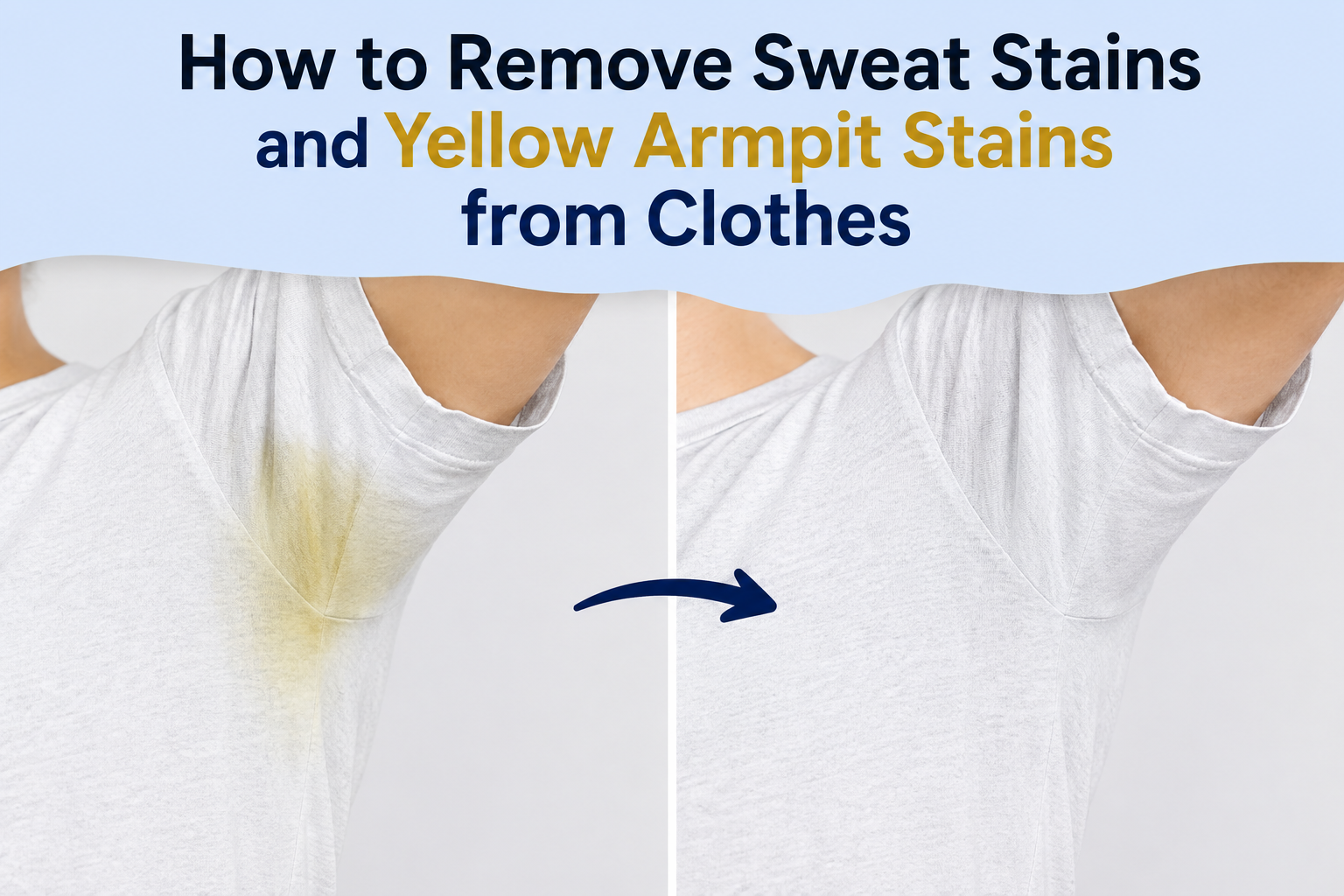
Learning how to remove sweat stains from clothes can help keep your favorite shirts looking fresh and clean. Sweat, body oils, deodorant, and detergent residue can create stubborn yellow marks around the armpits, especially on white shirts. Fortunately, with the right pretreatment and washing method, you can remove many fresh and stubborn sweat stains without damaging your clothes. In this guide, we’ll explain how to remove yellow armpit stains, treat old sweat stains, clean white and colored clothes, and prevent underarm stains from coming back. In this guide, you’ll learn how to remove yellow armpit stains, how to treat white and colored clothes, and the best ways to deal with stubborn, dried, and deodorant-related stains. What Causes Yellow Armpit Stains on Clothes? Yellow armpit stains are usually caused by a combination of sweat, body oils, deodorant or antiperspirant ingredients, and residue that becomes trapped in the fabric. Sweat itself is generally not bright yellow. The discoloration can develop when sweat and skin oils interact with products applied to the underarm area and remain in the fibers over time. Repeated washing without proper pretreatment can also allow residue to build up. This is why simply putting a stained shirt into the washing machine may not always remove the mark completely. How to Remove Sweat Stains from Clothes The best way to remove sweat stains depends on how old the stain is and what type of fabric you’re treating. Before using any cleaning method, check the garment’s care label and test your chosen solution on a small, hidden area if you’re unsure about colorfastness. Here is a simple method you can try: Step 1: Rinse the stained area Start by rinsing the affected area with cool or lukewarm water. Avoid immediately using very hot water because heat can make some stains more difficult to remove. Step 2: Apply a laundry pretreatment Apply a small amount of liquid laundry detergent directly to the sweat stain. Gently work the detergent into the fabric using your fingers or a soft laundry brush. Allow it to sit for around 10–15 minutes. Step 3: Wash according to the care label Place the garment in the washing machine and select the appropriate cycle and temperature for the fabric. Using the correct amount of detergent is important. Too much detergent can leave residue, while too little may not provide enough cleaning power. Step 4: Check before drying After washing, inspect the stained area before putting the garment in the dryer. If the stain is still visible, treat it again rather than immediately applying heat. Heat from a dryer can make some remaining stains harder to remove. How to Remove Yellow Armpit Stains from White Shirts White shirts can be particularly noticeable when yellow stains develop around the underarms. If you’re searching for how to remove yellow armpit stains from white shirts, start with a gentle pretreatment rather than immediately reaching for strong chemicals. Apply liquid laundry detergent directly to the yellow area and gently work it into the fabric. Let it sit for approximately 10–15 minutes before washing according to the garment’s care instructions. For persistent stains, a laundry stain remover designed for the specific fabric can be used according to its label instructions. Always check the garment’s care label before using whitening products. How to Remove Yellow Stains from Clothes If you’re trying to figure out how to remove yellow stains from clothes, first determine what caused the discoloration. Yellow marks around the armpits are often associated with sweat, body oils, and deodorant or antiperspirant residue. However, yellowing elsewhere on a garment can have different causes. A good general approach is: Pretreat the stained area with liquid laundry detergent. Gently work the detergent into the fabric. Allow it to sit before washing. Wash according to the care label. Inspect the garment before drying. Repeat the treatment if necessary. Avoid aggressive scrubbing because it can damage delicate fibers. How to Get Sweat Stains Out of Clothes If you’re looking for how to get sweat stains out of clothes, treating the stain before washing is one of the most important steps. Fresh sweat stains are generally easier to treat than stains that have been repeatedly washed and dried. For fresh stains, rinse the area and apply a small amount of liquid detergent directly to the fabric. Allow the detergent time to work before washing. For older stains, you may need to repeat the pretreatment process several times. The key is patience. A stubborn stain may not disappear after one wash. How to Remove Underarm Stains from Shirts When learning how to remove underarm stains from shirts, remember that the fabric type matters. Cotton shirts are generally easier to pretreat than delicate fabrics. Always check the care label before applying a stain remover. For regular washable shirts: Rinse the underarm area. Apply liquid laundry detergent. Gently massage the detergent into the stain. Allow it to sit for 10–15 minutes. Wash according to the care instructions. Check the stain before drying. For delicate garments, follow the manufacturer’s washing instructions and consider using a product specifically designed for delicate fabrics. How to Remove Armpit Stains from Clothes Knowing how to remove armpit stains from clothes can help extend the life of your favorite shirts. For regular washable clothing, pretreat the affected area before placing the garment in the washing machine. Don’t wait until the stain becomes extremely dark or yellow. Treating stains early can make the cleaning process much easier. If an armpit stain has been present for a long time, several gentle treatments may be more effective than one aggressive treatment. How to Get Yellow Armpit Stains Out of Shirts If you’re wondering how to get yellow armpit stains out of shirts, start by identifying whether the shirt is white or colored. For white shirts, you may have more treatment options, depending on the fabric and care label. For colored shirts, avoid assuming that a whitening product is safe. Some products can cause fading or uneven discoloration. For both types of