

How to Wash Jeans Without Fading or Shrinking: Complete Guide
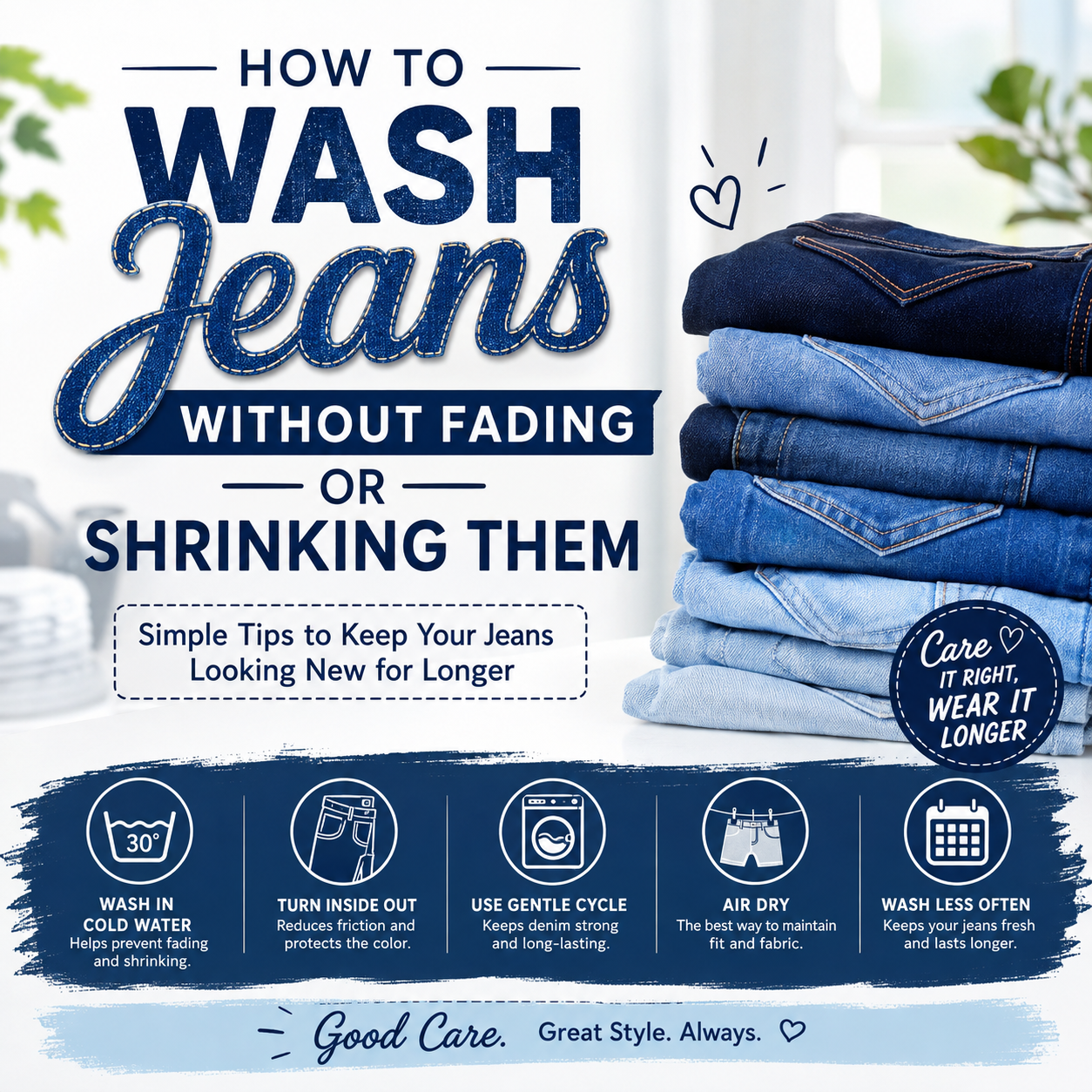
Learning how to wash jeans without fading or shrinking can help your favorite denim maintain its color, shape, and comfort for longer. The right water temperature, washing cycle, laundry detergent, and drying method can make a big difference in keeping jeans looking new. Jeans are durable and versatile, but improper washing can cause them to fade, shrink, lose their shape, or become stiff. In this guide, we’ll show you the best way to wash jeans, how to prevent jeans from fading, and how to dry jeans without shrinking them. If you have ever pulled your favorite pair of jeans out of the dryer only to discover that they no longer fit quite the same, you are not alone. The good news is that learning how to wash jeans without fading or shrinking them is simple. The right water temperature, washing cycle, detergent, and drying method can make a significant difference in how long your denim stays comfortable and looks new. In this guide, we’ll explain how to wash jeans in a washing machine, how often you should wash denim, how to prevent jeans from fading, and how to dry jeans without shrinking them. Why Do Jeans Fade and Shrink? Before learning how to properly wash jeans, it helps to understand why denim changes over time. Why Jeans Fade The deep blue or black color of denim comes from dye applied to the cotton fibers. Washing creates friction between the fabric, other clothes, and the washing machine. Over time, this friction can gradually remove some of the surface dye. Heat and aggressive washing can accelerate this process. Turning jeans inside out before washing helps reduce friction and exposure on the visible outer surface of the fabric, which can help minimize fading. Why Jeans Shrink Most traditional denim contains a significant amount of cotton, and cotton can shrink when exposed to high temperatures. Hot washing and high-heat tumble drying can cause denim to lose some of its original dimensions. Stretch jeans containing materials such as elastane or Lycra can also be affected by excessive heat. That is why cold water and gentle drying are two of the most important rules for washing jeans without shrinking them. How to Wash Jeans Without Fading or Shrinking Them Follow these simple steps the next time you wash your denim. 1. Check the Care Label First Before putting your jeans in the washing machine, check the manufacturer’s care label. Different types of denim can have different requirements. Raw denim, stretch denim, pre-washed denim, black jeans, and specialty fabrics may require slightly different care. The care label should always be your first reference. 2. Turn Your Jeans Inside Out One of the easiest ways to help prevent jeans from fading is to turn them inside out before washing. This places the outside surface of the denim inside the garment, reducing direct exposure to friction during the wash cycle. For dark blue or black jeans, this simple step can be particularly useful for preserving their appearance. Tip: Turn the jeans inside out and close the zipper and buttons before putting them into the washing machine. 3. Wash Jeans in Cold Water If you want to know the best water temperature for washing jeans, the answer is simple: cold water is generally the safest choice. Cold water helps reduce the risk of shrinking and can help preserve the color of denim. Hot water can contribute to fading and shrinkage, especially with darker denim. For most everyday jeans: Cold water + gentle cycle = better denim care. If your jeans have special washing instructions, always follow the manufacturer’s recommendations. 4. Choose a Gentle or Delicate Cycle Jeans are strong, but that does not mean they need an aggressive washing cycle. A heavy-duty cycle creates more agitation and friction, which can contribute to fabric wear and color loss over time. Instead, choose the gentle, delicate, or hand-wash cycle on your washing machine when appropriate. A gentle wash is particularly helpful for: Dark denim Black jeans Stretch jeans Lightweight denim Jeans with decorative details 5. Use the Right Laundry Detergent Choosing the right detergent is another important part of how to wash jeans without fading. Avoid using more detergent than necessary. Excess detergent can leave residue behind and may require additional rinsing. For dark or colored jeans, consider using a mild, color-conscious laundry detergent rather than an unnecessarily harsh cleaning formula. A gentle detergent can provide effective cleaning while helping you maintain good fabric-care habits. Prime Nova Partners’ Clean Laundry Detergent is designed around convenient everyday laundry care, making detergent choice another area worth considering when building a gentler washing routine. 6. Do Not Overload the Washing Machine A washing machine that is packed too tightly does not give clothes enough room to move freely. This can increase friction and prevent detergent and water from circulating effectively. When washing jeans, avoid stuffing too many heavy garments into the drum at once. For best results: Leave enough room for clothes to move. Wash jeans with similar colors. Avoid mixing dark denim with white clothing. Wash new dark jeans separately when recommended. Follow your washing machine’s load guidelines. How Often Should You Wash Jeans? One of the easiest ways to help prevent jeans from fading is simply to avoid washing them unnecessarily often. Unlike underwear, socks, and some workout clothing, jeans generally do not need to be washed after every wear unless they are visibly dirty, heavily sweaty, stained, or exposed to something that requires cleaning. Between washes, you can: Air your jeans out. Spot-clean small stains. Remove crumbs or surface dirt. Treat stains before they become permanent. The goal is not to avoid washing jeans completely. It is to wash them when they actually need cleaning. How to Wash Jeans in a Washing Machine If you prefer machine washing, here’s a simple routine you can follow: Step 1: Empty the Pockets Check every pocket for tissues, coins, receipts, or other objects. Step 2: Close Zippers and Buttons Closing zippers and buttons can