

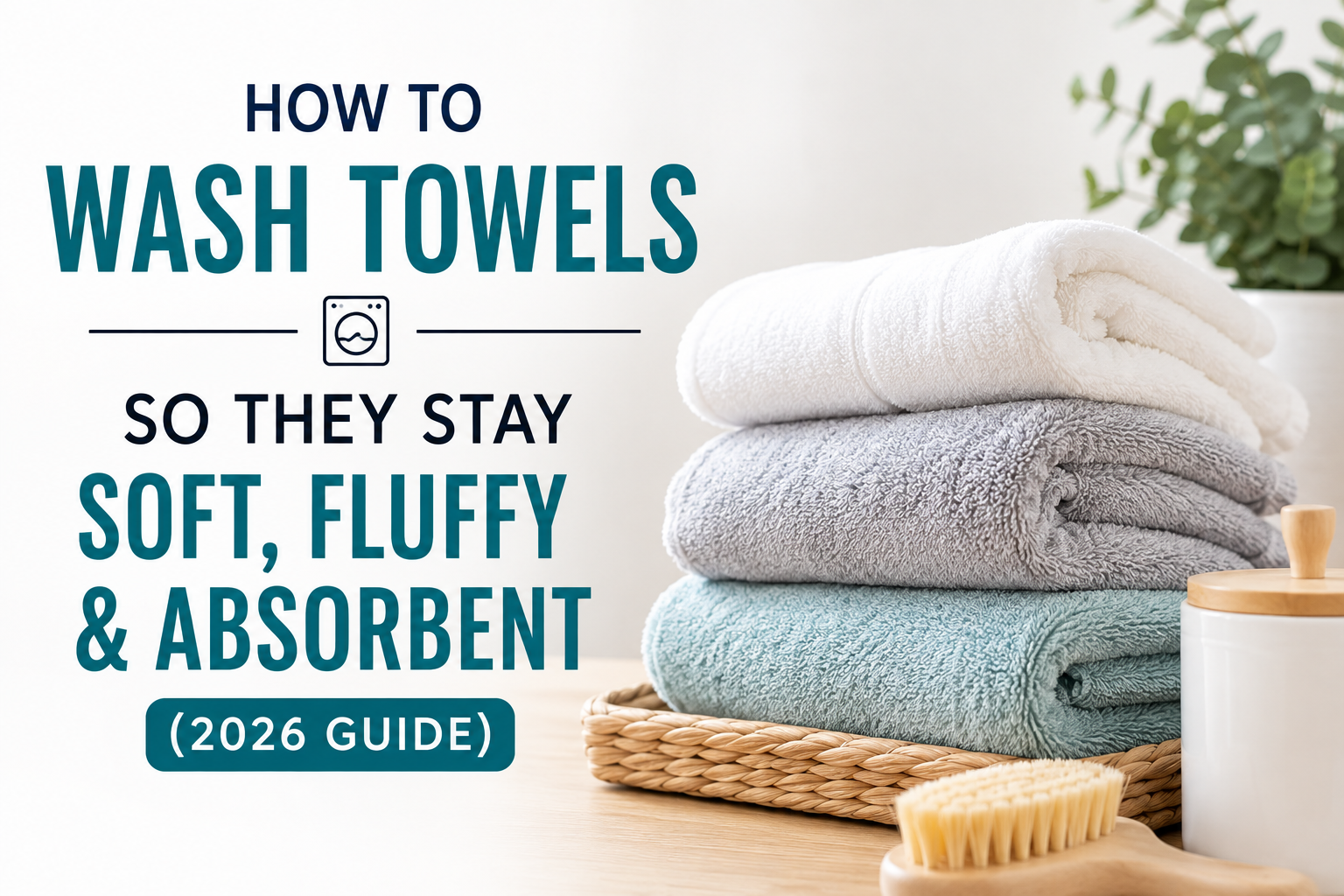
How to Wash Towels So They Stay Soft, Fluffy & Absorbent (2026 Guide)
How to Wash Towels So They Stay Soft, Fluffy, and AbsorbentFew small daily luxuries compare to wrapping yourself in a plush, ultra-soft towel right out of a warm shower. When you first buy new towels, they feel cloud-like, silky, and immensely cozy. Fast forward a few months, however, and many bath towels transform into stiff, scratchy boards that feel more like sandpaper than spa-quality cotton.Why does this happen? The culprit is almost never cheap materials—it is standard laundry habits. Common routines like overusing laundry detergent, pouring in commercial liquid fabric softeners, overloading the washing machine, and drying on high heat act as a slow recipe for ruining cotton fibers. If your bath towels have lost their loft, don’t throw them out just yet. Maintaining hotel-level softness—and even restoring old, stiff towels—is surprisingly easy once you understand the science of laundry care. The Root Causes: Why Do Towels Become Stiff? Before diving into solutions, it helps to understand why plush cotton fibers turn rough and scratchy in the first place. 1. Detergent Residue Build-Up When you use too much detergent, your washer’s rinse cycle cannot fully remove the excess soap. Detergent residue clings to the individual terry cloth loops. Over time, these soap deposits dry inside the fibers, causing them to stiffen and lock together like glue. 2. The Fabric Softener Trap It sounds counterintuitive, but commercial liquid fabric softeners are the leading enemy of towel softness. Fabric softeners coat cotton fibers with a thin layer of silicone or wax-like chemicals to make them feel slick. Over time, this chemical film builds up, repelling water and flattening the tiny loops that give towels their absorbency and fluffiness. 3. Hard Water Minerals If you live in an area with hard water, high concentrations of calcium and magnesium attach themselves to fabric fibers during the wash cycle. Left untreated, these minerals leave bath sheets feeling crusty and stiff when dry. 4. Excessive Heat in the Dryer High dryer temperatures bake leftover soap residues into the cotton fabric and scorch delicate cotton loops, breaking down the fibers and making them coarse to the touch. The Golden Rules of Towel Care To achieve long-lasting, spa-quality softness, follow these foundational golden rules every time you start a load of bath linens. Care Parameter Golden Standard Recommendation Washing Temp Warm water (approx. 104°F / 40°C) Detergent Amount Half (1/2) of the manufacturer’s recommended dose Fabric Softener Never use liquid softeners or dryer sheets Wash Load Size 50%–70% capacity (never overfill the drum) Dryer Setting Low to medium heat with wool dryer balls Step-by-Step Instructions: The Fluffy Towel Laundry Routine Follow this step-by-step procedure for every regular wash cycle to keep your towels soft, clean, and absorbent for years. Step 1: Sort Towels Separately Always wash towels in their own dedicated load. Mixing towels with clothing that has zippers, buttons, or snaps leads to snagging and pulled threads. Furthermore, synthetic fabrics like polyester shed lint that clings aggressively to cotton loops. Pro Tip: Separate darks and whites. Dyes can migrate over time, making vibrant bath sheets look dull or dingy. Step 2: Use Half the Recommended Detergent Modern laundry detergents are highly concentrated. Because towels are highly absorbent, they suck up soap rapidly and hold onto it during the rinse cycle. Cut your standard liquid detergent measurement by 50%. A smaller amount of soap cleans the fabric thoroughly without leaving sticky residue behind. Step 3: Select Warm Water and an Extra Rinse While cold water saves energy and scalding hot water can shrink cotton fibers, warm water (around 104°F / 40°C) hits the sweet spot. Warm water effectively dissolves oils, body soils, and detergent without breaking down delicate cotton threading. Always select an extra rinse cycle if your washer offers one. Step 4: Add Distilled White Vinegar to the Rinse Compartment Instead of commercial fabric softener, pour 1/2 cup of plain distilled white vinegar into the fabric softener compartment of your washing machine. Vinegar acts as a natural rinse aid: It breaks down alkaline detergent deposits lingering in the fibers. It neutralizes trapped body odors and mildew smells. It strips away mineral deposits from hard water. (Don’t worry—your laundry will not smell like vinegar once dried!) Step 5: Shake Towels Out Before Drying When you pull wet towels out of the washing machine, they are often twisted into dense, tightly packed clumps. Before throwing them into the dryer, give each towel a firm shake to open up the woven loops and fluff the fibers. Drying Techniques: Low Heat & Air Circulation How you dry your towels is just as critical as how you wash them. Improper drying can instantly undo a great wash cycle. Option A: The Tumble Dryer (Best for Maximum Fluffiness) Set to Low or Medium Heat: High heat bakes cotton threads and leaves them feeling stiff. Toss in Wool Dryer Balls: Replace synthetic dryer sheets with 2 to 4 wool dryer balls. They help separate towels during drying, improve air circulation, may reduce drying time, and can naturally help keep towels fluffy Do Not Over-Dry: Remove towels as soon as they are dry (or slightly damp). Over-drying strips natural moisture from cotton fibers, rendering them scratchy. Option B: Line Drying Outside Line drying is eco-friendly and gives linens a crisp, fresh scent, but outdoor air drying alone can leave towels feeling stiff. To prevent this: Hang towels in a breezy, shaded area rather than intense direct sunlight. Once 90% dry on the line, toss them into the tumble dryer on a Fluff / Air-Only cycle for 5 to 10 minutes to restore pile separation and softness. How to Restore Stiff, Scratchy Towels (The Vinegar Reset Method) If your current towels already feel like cardboard due to years of fabric softener and detergent buildup, don’t throw them out. You can perform an easy two-step laundry stripping process to remove years of trapped chemicals and minerals. The Two-Cycle Stripping Method Perform this process once every 3 to 4 months (or whenever towels start feeling heavy