

How to Wash Clothes Properly: Step-by-Step Guide
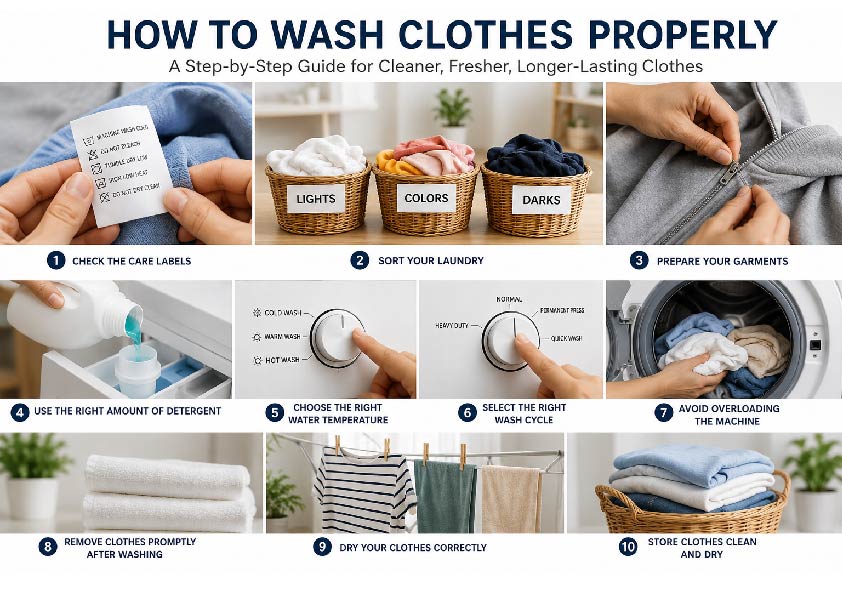
Learning how to wash clothes properly is essential for keeping your favourite garments clean, fresh, and in good condition. Using the wrong washing temperature, too much detergent, or an unsuitable wash cycle can lead to faded colours, shrunken sweaters, stretched fabrics, and unpleasant odours. Whether you are doing laundry for the first time or simply want to improve your routine, this step-by-step guide explains how to wash clothes properly. You will learn how to sort laundry, prepare garments, choose the right detergent and water temperature, select the best washing machine cycle, remove common stains, and dry clothes correctly. Before You Wash: Prepare Your Clothes Properly A successful wash begins before you put your clothes into the washing machine. Taking a few minutes to prepare your garments can help prevent damage and improve cleaning results. 1. Read the Care Labels Always check the care label before washing a garment. These instructions provide important information about how the item should be cleaned and dried. Care labels may tell you: The recommended water temperature Whether the garment can be machine washed Which wash cycle to use Whether the item can be tumble dried Whether it should be air dried or dry cleaned If a garment says “Dry Clean Only,” it is best to follow the manufacturer’s instructions. Some items labelled simply “Dry Clean” may be suitable for gentle hand washing, but this depends on the fabric and construction of the garment. Important: When in doubt, always follow the care label. Different fabrics can react differently to water, heat, and detergents. 2. Sort Your Laundry Sorting your laundry helps prevent colour transfer and protects delicate fabrics from unnecessary damage. Sort Clothes by Colour Separate laundry into: Whites Light colours Dark colours Dark clothing can sometimes release excess dye, especially when it is new. Washing dark garments separately helps reduce the risk of colour bleeding. Sort Clothes by Fabric Weight Heavy items such as: Towels Jeans Hoodies Bedding should generally be washed separately from lighter items such as: Blouses Delicate tops Thin T-shirts Lingerie Heavy fabrics can create additional friction during washing, which may damage delicate clothing. Sort Clothes by Soil Level Heavily soiled clothing, muddy garments, and sweaty sportswear may need a different wash cycle or stain treatment than lightly worn everyday clothes. 3. Prepare Your Garments Before loading the washing machine, take a few simple steps to protect your clothes. Empty all pockets. Close zippers to prevent snagging. Fasten bras and delicate hooks. Turn printed T-shirts and dark clothing inside out. Remove loose belts and accessories. Check garments for stains before washing. It is usually best to unbutton shirts before washing. This can help reduce unnecessary stress on the buttons and buttonholes during the wash cycle. How to Wash Clothes Properly: 5 Essential Steps Once your clothes are sorted and prepared, you can begin the washing process. Step 1: Add the Correct Amount of Detergent Use the detergent according to the manufacturer’s instructions and the size and soil level of your load. Using too much detergent does not necessarily make clothes cleaner. Excess detergent can leave behind residue, make fabrics feel stiff, and may contribute to unpleasant odours over time. For a more convenient and mess-free laundry routine, some households choose detergent sheets or concentrated detergents that are pre-measured and easy to store. Tip: Always follow the dosage instructions on the product packaging and consider your washing machine’s load size and water hardness. Step 2: Choose the Right Water Temperature Choosing the correct water temperature is an important part of knowing how to wash clothes properly. Cold Water Cold water is generally suitable for: Dark clothing Bright colours Delicate fabrics Lightly soiled garments It can also help reduce the risk of shrinking and colour fading while using less energy than hot-water washing. Warm Water Warm water can be suitable for: Moderately soiled clothing Synthetic fabrics Everyday garments Always check the care label before choosing a warmer wash temperature. Hot Water Hot water may be appropriate for certain durable items, including: Some white cotton clothing Towels Bed linens Heavily soiled washable fabrics However, hot water can cause some fabrics to shrink, fade, or become damaged. Therefore, it should not be used automatically for every load. A good general rule: Use the lowest temperature that effectively cleans your clothes and is recommended by the care label. Step 3: Select the Correct Washing Machine Cycle Different fabrics require different levels of agitation and spin speed. Normal or Regular Cycle This cycle is generally suitable for durable everyday fabrics such as: Cotton Jeans Towels Sheets Permanent Press Cycle This cycle is often suitable for synthetic fabrics and clothing that wrinkles easily. It typically uses gentler agitation and may help reduce creasing. Delicate or Gentle Cycle Use a gentle cycle for delicate items such as: Lingerie Lace Lightweight fabrics Some wool garments Always check the care label, as some delicate fabrics may require hand washing or professional cleaning. Step 4: Avoid Overloading the Washing Machine Overloading your washing machine is one of the most common laundry mistakes. Clothes need enough space to move freely through the water and detergent. If the drum is packed too tightly: Clothes may not clean properly. Detergent may not distribute evenly. Fabrics may experience more friction. The washing machine may become unnecessarily strained. A simple rule is to avoid tightly compressing clothes into the drum. Leave enough room for garments to move during the wash cycle. Step 5: Remove Clothes Promptly After Washing Once the washing cycle is complete, remove your clothes as soon as reasonably possible. Leaving damp clothing inside the washing machine for too long can contribute to: Musty smells Mildew growth Increased wrinkles Move your clothes to the dryer or drying rack promptly for the best results. How to Remove Common Laundry Stains The sooner you treat a stain, the better your chances of removing it successfully. Stain Recommended Approach Grease or oil Apply a small amount of suitable liquid detergent or stain treatment and allow it to work