


15 Laundry Mistakes That Ruin Your Clothes And How to Avoid Them
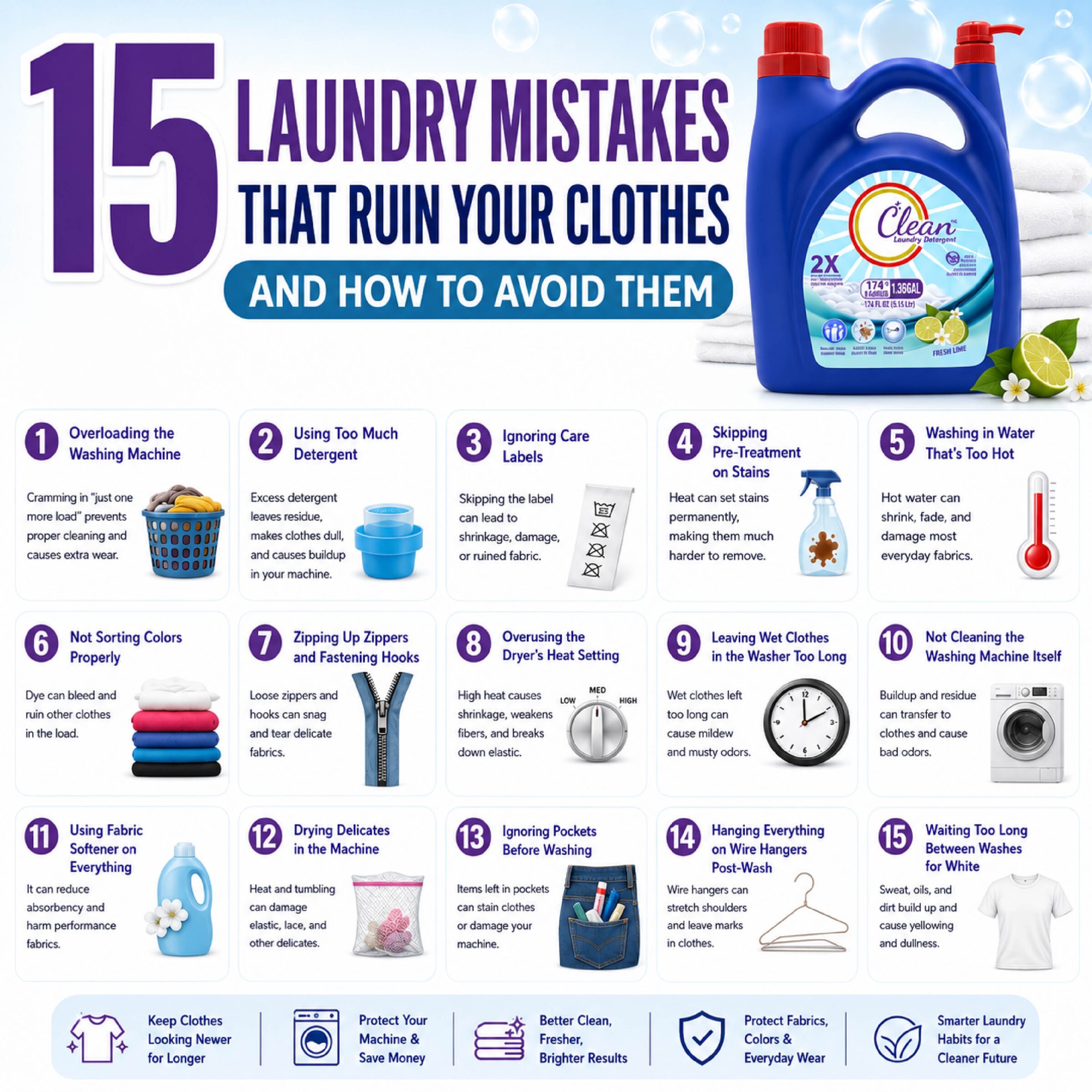
Laundry feels like one of those chores you can do on autopilot — toss everything in, add some detergent, hit start. But a surprising number of everyday laundry mistakes are quietly wearing out your clothes, fading colors, shrinking fabrics, and leaving stains that never should have set in the first place. The good news? Almost every one of these laundry mistakes is easy to fix once you know what to look for. Below are the 15 most common laundry mistakes, why each one damages your clothes, and exactly how to avoid them. For a deeper dive into fabric care science, the American Cleaning Institute’s fabric care guide is a solid outside reference. 1. Overloading the Washing Machine Cramming in “just one more load” to save time actually works against you. When the drum is too full, clothes can’t move freely, so detergent doesn’t rinse out evenly and fabrics rub against each other under pressure instead of gently tumbling. The result is dingy, unevenly cleaned laundry and extra wear on fibers. Fix it: Leave enough room for clothes to move — as a rule of thumb, the drum should be about three-quarters full at most. 2. Using Too Much Detergent — A Classic Laundry Mistake More detergent doesn’t mean cleaner clothes. Excess suds trap dirt and residue in the fabric instead of rinsing it away, which can leave clothes looking dull and feeling stiff over time. It also makes your machine work harder and can lead to buildup in the drum. Fix it: Follow the measuring line on your detergent cap, and adjust down for smaller or lightly soiled loads. Pre-measured options, like Prime Nova Partners’ laundry detergent, take the guesswork out entirely. 3. Ignoring Care Labels Those little tags aren’t just fine print — they’re a roadmap for keeping a garment looking new. Washing a “dry clean only” sweater on a normal cycle, or tossing a delicate blouse in with towels, is one of the fastest ways to warp, shrink, or pill fabric. Fix it: Take five seconds to check the label before sorting. When in doubt, wash cooler and gentler than you think you need to. 4. Skipping Pre-Treatment on Stains Tossing a stained shirt straight into the wash and hoping the cycle handles it usually backfires — heat from the dryer can set a stain permanently, making it nearly impossible to remove later. Fix it: Treat stains as soon as possible with a stain remover or a small amount of detergent worked directly into the fabric, then let it sit for a few minutes before washing. 5. Washing in Water That’s Too Hot Hot water is great for heavily soiled whites, but it’s rough on most everyday fabrics. It can shrink natural fibers like cotton and wool, fade colors faster, and break down elastic in activewear and undergarments. Fix it: Use cold or warm water for most loads, and reserve hot water for genuinely soiled items or specific care instructions. 6. Not Sorting Colors Properly Bleeding dye is one of the most frustrating laundry disasters — a single red sock can turn a whole load pink. It’s not just new garments that bleed, either; darker, saturated colors can release dye for several washes. Fix it: Sort into lights, darks, and brights, and wash new dark or brightly colored items separately for the first few washes. 7. Zipping Up Zippers and Fastening Hooks Loose zippers, hooks, and buttons act like tiny hooks inside the machine, snagging on delicate fabrics and creating small tears or pulls in other garments. Fix it: Zip zippers, fasten hooks, and button up shirts before they go in the wash. 8. Overusing the Dryer’s Heat Setting High heat is efficient, but it’s also the number one cause of shrinkage and fiber breakdown. Over time, high-heat drying makes fabrics feel thinner, causes elastic to lose its stretch, and can warp synthetic blends. Fix it: Use a lower heat or air-dry setting for anything delicate, and reserve high heat for heavy-duty items like towels and bedding. 9. Leaving Wet Clothes in the Washer Too Long Forgetting a load in the washer for a few hours (or overnight) creates the perfect environment for mildew and musty odors, which can be surprisingly hard to wash out once they set in. Fix it: Try to move clothes to the dryer or a drying rack within 30–60 minutes of the cycle ending. 10. Not Cleaning the Washing Machine Itself Detergent residue, fabric softener buildup, and mineral deposits accumulate inside your machine over time, and they can transfer right back onto your “clean” laundry — sometimes as a musty smell, sometimes as faint residue on dark fabrics. Fix it: Run an empty hot cycle with a washing machine cleaner or a cup of white vinegar once a month, and wipe down the rubber gasket and detergent drawer regularly. 11. Using Fabric Softener on Everything Fabric softener makes towels feel fluffy, but it coats fibers with a waxy layer that actually reduces absorbency over time. It’s especially problematic on towels, activewear, and anything labeled moisture-wicking. Fix it: Skip fabric softener on towels, workout gear, and microfiber items. If you do want softness without buildup, a lighter-touch option like Prime Nova Partners’ fabric softener dryer sheets reduces wrinkles and static without over-coating fibers. 12. Drying Delicates in the Machine Bras, lace, swimwear, and other delicate items are built to withstand gentle handling, not the tumbling and heat of a standard dryer cycle. Elastic breaks down fast, and underwires can bend or poke through fabric. Fix it: Lay delicates flat to air dry, or use a mesh garment bag if you do need to machine wash them. 13. Ignoring Pockets Before Washing Tissues, pens, and lip balm left in pockets are more than an annoyance — a melted crayon or leaking pen can stain an entire load, and tissue paper leaves lint on everything. Fix it: Make checking pockets part of your sorting routine, every single time. 14. Hanging Everything on Wire Hangers