

How to Clean Your Washing Machine and Remove Bad Smella
Learning how to clean your washing machine and remove bad smells can help eliminate mold, mildew, soap residue, and unpleasant odors. If your laundry smells musty after washing, your machine may need a deep clean.
Over time, washing machines collect detergent scum, fabric softener residue, body oils, hard water minerals, and trapped moisture. Together, these create the perfect environment for mold and mildew to grow.
Fortunately, learning how to clean your washing machine and remove bad smells is simple and inexpensive. The process takes less than an hour of hands-on effort. This guide explains how to clean both front-load and top-load washing machines, remove stubborn odors, and keep your laundry smelling fresh.
Why Does Your Washing Machine Smell Bad?
Before starting the cleaning process, it helps to understand why a machine designed to clean clothes can become dirty.
Modern washing machines, especially high-efficiency (HE) models, use much less water than older appliances. This is great for the environment and your utility bills. However, detergent residue and grime may not rinse away completely.
Here are the main causes of washing machine odors:
Excess Detergent Usage: Using too much liquid detergent or fabric softener can leave sticky residue inside the drum and drain pipes.
Cold-Water Washes: Washing exclusively at low temperatures, such as 30°C/86°F or below, may allow bacteria and greasy residue to build up.
Trapped Moisture: Closing the washing machine door or lid immediately after a cycle traps moisture inside. This creates an ideal environment for mildew.
A Clogged Drain Pump Filter: Lint, coins, and hair can trap stagnant water inside the filter compartment. Over time, this may cause a sewage-like smell.
Essential Supplies You Will Need
You usually do not need harsh or expensive chemical cleaners to freshen your washing machine. Many effective cleaning supplies are already in your kitchen.
Natural Household Ingredients
White Vinegar (4 Cups): A mild acid that helps break down hard water limescale and neutralize sour odors.
Baking Soda (1 Cup): A mild abrasive and deodorizer that helps remove grime and stubborn smells.
Microfiber Cloths and an Old Toothbrush: Useful for scrubbing tight corners, rubber gaskets, and detergent drawers.
Warm Dish Soap: Ideal for cleaning removable plastic parts.
Alternative Option: Chlorine Bleach
Severe mold growth may require a stronger solution. In this case, you can use 1–2 cups of liquid chlorine bleach instead of vinegar.
⚠️ SAFETY WARNING: Never mix vinegar and bleach. Combining them creates toxic chlorine gas, which is extremely dangerous. Choose either the vinegar and baking soda method or the bleach method.
Step-by-Step: How to Clean a Front-Load Washing Machine
Front-loading washing machines often develop moldy rubber gaskets and dirty detergent drawers. The following steps will help you clean the machine thoroughly.
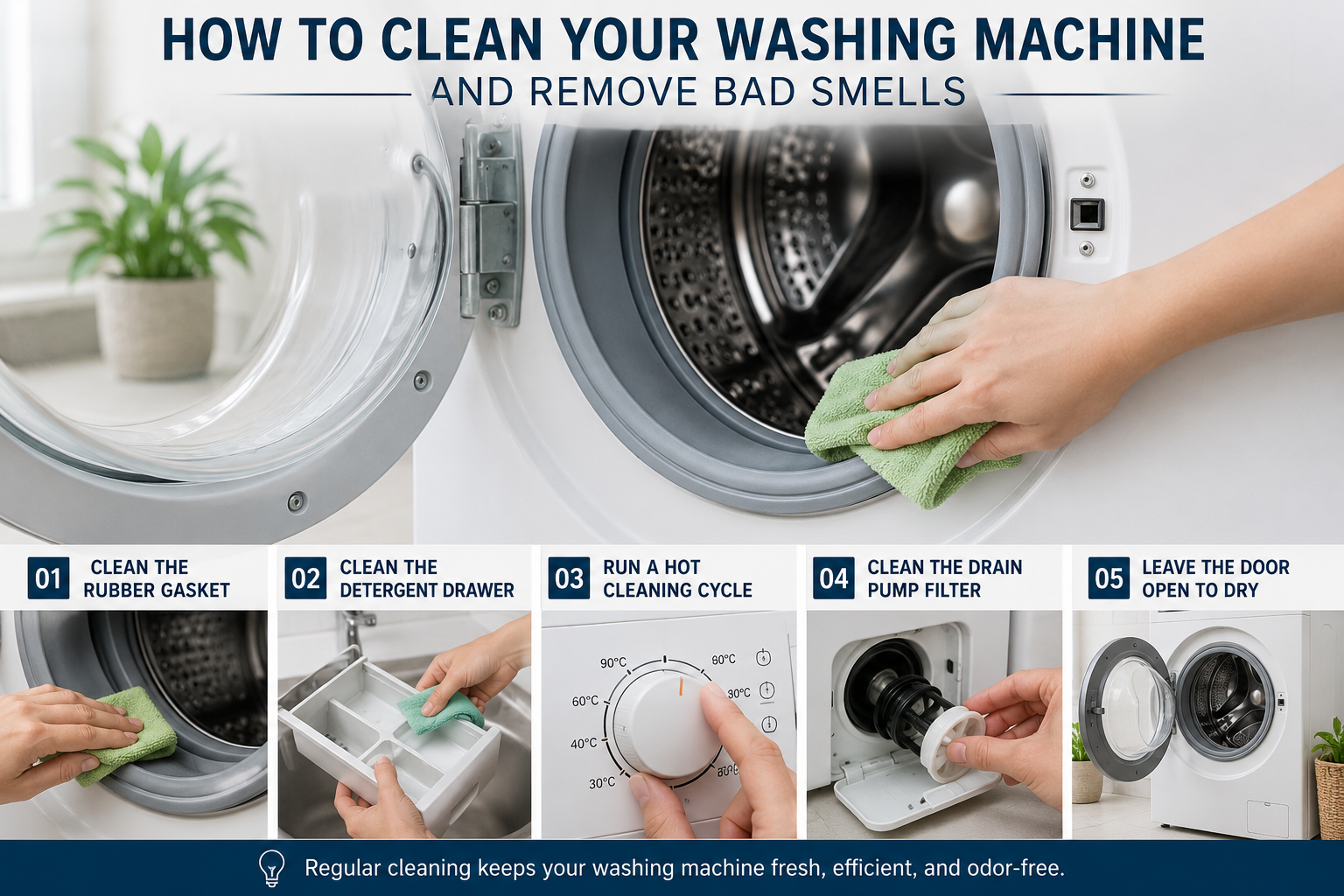
Step 1: Clean the Rubber Door Gasket
The rubber seal around the door is a common place for mold and foul odors to develop.
Pull back the folds of the rubber seal and inspect the hidden crevices. Mix equal parts warm water and white vinegar, or use mild dish soap. Spray the solution generously, then scrub away black mold spots, slimy residue, and trapped debris with a microfiber cloth or old toothbrush. Wipe the entire gasket completely dry with a clean towel.
Step 2: Clean the Detergent Dispenser Drawer
Detergent and fabric softener can quickly build up inside the drawer. Over time, this residue turns into thick, stagnant slime.
Pull the dispenser drawer out until it reaches the stop. Press the release tab, usually located in the center compartment, and remove the drawer completely.
Soak it in warm, soapy water for 10–15 minutes. Use a small brush or toothbrush to remove the buildup, paying special attention to the small siphon caps. Wipe the inside of the drawer cavity with a damp cloth.
Once clean, dry the drawer completely and slide it back into place.
Step 3: Run a Hot Deep-Cleaning Cycle
The next step is to clean the internal drum and water pipes.
Make sure the washing machine is completely empty. Sprinkle 1 cup of baking soda into the bottom of the drum. Add 2 cups of white vinegar to the liquid detergent compartment, or pour it directly into the drum if your model allows it.
Select the “Clean Washer” or “Tub Clean” cycle. If your machine does not have either setting, choose the longest cycle with the hottest water temperature available.
Let the entire cycle run without interruption.
Step 4: Clean the Drain Pump Filter
A sewer-like smell after cleaning may indicate a clogged drain pump filter.
Locate the small access door at the bottom front of the machine. Place a shallow tray and towel underneath to catch standing water.
If your machine has an emergency drain hose, carefully unclip it and drain the water into the tray. Unscrew the filter cap counterclockwise and remove the filter. Rinse away lint, coins, and other debris under warm running water.
Replace the filter and tighten it securely. Close the access door when finished.
Step-by-Step: How to Clean a Top-Load Washing Machine
Top-loading machines have large tubs that benefit from a deep soaking method. This helps loosen soap scum and mineral deposits.
Step 1: Fill the Tub with Hot Water
Remove all clothing from the washing tub. Set the machine to the highest load size and hottest water temperature.
Allow the tub to fill completely. Pause the cycle before the agitation begins.
Step 2: Add the Cleaning Solution
Pour 4 cups of white vinegar into the hot water. Close the lid and let the machine agitate for 1–2 minutes so the solution mixes evenly.
Pause the machine again. Open the lid and carefully add 1 cup of baking soda. The mixture will fizz and help loosen scum and grease.
Step 3: Let It Soak
Leave the lid open and allow the hot solution to sit for 45–60 minutes.
While the machine is soaking, use a cloth or old toothbrush to scrub the agitator, detergent dispensers, and the area beneath the upper rim of the tub.
Step 4: Complete the Wash Cycle
Close the lid and restart the machine. Allow it to complete the full wash, rinse, and spin cycle.
The process will drain away loosened debris and residue.
Step 5: Wipe Down the Drum and Exterior
When the cycle finishes, wipe the inside of the drum with a dry microfiber cloth. Clean the lid, buttons, knobs, and outer cabinet to remove dust and splatters.
How to Remove Extreme Musty Smells and Black Mold
A standard vinegar wash may not remove severe odors from an appliance that has gone years without cleaning. Stubborn cases may require a stronger approach.
Use Chlorine Bleach: Run a full hot cycle with 1–2 cups of chlorine bleach in an empty drum. Bleach can kill mold spores and break down tough organic matter.
Run a Follow-Up Water Cycle: After using bleach, run another hot cycle with plain water. This helps remove chemical residue before your next load of laundry.
Use Commercial Washing Machine Cleaners: Products such as washing machine cleaning tablets are designed to break down hardened limescale and residue in hard-to-reach areas.
Pro Tips for a Permanently Fresh Washing Machine
- Leave the door or lid slightly open after every load.
- Measure detergent carefully because using more is not always better.
- Consider replacing liquid fabric softener with white vinegar.
- Remove wet clothes as soon as the wash cycle ends.
- Run one hot wash cycle at 60°C/140°F or higher each week.
- Clean the lint or pump filter once a month.
- Perform a deep vinegar and baking soda clean every three months.
7 Essential Habits to Keep Your Washing Machine Smelling Fresh
Once your washing machine is clean, a few simple habits can help keep it fresh for months.
1. Leave the Door Open
This is one of the most effective habits you can develop. Leave the door or lid slightly open after every wash.
Air circulation helps dry the interior drum and gasket. As a result, mold and mildew have less opportunity to grow.
2. Stop Overusing Detergent
More detergent does not necessarily make clothes cleaner. Excess suds may not rinse away properly.
High-efficiency detergent is highly concentrated. Follow the manufacturer’s recommended dosage instead of adding extra detergent.
3. Ditch Liquid Fabric Softener
Liquid fabric softeners can leave oils and other ingredients behind inside the washing machine tub. Over time, this film may trap bacteria and create unpleasant odors.
For naturally soft clothes, consider using 1/2 cup of white vinegar in the fabric softener compartment.
4. Remove Wet Clothes Promptly
Avoid leaving damp laundry inside a closed washing machine overnight. Wet fabrics trap humidity inside the drum and may encourage mold growth within a few hours.
5. Run Weekly Hot Washes
Cold-water washing can help save energy. Still, running at least one hot cycle at 60°C/140°F or higher each week can help reduce buildup.
A load of white towels or bed linens is a practical option for this routine.
Frequently Asked Questions (FAQ)
How often should you clean your washing machine?
A deep clean every 1–3 months is generally a good maintenance schedule. The ideal frequency depends on how often you do laundry and whether you live in a hard water area.
Can I use vinegar in my high-efficiency (HE) washing machine?
Yes. White vinegar can be used in moderate amounts during a cleaning cycle. It helps break down mineral buildup and residue.
Always follow your washing machine manufacturer’s care instructions before using any cleaning product.
Is vinegar or bleach better for cleaning a washing machine?
Both options can work well, but they serve different purposes.
White vinegar is useful for routine maintenance. It helps break down limescale and soap scum.
Chlorine bleach is more suitable for heavy mold growth and severe bacterial buildup.
Never use vinegar and bleach together.
Why does my washing machine still smell after cleaning it?
Persistent odors may indicate a clogged drain pump filter. Check the filter for trapped debris and inspect the drainage standpipe.
A blocked or improperly vented drain hose can also allow sewer gases to enter the washing machine drum.
Final Thoughts
Learning how to clean your washing machine and remove bad smells is an important part of appliance maintenance. A simple deep clean every few months can help reduce odors and residue.
Leave the door or lid slightly open after each wash. Remove wet clothes promptly and clean the machine regularly. These simple habits can help keep your washing machine fresh and your laundry smelling clean.